
Last updated: 26 October 2026
George Stubbs is the 18th-century Liverpool painter who changed how British art saw the horse, from Whistlejacket to his book of horse anatomy. Here you will find our take on his work, where to see George Stubbs paintings free in the UK, prints you can buy, recent auction results and our review of the National Gallery’s 2026 show.
Our take on George Stubbs
Stubbs was largely self-taught. In the 1750s he spent about eighteen months dissecting horses in a barn at Horkstow in Lincolnshire, and the drawings became The Anatomy of the Horse (1766). “Stubbs fundamentally changed the approach to depicting the horse in late 18th-century British art,” says the National Gallery curator Dr Mary McMahon in the gallery’s 2026 press release.
I gave Stubbs: Portrait of a Horse 4/5. It was a small show with a huge centrepiece, Scrub, in a room that is not the National Gallery’s grandest space. His horses are not photographic realism; they are something stranger.
The good news is that you can still see George Stubbs at his best for free. Scrub is still on loan and hangs beside Whistlejacket in Room 34. Originals sell for hundreds of thousands of pounds, but his own 1788 etchings do come up at auction.
George Stubbs: the essentials
- Born in Liverpool on 25 August 1724, the son of a currier, and died in London on 10 July 1806, according to the Royal Academy.
- Painted portraits and studied anatomy in the north of England, and etched the plates for a treatise on midwifery while living in York in the later 1740s.
- Dissected horses in Lincolnshire from 1756 to 1758, and was based in London by 1759. The Anatomy of the Horse was published in 1766.
- Elected an Associate of the Royal Academy in 1780. His election as a full Academician the next year was annulled after he refused to submit a diploma work.
- Also painted in enamel on copper and on Wedgwood plaques, including his 1781 self-portrait now at the National Portrait Gallery.
- Died while working on a comparative anatomy of the human body, a tiger and a common fowl.
Where to see George Stubbs paintings now
- Free: Whistlejacket (about 1762), Scrub (on loan from a private collection), The Milbanke and Melbourne Families and Dungannon, with a Lamb (1793), in Room 34 at the National Gallery, London.
- Free: Horse Devoured by a Lion in Room 4 at Tate Britain, and his enamel self-portrait in Room 18 at the National Portrait Gallery.
- Elsewhere in the UK: Molly Longlegs at the Walker Art Gallery, Liverpool, and Gimcrack with John Pratt up on Newmarket Heath at the Fitzwilliam Museum, Cambridge. Check before you go, as neither museum says whether it is on display.
- Stubbs: Portrait of a Horse, National Gallery, London, 12 March to 31 May 2026, free. Read our review. No new Stubbs exhibition has been announced.
Recent George Stubbs auction results
Market signals
Averages over the last 36 months, in US dollars
Figures from the Artsy price database. Last checked: 26 October 2026.
Only about five Stubbs lots come up a year. Recent results run from a print at around £30,000 to paintings near £1m:
- A prancing horse with two dogs, in a landscape, 1791, oil on canvas, 101.6 x 126.7 cm (40 x 49 3/4 in). Sold for £882,000 against an estimate of £800,000 to £1,200,000 at Christie’s London, 1 July 2025.
- The Marquess of Rockingham’s Scrub, with John Singleton up, oil on canvas, 99 x 127 cm (39 x 50 in). Sold for £266,700 against an estimate of £150,000 to £250,000 at Christie’s London, 30 June 2026. A different, smaller picture from the National Gallery loan.
- A Horse affrighted at a Lion, 1788, etching with roulette, a rare first-state proof, sheet 23.4 x 32.3 cm (9 1/4 x 12 3/4 in). Sold for £30,480 against an estimate of £20,000 to £30,000 at Christie’s London, Old Master Prints, 7 July 2026.
Prices include buyer’s premium. Last checked: 26 October 2026.
Where to buy George Stubbs prints
Originals are auction territory. Museum shops sell good reproductions:
- Whistlejacket print, from £25: a made-to-order print on paper or canvas, in three sizes, from the National Gallery Shop.
- The Milbanke and Melbourne Families print, from £25: also from the National Gallery Shop.
- Mares and Foals in a River Landscape print, from £30: made to order, with framing options, from the Tate Shop.
- Whistlejacket cushion, £35: 45 x 45 cm (17.7 x 17.7 in), cotton, from the National Gallery Shop.
Our reviews featuring George Stubbs
- Stubbs: Portrait of a Horse at the National Gallery review (Cool Factor 4/5).
George Stubbs FAQs
Where can I see Whistlejacket?
In Room 34 at the National Gallery, London, free. Scrub, the other life-size Stubbs horse, hangs in the same room on loan.
Can I buy an original George Stubbs print?
His own etchings, such as the 1788 A Horse affrighted at a Lion, come up at auction. A rare proof sold at Christie’s for £30,480 in July 2026.
What is George Stubbs famous for?
Horse painting, above all Whistlejacket, and The Anatomy of the Horse (1766), based on his own dissections.
Was George Stubbs a Royal Academician?
He was elected an Associate in 1780, but his election as a full Academician in 1781 was annulled after he refused to submit a diploma work.
More from CoolCuration
- Mark Wallinger The White Horse print: a contemporary horse portrait you can buy.
- Henry Moore at Kew review: another British great, seen in a new setting.
- Gifts for artists: our edit of presents for people who make things.
- Best affordable art in the UK: where to start collecting without auction prices.
Think we’re missing something, got something wrong, or want to be featured? Contact us.
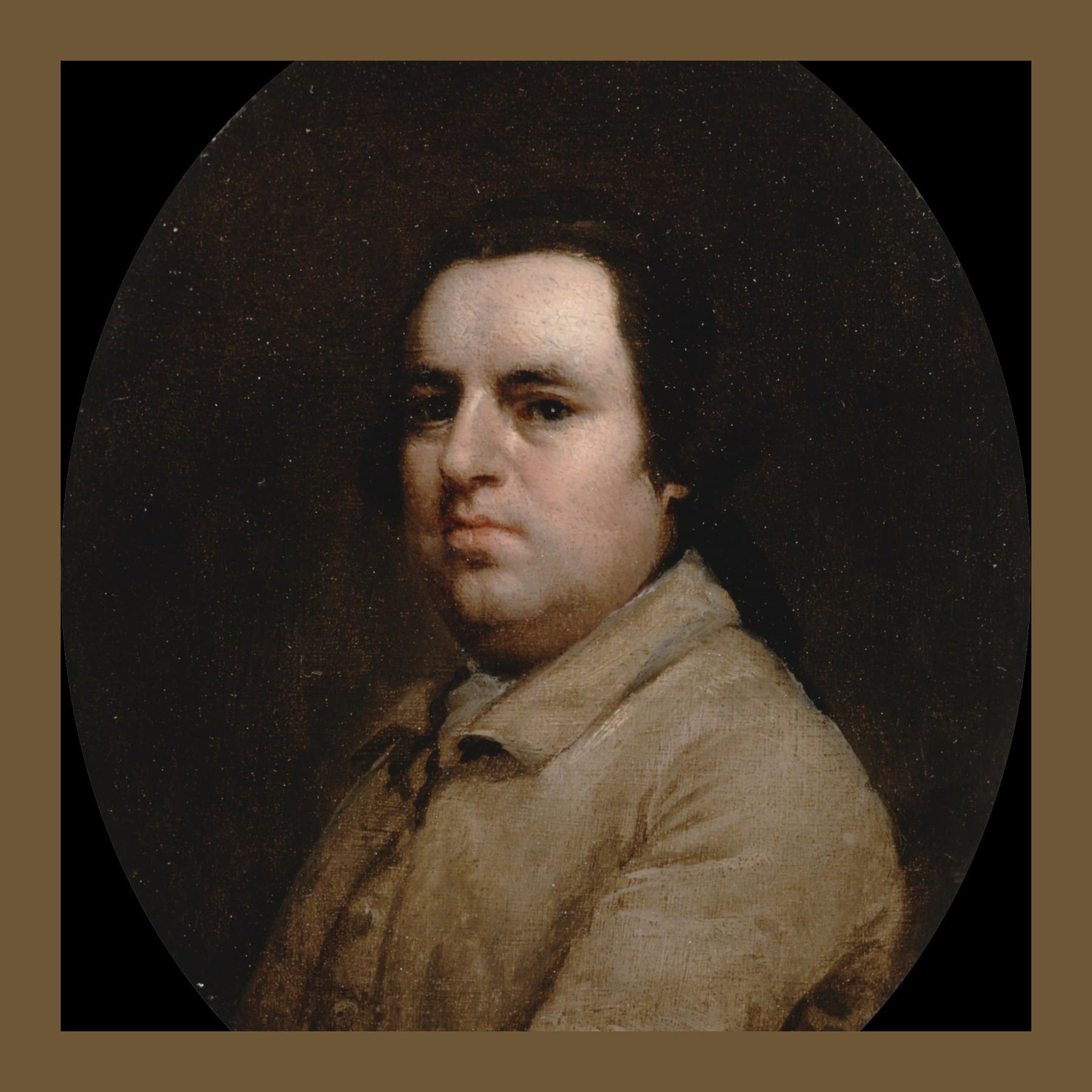
Main image: George Stubbs, Self-Portrait, c. 1759, oil on copper, Yale Center for British Art, Paul Mellon Fund. Public domain, via Wikimedia Commons. No photograph of Stubbs exists. Cropped and framed by CoolCuration. Displays, prices and auction results last checked: 26 October 2026.
No Comments.