
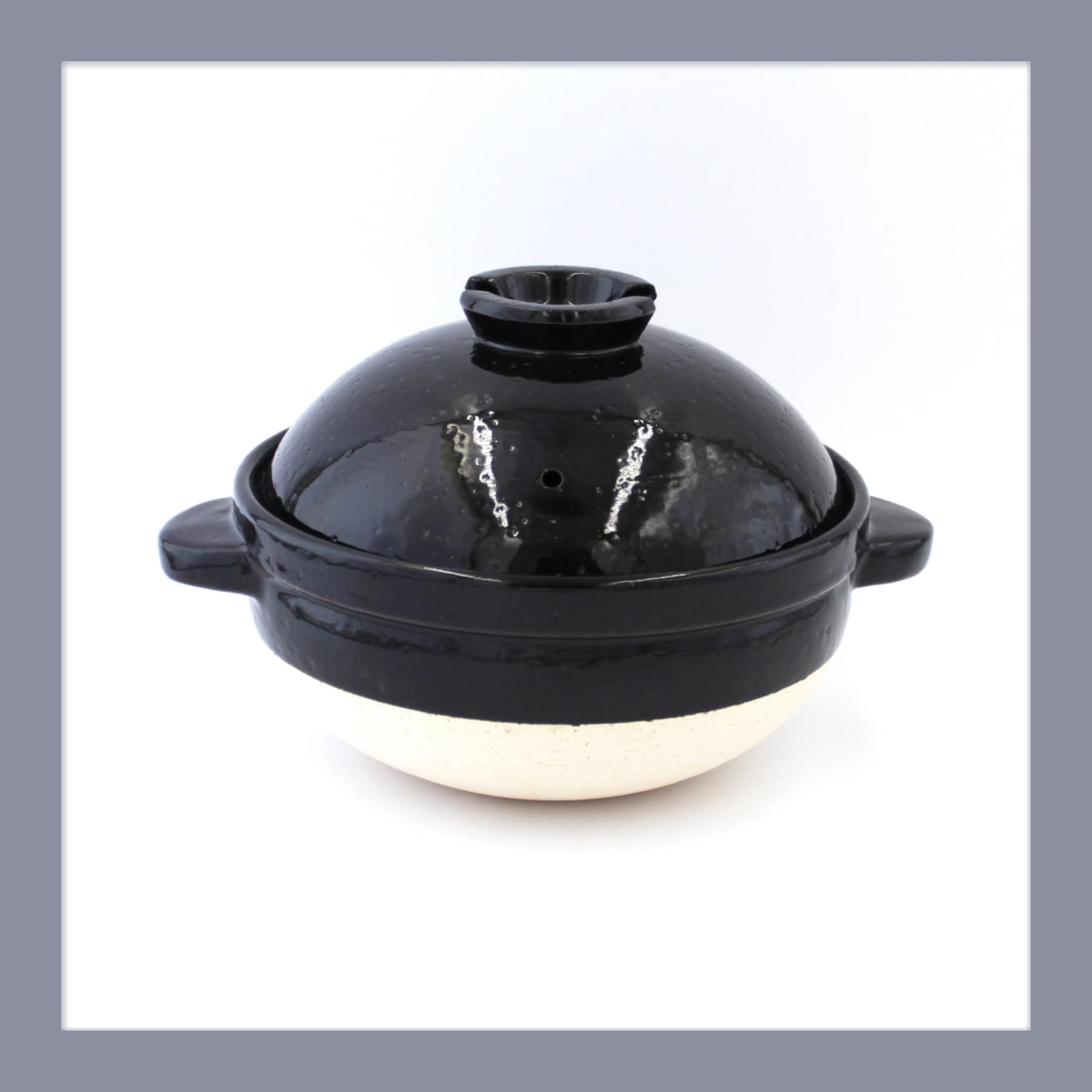
Kamado-san Donabe Rice Cooker by Nagatani-en
Last updated: 15 October 2026
The Kamado-san donabe is a double-lidded clay pot that cooks rice on a gas flame with no electricity, no timer and no switch. Nagatani-en have been making Iga-ware in Mie Prefecture since 1832, eight generations of one family, and this is the pot the company is known for. The two-cup size is £138 at wagumi and the three-cup is £176. It takes direct flame but not induction, and it needs seasoning before first use. Every figure here was checked on 6 September 2026.
Why two lids
The inner lid is the whole design. A single-lidded pot lets steam escape as pressure builds, so the rice cooks unevenly and the water runs off. The Kamado-san has a heavy inner lid that seats inside the rim and an outer lid over it, and the pair traps steam and raises the pressure inside the pot slightly. The rice steams in its own water rather than boiling in it.
That is why the thing exists. Nagatani-en are not selling a nicer-looking rice cooker, they are selling a different cooking method, and the claim they make for it is straightforward: the food tastes better.
The other half of the design is the clay. Iga clay is porous and coarse, and it holds heat for a long time after the flame goes out, so the pot carries on cooking through the resting phase without a burner under it. A steel pan cannot do that. It is also why the pot is heavy: 3kg for the two-cup size.
Nagatani-en, and the caution about the name
Nagatani-en was established in 1832 in a village in Iga, Mie Prefecture, and has been run by the Nagatani family for eight generations. The works still has a sixteen-level climbing kiln built in the early nineteenth century, used for production until the 1970s and fired two or three times a year now for special work. Day to day the pots come out of large gas kilns.
One thing to get right before searching for them: the pottery Nagatani-en is not the food company Nagatanien. They are unrelated businesses with almost the same name, and the food one sells instant ochazuke rather than clay pots. Every fact on this page is about the Iga-ware maker.
The two sizes
| Size | Dimensions | Volume | Weight | Price at wagumi |
|---|---|---|---|---|
| Two rice cup, 2-Go | 21cm x 16cm high | 1,000ml | 3kg | £138.00 |
| Three rice cup, 3-Go | 24cm x 18cm high | 1,500ml | 3.6kg | £176.00 |
A Japanese rice cup, a go, is about 180ml of uncooked rice, so two go feeds two to three people generously and three go feeds four. Both were in stock when we checked.
Because of the weight, wagumi exclude the pot from free shipping and calculate postage at checkout, so the price on the page is not the price at the till. Factor that in before comparing it against anything.
Seasoning it, which is not optional
Porous clay has to be sealed before it meets food, and the process is called medome. It involves cooking a starchy porridge in the pot so the starch fills the pores in the clay, and it is described in the English instructions wagumi supply with each pot.
Skipping it means a pot that seeps and can crack. Doing it takes an hour of mostly waiting. This is the single most common reason people are disappointed by a donabe, and it is entirely avoidable.
What it will and will not sit on
Direct flame only. Gas is what it is designed for, and the pot is suitable for open flame. It will not work on induction, and a ceramic pot on a radiant electric hob is a slow and risky proposition. If your kitchen is induction, this is the wrong object and no adaptor plate makes it the right one.
That matters more than it used to, because a lot of British kitchens have moved off gas. Check the hob before buying this as a present.
What comes in the box
The pot, both lids, and English-language care and recipe instructions. The pot stand and the wooden spatula that appear in wagumi's photographs are not included, which the listing says plainly and buyers still miss. A trivet matters, because a 3kg clay pot straight off a flame will mark a worktop.
Beyond rice
It is sold as a rice cooker and it is also a hot pot. Nabe dishes, slow braises, anything that wants long even heat and a sealed lid. The heat retention that makes rice work makes a stew work as well, and the pot goes from hob to table without decanting, which is half the appeal of donabe cooking at home.
The instructions carry recipes beyond rice, which is a better starting point than guessing. If Japanese cooking is the actual gift, our page on Japan: The Cookbook is the companion to give with it.
Kamado-san donabe FAQs
What is a donabe?
A Japanese earthenware pot for cooking over a flame. Donabe translates roughly as earth pot. The Kamado-san is Nagatani-en's rice-cooking version, distinguished by its double lid.
How much does the Kamado-san cost in the UK?
£138 for the two rice cup size and £176 for the three rice cup size at wagumi, both checked on 6 September 2026. Shipping is charged separately because of the weight.
Does it work on an induction hob?
No. It is made for direct flame. Gas works, induction does not, and a ceramic pot is a poor match for a radiant electric hob.
Do you have to season it first?
Yes. The process is called medome and it seals the porous clay by cooking a starchy porridge in the pot. Instructions come with it in English. Skipping the step risks seepage and cracking.
How many people does it feed?
The two-cup size holds 1,000ml and suits two to three people. The three-cup size holds 1,500ml and suits about four. A Japanese rice cup, a go, is roughly 180ml of uncooked rice.
Is the spatula included?
No. Neither the wooden spatula nor the pot stand shown in the product photographs comes with it. A trivet is worth having, because the pot is heavy and comes off the flame hot.
Is Nagatani-en the same company as Nagatanien the food brand?
No. They are separate and unrelated businesses with similar names. Nagatani-en is the Iga-ware pottery in Mie Prefecture, established in 1832.
More from CoolCuration
- Gifts for Japan lovers: the full guide, well past the obvious.
- Japan: The Cookbook: the reference to give alongside it.
- Gifts for foodies: presents for people who cook rather than people who eat out.
- Our Place Always Pan Pro review: the opposite argument, one pan doing everything on any hob.
- Gifts for a lifetime: things bought once, for people who would rather not buy twice.
Prices, stock and shipping terms change. Everything here was checked on 6 September 2026 against wagumi's own product page. The account of Nagatani-en's history and kilns comes from TOIRO, who work directly with the pottery.





Follow us: Instagram
Copyright 2026 CoolCuration | Privacy Policy | Cookie Policy | Affiliate Disclosure | Cool Factor
-----------
We are proud supporters of a safer more private internet via encouraging people to use Brave browser and are actively taking on Spammers as part of ProjectHoneypot. This site is hosted on servers that run on 100% renewable energy in the UK thanks to GreenWebHosting.
This site contains affiliate links, including to Amazon.com and Amazon.co.uk. We may earn a commission if you make a purchase or sign up for a service via these links, at no extra cost to you. All offers and promotions are accurate at the time of publication but are subject to change or withdrawal by the businesses featured. We cannot guarantee their continued availability. Read our full affiliate disclosure.
Reviews and opinions on CoolCuration reflect the personal experience of our writers at the time of publication. They are not professional endorsements and your experience may differ. Scores use our Cool Factor rating system and are given independently of any commercial relationship.
All content on CoolCuration is provided for informational and entertainment purposes only. It does not constitute financial advice, investment recommendations or an endorsement of any product or service. We are not authorised by the Financial Conduct Authority and do not offer personalised financial guidance. You should always do your own research or consult a qualified financial advisor before making any financial decisions.