
Last updated: 4 June 2026
By Tristan · Arts, exhibitions and creative culture
This is an opinion piece. Views expressed are the author's own and do not constitute professional advice.
This article contains affiliate or referral links. If you click through and sign up I may earn a commission or referral bonus at no extra cost to you. It does not affect my editorial view.
Cool Factor
★★★★☆
4 out of 5
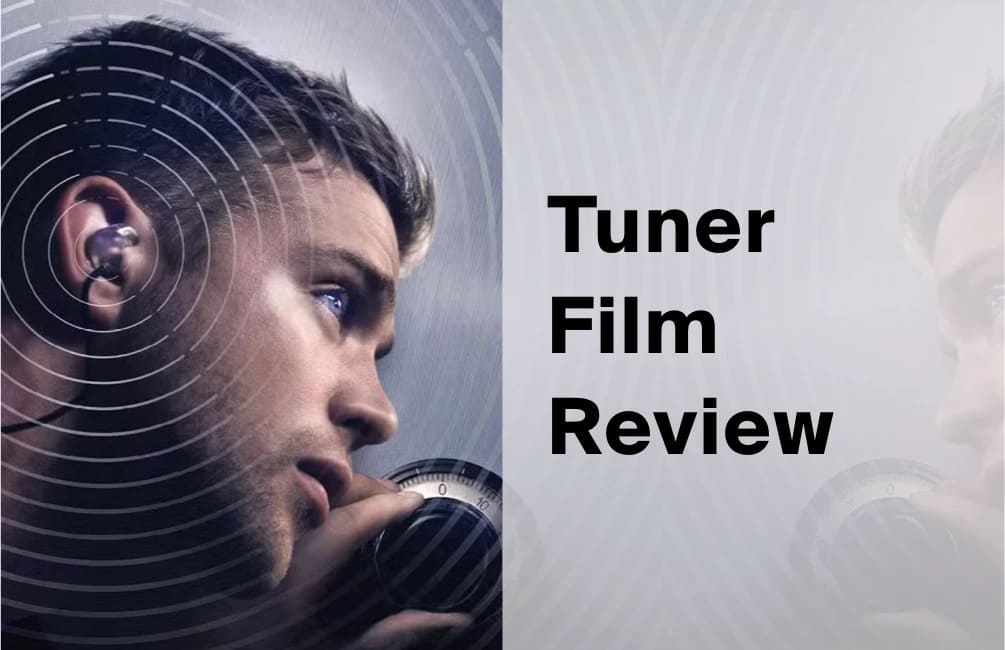
Welcome to our Tuner film review, where a piano tuner with painfully sensitive ears discovers his gift works just as well on safes as it does on Steinways. On paper it sounds like a gimmick. In practice, Tuner is one of the warmest, most likeable crime dramas to reach UK cinemas this year, and it confirms what a lot of us suspected after The White Lotus: Leo Woodall is a proper film star.
The short version of this Tuner film review is simple. The performances are lovely, the New York setting glows, and the script has real wit. After a patient opening, the film also winds the tension surprisingly tight. So read on for the full verdict, and why it lands at a confident four out of five rather than the very top of our scale.
What is Tuner about?
Tuner follows Niki White (Woodall), a once-promising young pianist whose career was ended by hyperacusis, a condition that makes everyday sound feel painfully loud. Niki now wears ear protection constantly and works as a piano tuner across the city, apprenticed to a veteran technician, Harry Horowitz (Dustin Hoffman), an old friend of his late father.
Because his hearing is so acute, Niki can detect the faintest mechanical flaw in an instrument. Naturally, that same talent turns out to be useful for cracking safes. When money gets tight, a charismatic and faintly menacing security consultant, Uri (Lior Raz of Fauda fame), tempts him into off-the-books work. Meanwhile, Niki falls for Ruthie (Havana Rose Liu), a gifted composition student. For the purposes of this Tuner film review, that is all the plot you need; the pleasures here are about character, not twist.
Daniel Roher's leap from documentary to drama
Tuner is the first fiction feature from Daniel Roher, the Canadian director best known for the Oscar-winning documentary Navalny. That pedigree matters. Roher, who co-wrote the script with Robert Ramsey, clearly relishes the freedom of invention, yet he keeps a documentarian's curiosity about a niche world most of us never think about.
As a result, the film is stuffed with lovely, true-feeling detail about the trade: the way wealthy clients treat their pianos as furniture, the small humiliations of the job, the near-mystical skill involved. The film premiered at Telluride, then travelled through Toronto and opened Sundance, before reaching cinemas this spring. On the review-aggregator Rotten Tomatoes, its critics' consensus calls it a film "announcing Leo Woodall as a compelling star talent", and on the whole that verdict feels earned.
First impressions
What struck me first, in writing this Tuner film review, was the texture. Roher and cinematographer Lowell A. Meyer shoot New York and its moneyed suburbs in warm, crisply edited montages as Harry and Niki make their rounds. Will Bates supplies a jazzy, light-footed score. Indeed, the opening stretch plays less like a thriller and more like a gentle two-hander about a surrogate father and son.
That tonal patience is deliberate, and largely it works. Still, it does mean the film takes its time at the outset. Do not mistake that for the whole film, though. Once the setup is in place, Tuner shifts gear sharply, and the calm of those early scenes turns out to be the exception rather than the rule.
Leo Woodall finally gets a lead worthy of him
If this Tuner film review has a headline, it is Woodall. After scene-stealing turns in The White Lotus and One Day, and a charming run opposite Renée Zellweger in Bridget Jones: Mad About the Boy, he gets a genuine leading role here, and he is a near-perfect fit for it.
Niki is the strong, silent type, brooding and watchful, but Woodall never lets him become a blank. There is a flirtatious set piece in which Ruthie tests his ear by playing notes for him to identify, and his quiet, almost embarrassed precision is wonderfully sexy. Crucially, he carries the film's emotional weight without ever overplaying it. The camera, frankly, adores him.
Dustin Hoffman, clearly having a ball
Then there is Hoffman. Harry is a big-mouthed, jazz-loving old craftsman whose own hearing is fading even as he mentors a protege who hears too much. It is a beautifully ironic pairing, and Hoffman, largely absent from screens in recent years, tucks into the role with obvious glee. "It's not about hearing, it's about feeling," Harry tells Niki, and that line could double as the film's mission statement.
What is remarkable is the range. He moves from broad comedy and easy charm through to real tragedy without a seam showing, and he handles the tonal shifts unbelievably well. It is a reminder of just how complete an actor he is. There is a knowing wink here, too. Hoffman, of course, won an Oscar playing a savant in Rain Man, and Tuner cheekily has a character liken Niki to that very film. It is a fun nod for cinephiles, although, as I will come to, it is also a slightly distracting one.
The world of piano tuning, beautifully drawn
Above all, Tuner is a love letter to overlooked craft. The film treats tuning as something close to magic, and it makes Niki's hyperacusis feel like both a curse and a strange superpower. For anyone curious, hyperacusis is a real and often debilitating condition; the NHS has a clear overview of it, and the film handles it with more care than the safecracking hook might suggest.
What is so smart about Tuner is how sensory it is for the viewer, not just for Niki. Roher makes you feel the film as much as watch it. The sound design plays constantly with contrasts in volume, lurching from near-silence to sudden, painful loudness so that you flinch alongside Niki. The visuals do the same with light, sliding from bright, airy scenes into darkness and back again. That push and pull is everywhere, and it gives the film a texture you rarely get in a drama this modest.
Will Bates's jazzy, nimble score deserves singling out. It is not just pleasant wallpaper; it does real work, mirroring Niki's heightened hearing and lacing the film with a restless, improvisational energy that suits a story about a musician who can no longer play. And it is not only the original score. The choice of pre-existing songs is just as considered, and it is the timing and placement that makes them land. Tracks arrive exactly where they should, used to lift, undercut or punctuate a scene rather than simply fill it. The whole soundtrack, composed and curated alike, feels chosen by someone who actually listens.
Tellingly, the film moves through every register with the same assurance. Comedy gives way to tragedy, jeopardy to safety, tension to tenderness and love, and Roher handles each shift adeptly. It covers all the emotive and sensory angles, and it does so without ever feeling showy. That control is the real achievement here.
A slow start that builds real tension
Here is where this Tuner film review wants to correct a common assumption. Yes, the opening is unhurried, and the Guardian's four-star review charmingly described the film as "like the Safdie brothers in chill out mode". After that early stretch, though, I found Tuner surprisingly intense, and I was tense for much of it.
The pressure comes from several directions at once. Niki is trying to look after an ailing Harry, take on the safe work, and pull off a full job, all while Ruthie races against the clock towards her final exam. Those threads tighten together, and the film generates real urgency, including in the romance, which moves with more speed and heat than you expect. Uri, moreover, is a genuine threat throughout, and Roher refuses to flatten him into a cartoon villain. So while the first act ambles, the rest does not. This is a film that quietly gets its hooks into you and then squeezes.
Honest critical observations
No Tuner film review worth reading would pretend the film is flawless, so here are the genuine reservations. First, Hoffman is underused. He is so good that every scene without him feels a little flatter, and the film never quite recovers the spark when he steps back.
Second, the premise asks for a fair bit of goodwill up front. You do have to accept that a mild-mannered tuner would stand in a wealthy client's home while strangers drill into a safe, ask only limited questions, and then happily open the thing for them on the spot, fingerprints and all. And then go on to make a habit of it, fingerprints and all, while the police remain conspicuously nowhere to be seen. There is also a plot turn involving a watch that you will see coming a little too early, which slightly deflates a moment meant to surprise. Once you make peace with that initial leap and what you know is coming, however, the film more than rewards you.
Third, the Rain Man reference, clever as it is, draws attention to a structural softness: Niki's condition is sometimes treated more as a plot device than a lived reality. Time Out, which landed on a cooler three stars, called that nod "a distracting nod, but not inaccurate", and I see their point.
The rave scene, too, felt unnecessary to me. The jeopardy it introduces is real enough, but it sits awkwardly against the rhythm of the surrounding scenes, and you sense the same beat could have been reached another way without the detour. It is a brief wobble rather than a fatal one, but it is the moment the film tries hardest and convinces least.
The cast is, on the whole, superbly chosen, which makes the one slightly weaker link stand out. Jean Reno, for my money, is the least compelling presence here, his character the least believable of the ensemble. He is far from bad, but in company this strong, he is the one who never quite convinces. Finally, the romance, while sweetly played, follows a familiar beat or two, and Havana Rose Liu, who is fabulously cast and brings real warmth and spark to Ruthie, is given less to do than her talent deserves. None of this sinks the film. Still, these are the things that keep a very good film from becoming a great one, and honesty demands naming them.
Why Tuner matters now
Beyond its own pleasures, Tuner matters as a star-making moment. It is rare to watch a leading man arrive quite this fully formed, and on this evidence Woodall has the range to go almost anywhere. Awards chatter has already started, and it would be no surprise to see his name in the conversation. We had a similar feeling watching another book-to-screen pairing recently, which we covered in our Hamnet film review.
It also quietly argues for the value of small, character-led films in an era of franchises. Made for a modest budget, Tuner trusts its actors and its world rather than spectacle, and that confidence is its own reward.
Is Tuner worth a cinema ticket?
The bottom line of this Tuner film review is yes, comfortably. For the price of a ticket you get two of the most enjoyable performances of the year, a script that is funnier and more tender than its premise lets on, and a New York you will want to step into. If you love actorly, grown-up dramas, this is a treat.
It is, additionally, a film that will send you straight back to music afterwards. The score practically begs you to dig out a piano playlist, and if it reawakens a dormant love of music, we have a guide to Amazon Music Unlimited that will help. For the film obsessive in your life, our gift guide for movie buffs is also worth a browse.
Where and when to watch Tuner in the UK
Tuner is in UK cinemas now, following its US release in late May 2026. It runs just under two hours, which feels about right, although a slightly tighter opening would not have hurt. It is rated 15 by the BBFC, so it is one for older teens and up rather than a family outing. As ever with a smaller release, an early or midweek screening is your best bet for a quiet auditorium.
The verdict
To sum up this Tuner film review: this is a warm, witty, beautifully acted charmer that is far better than its high-concept hook suggests. Woodall is a revelation, Hoffman is a joy, the supporting cast mostly sparkles, and Roher proves his documentary instincts travel happily into fiction. Once you get past that initial leap of faith over the premise, it is great, and far more tense than its reputation suggests. The main thing holding it back is a first act that takes its time before the tension properly kicks in.
Cool Factor
★★★★☆
4 out of 5
Overall, a confident 4 out of 5, Stone cold. Tuner wins that fourth star on the strength of its central pairing, its wit, its command of tone and texture, and its lovely sense of place. It just misses Ice cold because the film takes a while to find its urgency, and because Hoffman, its secret weapon, is rationed too carefully. See it for the people, and stay for the tension, and that, in one line, is our Tuner film review.
Tuner film review: frequently asked questions
Is Tuner worth watching?
Yes. As this Tuner film review has argued, the performances alone justify the ticket. Woodall and Hoffman are a delight, and the film is witty, warm and, after a patient start, genuinely tense. Just go in expecting a character drama with a crime flavour rather than a wall-to-wall action thriller.
What is Tuner about?
It follows a young piano tuner, Niki, whose extreme sensitivity to sound ended his music career but makes him brilliant at cracking safes. When money runs short, he is drawn into criminal work while falling for a composition student. It is part odd-couple drama, part romance and part thriller.
Who stars in Tuner?
Leo Woodall leads as Niki, with Dustin Hoffman as his mentor Harry. The supporting cast includes Havana Rose Liu as Ruthie, Lior Raz as Uri, Tovah Feldshuh and Jean Reno. It is the first fiction feature from Navalny director Daniel Roher.
Is Tuner based on a true story?
No. Tuner is an original screenplay by Daniel Roher and Robert Ramsey. However, the hyperacusis that affects Niki is a real medical condition, and the film's depiction of the piano-tuning trade is grounded in genuine detail.
How long is Tuner and what is the certificate?
It runs just under two hours and is rated 15 by the BBFC, so it is not suitable for younger viewers. Worth bearing in mind if you are planning a trip with the family.
Related reads from across CoolCuration
- Hamnet film review — Another book-to-screen adaptation we reviewed, anchored by a strong central pairing.
- LUMI Keys — Light-up keys to teach yourself piano at home, no tuning fork required.
- Gift guide for audiophiles — Our pick of presents for the serious music lover in your life.
- Audible — Where we get our audiobooks, including a healthy shelf of music memoirs.
- How Music Works — David Byrne on why music does what it does to us.
What's trending






Recent posts
- Best Audiobooks October 2026: 10 UK Listens Ranked
 Ten new audiobooks for October 2026, from a full-cast Dracula with Jonathan Bailey to Russell T Davies reading his own television memoir.
 - Louis Fratino at David Zwirner ReviewLast updated: 4 October 2026 By Tristan · Arts, exhibitions and creative culture This is an opinion piece. Views expressed are the author's own and do not constitute professional advice. Exhibition reviewMayfair Saunas, subway cars and a lot of skin in Mayfair Louis Fratino at Zwirner is the American painter's first solo show in London,… Read more: Louis Fratino at David Zwirner Review
- What Is a Sprive Boost? Seven Days, and What It Actually PaysA Sprive boost lifts your cashback rate for seven days, and it arrives on its own. What mine paid, and why Supercharge is a display toggle rather than extra cashback.


No Comments.