
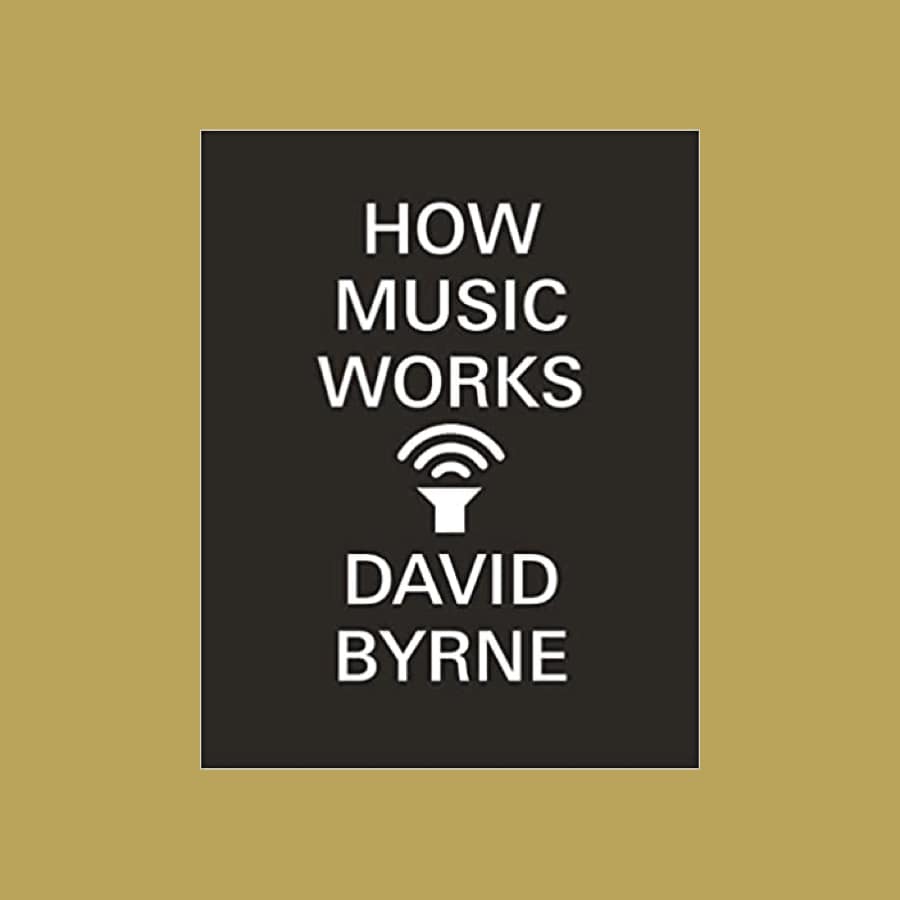
How Music Works by David Byrne
Last updated: 3 October 2026
How Music Works is David Byrne's book about why music sounds the way it does, and his answer is that the room, the technology and the money shape a song as much as the person writing it. Byrne co-founded Talking Heads, so most of his examples come from his own records and tours. On 3 October 2026 Amazon UK had the 376-page Canongate paperback at £14.99, down from a list price of £20, and in stock.
Buy How Music Works on Amazon UK, £15
The Amazon links on this page are affiliate links. If you buy through one, I earn a commission at no extra cost to you.
What How Music Works is about
Byrne starts from a simple observation. Music written for a cathedral, a dance hall or a small New York club sounds different, because each space suits a different kind of sound. So a band that plays a cramped room with hard walls ends up writing for that room. He uses Talking Heads at CBGB as one example. Wagner's opera houses and outdoor music in African villages are others.
From there the book moves through recording technology, from phonographs to MP3s, and how each format changed what musicians made. After that come chapters on collaboration, on the business of releasing records, and on why amateur music-making matters. In the business chapter Byrne compares different ways an artist can release music, using figures from his own albums.
The 2013 paperback
Canongate first published the book in the UK in September 2012. The paperback followed on 19 September 2013 and added a new chapter on finding new music in the digital age. Canongate also sells an unabridged audiobook read by Andrew Garman, which runs to 13 hours 9 minutes. The full list of editions is on Canongate's page for the book.
What reviewers said
The book had a good reception in the UK press. Writing in The Herald, Keith Bruce called it "a very involving read" and said "Byrne is good company". In The Observer, Mark Ellen said Byrne had turned a "galaxy of theory" into readable scholarship. Meanwhile, Amazon UK shoppers gave it 4.6 out of 5 from 2,173 ratings when we checked on 3 October 2026.
Key facts
- Author: David Byrne
- Publisher: Canongate Books
- First published: September 2012 in the UK
- This edition: paperback, 19 September 2013, with the added chapter
- Length: 376 pages, 16.4 x 21.4cm, 820g
- ISBN: 9780857862525
- Price: £14.99 on Amazon UK on 3 October 2026, list price £20
Who it suits
- Talking Heads fans: Byrne explains how the band's early sound grew out of the clubs it played and the records it made.
- Musicians and producers: the chapters on recording and on releasing music give practical context for decisions about studios and distribution.
- Readers who like books on creativity: it pairs well with The Creative Act by Rick Rubin, a producer's view of how ideas turn into records.
The limits
How Music Works is not a music theory textbook, so it will not teach you harmony or an instrument. It is a set of long essays, each on a different subject. Also, the book first came out in 2012. So the chapters on the music business predate most of today's streaming market. The 2013 chapter on digital discovery covers some of it.
Where to buy it in the UK
Amazon UK had the Canongate paperback at £14.99 on 3 October 2026, in stock and sold by Amazon.
FAQs
What is How Music Works about?
It is David Byrne's account of how venues, recording technology, collaboration and money shape the music people make and hear.
Who publishes How Music Works in the UK?
Canongate Books. It published the first edition in September 2012 and the expanded paperback in September 2013.
How long is How Music Works?
The paperback runs to 376 pages. The unabridged audiobook, read by Andrew Garman, lasts 13 hours 9 minutes.
How much does How Music Works cost in the UK?
Amazon UK had the paperback at £14.99 on 3 October 2026. The list price is £20.
Do you need to know music theory to read it?
No. Byrne writes for general readers and explains the few technical ideas he uses as he goes.
More from CoolCuration
- Book lovers gift guide: presents for people who already own too many books.
- Born to Run by Bruce Springsteen: another musician's own story, from New Jersey bars to stadiums.
- Audible UK: the plans, the prices and how the free trial works, if you would rather listen.
- Amazon Music Unlimited UK: what the plans cost and what you get with each.
- Best smart speakers UK: HomePod, Sonos and Echo compared for playing music at home.
Prices and availability change. The affiliate links on this page earn a commission at no extra cost to you, and brands do not choose what we feature.
Image: publisher's cover
More things like this:








Follow us: Instagram
Copyright 2026 CoolCuration | Privacy Policy | Cookie Policy | Affiliate Disclosure | Cool Factor
-----------
We are proud supporters of a safer more private internet via encouraging people to use Brave browser and are actively taking on Spammers as part of ProjectHoneypot. This site is hosted on servers that run on 100% renewable energy in the UK thanks to GreenWebHosting.
This site contains affiliate links, including to Amazon.com and Amazon.co.uk. We may earn a commission if you make a purchase or sign up for a service via these links, at no extra cost to you. All offers and promotions are accurate at the time of publication but are subject to change or withdrawal by the businesses featured. We cannot guarantee their continued availability. Read our full affiliate disclosure.
Reviews and opinions on CoolCuration reflect the personal experience of our writers at the time of publication. They are not professional endorsements and your experience may differ. Scores use our Cool Factor rating system and are given independently of any commercial relationship.
All content on CoolCuration is provided for informational and entertainment purposes only. It does not constitute financial advice, investment recommendations or an endorsement of any product or service. We are not authorised by the Financial Conduct Authority and do not offer personalised financial guidance. You should always do your own research or consult a qualified financial advisor before making any financial decisions.