
Last updated: 16 April 2026
By Stiv · Design, technology and personal finance
This is an opinion piece. Views expressed are the author's own and do not constitute professional advice.
This review contains referral links. If you purchase through our link on the FYTA Beam detail page, you get 10% off. Our opinions remain entirely independent.
Cool Factor: 4/5
We have been searching for a reliable smart plant sensor for years. After failed attempts with Xiaomi and Parrot, we finally landed on the FYTA Beam G2. This FYTA Beam review covers four months of daily use across 13 sensors in a London flat, and the short version is: it is genuinely the best plant tracking system we have found. Not perfect, mind you. But properly impressive.
What Is the FYTA Beam G2?
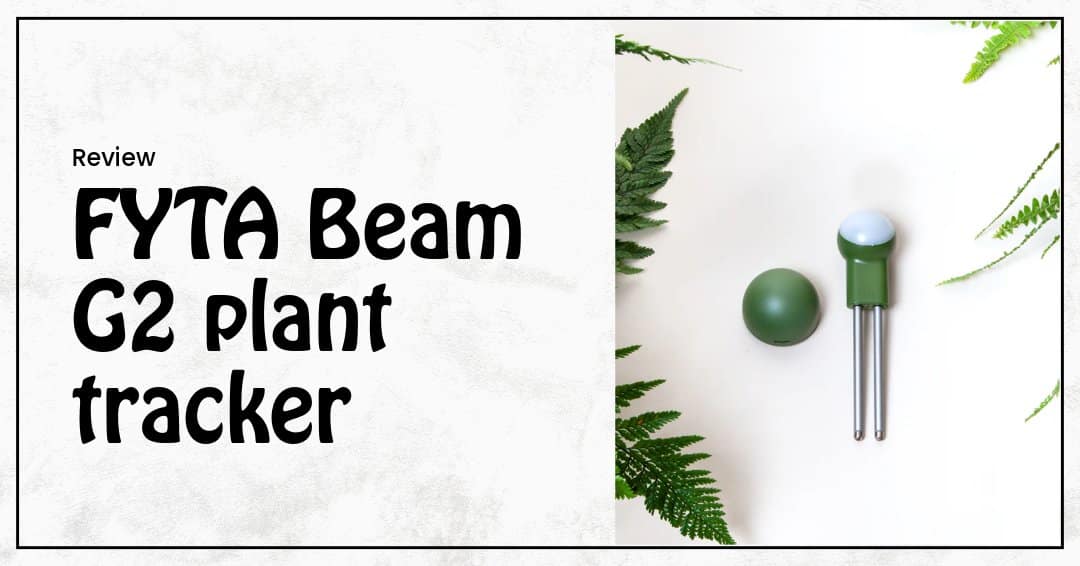
The FYTA Beam G2 is a small, solar-and-battery-powered sensor that sits in the soil of a potted plant. It continuously measures soil moisture, nutrient levels, light intensity and temperature. All readings sync to the free FYTA app, which uses species-specific algorithms to tell you exactly what each plant needs and when it needs it. You can read more about the specs and pricing on our FYTA Beam detail page.
First Impressions
Setting up the FYTA system was refreshingly straightforward. You scan a QR code on the sensor, identify your plant using the app's camera (it recognised almost everything we pointed it at), and push the sensor into the soil. The whole process took about two minutes per plant. Pairing the Wi-Fi Hub was equally simple: plug it in, connect to your 2.4 GHz network and the Hub finds every sensor in range automatically.
Our first impression was genuinely positive. The app is clean and well designed, the sensors look neat sitting in the pots, and within an hour we had live readings from every plant in the flat. After years of fighting with Bluetooth-only sensors, having everything just work felt like a small miracle.
The Sensors We Tried Before
Before finding FYTA, we went through two other smart plant sensors. Neither lasted.
First was the Xiaomi Mi Flora. On paper it looked great: affordable, decent app, four metrics. In practice, the Bluetooth connection was a nightmare. It would drop constantly, fail to sync and require us to stand right next to each plant with the app open. With more than a handful of sensors, that became unworkable. We gave up after a few months.
Then came the Parrot Flower Power. Parrot actually made a solid sensor. The readings were reliable and the app was decent. Unfortunately, Parrot pulled out of the consumer plant sensor market entirely, stopped selling the hardware and eventually wound down app support. Our sensors became expensive paperweights. It is a cautionary tale, and one we will come back to.
Our London Plant Problem
Living in London, keeping houseplants alive is harder than it sounds. Natural light is often limited, temperatures swing between overheated radiator air and draughty windows, and flats rarely have the consistent conditions that tropical plants crave. We had already invested in Lechuza self-watering pots to help manage watering, and even switched some plants to Lechuza PON substrate as an alternative to soil.
Even with that setup, we kept running into problems. Yellow mould would appear on the surface of the PON, which is a telltale sign of persistent overwatering. The Lechuza reservoir system is brilliant at preventing total drought, but it can also mask the fact that you are topping up too often. Without any data to guide us, we were essentially guessing, and guessing badly.
The Experience: Four Months with 13 Sensors
After setting up 13 FYTA Beam G2 sensors across every plant in the flat, the difference was immediate. Within the first week, the app flagged three plants that were consistently sitting in too much moisture. Two of those were the exact pots where yellow mould had been appearing. We adjusted our watering schedule based on the data and the mould cleared up within a couple of weeks.
Has it fully solved our overwatering problem? Honestly, no. We still occasionally get a faint yellow tinge on the PON surface, especially in winter when evaporation slows. But the improvement has been massive. Before FYTA, we were flying blind. Now we have actual numbers to work with, and the push notifications mean we only water when the sensors confirm the soil genuinely needs it.
The Wi-Fi Hub Is Essential
We cannot stress this enough: get the Wi-Fi Hub. Without it, you are relying on Bluetooth, which means manually opening the app within range of each sensor to pull data. With the Hub, every sensor syncs automatically every hour, and the app sends push notifications whenever a plant needs attention. For 13 plants spread across multiple rooms, the Hub turned a clunky manual process into a seamless, hands-off system.
This is where FYTA truly separates itself from the competition. The hourly automated sync means you are always working with current data, not whatever you happened to pull last time you walked past with your phone. If a plant suddenly gets too dry or too cold, you know about it straight away.
The Science Behind the Probes
FYTA's approach to probe depth is grounded in genuine plant science, and it makes a real difference to accuracy. The company recommends positioning the probe tips in the bottom third of the pot, because that is where water naturally accumulates over time. Most cheap moisture meters only measure near the surface, which tells you very little about what is happening at root level where problems actually start.
The G2's interchangeable probes come in lengths from 3 cm to 20 cm, so you can match each sensor to the depth of each pot. In theory, this is brilliant. In practice, working out the right probe length for every single pot was a proper faff. More on that shortly.
Cool Factor
★★★★☆
4 out of 5
Value for Money
There is no getting around it: the FYTA system is not cheap. A single Beam G2 costs around £35, the Wi-Fi Hub another £35, and if you need different probe lengths (which you almost certainly will), those are sold separately from about £8 a pair. For our setup of 13 sensors plus a Hub and various extra probes, the total was well north of £500.
Compared to a basic £8 moisture meter from Amazon, that is a lot of money. But those meters measure one thing, give you no historical data, have no app integration and cannot alert you to problems. The FYTA system is in a completely different category. If your plants are important to you, and you want to understand what is actually happening in the soil, it justifies the investment. Using our referral link for 10% off certainly helps soften the blow.
What Could Be Better
For all its strengths, the FYTA system has a few genuine frustrations.
Working out probe sizes is painful. With 15 plants (we have since added two more), we had to measure the internal depth of every pot, then cross-reference against FYTA's comparison table to find the right probe length. Their website does not offer a simple calculator or guided tool for this. We ended up making a spreadsheet to keep track of which pot needed which probe, and it was far more effort than it should have been. FYTA could massively improve this part of the experience.
Probes sold separately is annoying. The Beam G2 ships with a standard 7.5 cm probe, which only suits pots between 10 and 15 cm tall. For anything bigger or smaller, you need to buy extra probes. Even with the 10% discount, the additional cost adds up. Including a short and a long probe option in the box would be a much better experience.
Prices are in Euros. FYTA is based in Germany and their website lists everything in EUR. For UK buyers, this means exchange rate fluctuations and sometimes unexpected shipping costs. A GBP pricing option or UK stockist would make a big difference.
The Parrot Question: Will FYTA Stick Around?
After getting burned by Parrot, we are naturally cautious about investing in another smart sensor ecosystem. The big question is always: what happens if the company folds?
On balance, the signs are encouraging. FYTA recently launched the entire 2.0 sensor range (Beam G2, Mini, Sphere and Terra), secured additional funding and continues to release regular firmware updates. The company is actively expanding its product line, not winding down. That said, the sensors do rely on the FYTA cloud and app, so if the servers ever went offline, functionality would be severely limited. It is a risk worth acknowledging, even if it feels unlikely right now.
The Verdict
The FYTA Beam G2 is, quite simply, the best smart plant sensor we have used. After years of unreliable Xiaomi connections and the disappointment of Parrot's exit, FYTA delivers a system that actually works the way you want it to: accurate sensors, a genuinely useful app and a Wi-Fi Hub that makes the whole thing effortless. It has not completely solved our overwatering issues in a London flat, but it has improved the situation enormously by replacing guesswork with real data.
The frustrations are real but not deal-breaking. The probe sizing process needs a proper guided tool, selling probes separately is a bit stingy, and the price is high. None of those things stopped us from sticking 13 sensors in our plants and relying on them daily. For that reason, this earns a strong four out of five.
Overall, a solid 4/5 Stone cold. The FYTA Beam G2 blew us away with the quality of its data, the reliability of the Wi-Fi Hub and the genuinely useful app notifications. It did not quite hit Ice cold because the probe sizing faff, the separate probe purchases and the premium pricing hold it back from being a completely frictionless experience. Still, if you are serious about keeping your plants alive, this is the system to get. Head to our FYTA Beam detail page for 10% off.
Frequently Asked Questions
Is the FYTA Beam G2 worth it?
For serious plant owners, yes. The combination of four-metric sensing, species-specific app analysis and automated Wi-Fi Hub syncing makes it the most comprehensive smart plant system currently available. It is expensive, but the data quality justifies the cost if healthy plants matter to you.
How does the FYTA Beam compare to Xiaomi Mi Flora?
In our experience, the FYTA system is far more reliable. The Mi Flora's Bluetooth connection dropped constantly and required manual syncing. FYTA's optional Wi-Fi Hub eliminates that problem entirely with hourly automated readings. The FYTA app is also significantly more detailed, with species-specific analysis rather than generic thresholds.
Can I use FYTA Beam with Lechuza self-watering pots?
Absolutely. We use ours in a mix of Lechuza pots with PON substrate and the sensors work well. Just make sure the probe tips do not touch any drainage layer at the bottom, as this can distort readings. Position them in the lower third of the soil or substrate.
How long does the FYTA Beam battery last?
FYTA states over two years from the replaceable CR2450 button cell. The sensor also has a built-in solar cell that extends battery life further. After four months, all 13 of our sensors are still showing full battery.
Does FYTA require a subscription?
No. The FYTA app is completely free with no subscription fees. All features, including push notifications, historical data and the AI health check, are included at no extra cost.
More from CoolCuration
- FYTA Beam G2: Get 10% Off — Our detail page with the referral discount and full specs breakdown.
- Phox Water Filter Review — Another smart home product we genuinely rate for everyday use.
- Gift Guide for Techies — Curated picks for anyone who loves a clever gadget.
- Octopus Energy Referral — Cut your energy bills while keeping your heated plant corner running.
- Haloha App — Another app worth checking out from our curated collection.
What's trending






Recent posts
- Girls Just Wanna Have Funds Review: Our Book of the Month
 Our Book of the Month: Girls Just Wanna Have Funds by Female Invest. The friendliest first investing book I have read, and the one place it leaves a UK reader short. Prices, formats and an honest verdict. #BookOfTheMonth #GirlsJustWannaHaveFunds #FemaleInvest #MoneyBooks #UKFinance
 - Philips OneBlade Review UK: 4/5 After Five YearsFive years with the same Philips OneBlade. One handle, a new blade every four months, and blades that work out at £1.65 a month. Here is what wore out, which blade I stopped buying, and the one design flaw that will eventually kill it. #philipsoneblade #grooming #shaving #ukreviews #coolcuration
- Best Smart Home Starter Kit UK 2026: Apple, Google or AlexaThree ways into a smart home and one box you replace if you change your mind. Apple, Google and Alexa priced side by side, plus the Matter kit that works with all three.



No Comments.