
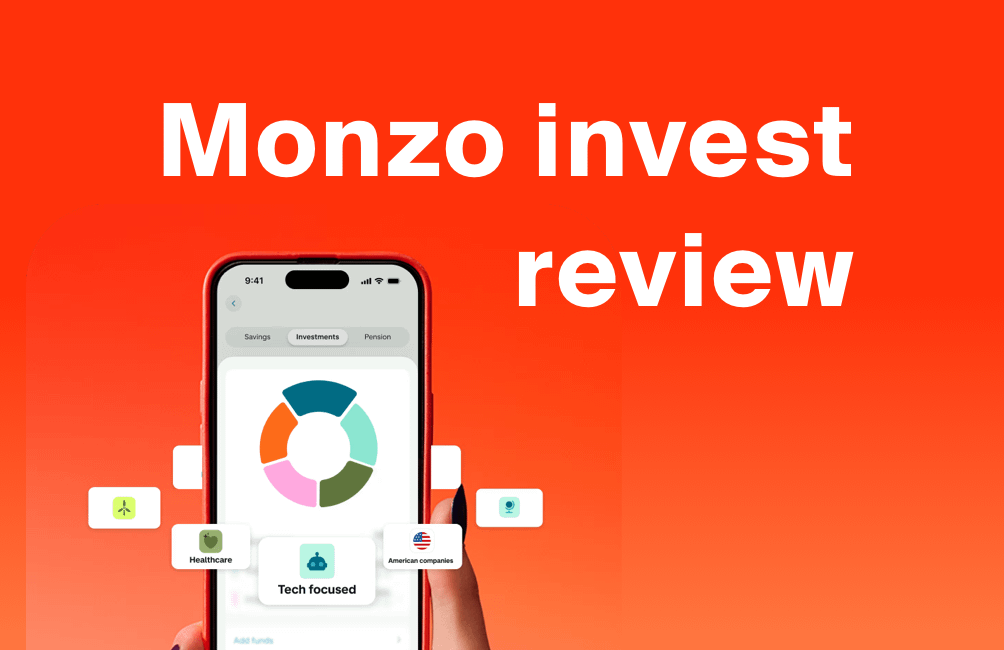
Last updated: 7 October 2026
By Stiv · Design, technology and personal finance
This is my own experience. I've invested in Monzo's Adventurous fund since November 2025, paying in £50 a month, with round-ups and my savings interest topping it up on the side.
This is an opinion piece. Views expressed are my own and do not constitute professional advice.
Cool Factor: 4/5 Stone cold
This Monzo Investments review is based on real money I've had invested since late 2025, not a quick five-minute demo. I wanted to invest without downloading five apps, reading 19 Reddit threads, and accidentally becoming a part-time day trader. Monzo Investments keeps things simple on purpose. You pick a risk level, deposit from as little as £1, and let BlackRock-managed funds do the heavy lifting. No stock picking. No fiddling. No "should I buy Nvidia" spiral at 1am. And with the recent launch of Build Your Own portfolios, there's now more choice than ever without losing that trademark Monzo simplicity.
Before you read on: This article contains affiliate and referral links, which are paid links. If you click one and buy or sign up, I earn a commission or referral bonus at no extra cost to you. Brands don't choose what I feature or what I say about them. This is not financial advice.
Capital at risk. The value of investments can go down as well as up and you may get back less than you invested. Past performance is not a reliable indicator of future results.
Want the Monzo current-account bonus?
There's no live Monzo Investments referral, but you need a current account to invest anyway, and that one does have a working offer (rewards from £5, up to £50, sometimes up to £100). For the full lowdown on the bank itself, read my Monzo review UK after four years of daily use. The latest terms are on my referral page.
Get the Monzo current-account bonus
New to Monzo as well as to investing? My Monzo guides hub covers the bank account, the paid plans and the savings pots alongside the investing side.
What is Monzo Investments?
Monzo is the UK's largest digital bank, with more than 12 million customers. The investment feature sits directly inside the banking app, so there's no separate platform or login to deal with. Because I already used Monzo for everyday spending, getting started felt seamless rather than like a whole new commitment.
You can open a Stocks and Shares ISA or a General Investment Account (GIA), with a minimum investment of just £1. There are now 17 investment options in total, split across two main approaches. For the record, I invest through the GIA, although for long-term investing the ISA is usually the more tax-efficient default if you haven't used your allowance.
Keep it simple: ready-made funds
This is the original Monzo experience, and the one I use. You answer a few questions about risk, then pick one of three diversified portfolios built from BlackRock's MyMap ESG funds:
- Careful: roughly 80% bonds and 20% shares. Lower risk, steadier growth. Fund fee 0.14%.
- Balanced: around 34% bonds and 66% shares. The middle ground. Fund fee 0.14%.
- Adventurous: 100% shares. Higher potential returns and more volatility. Fund fee 0.14%.
I went with Adventurous because I'm investing for the long term and I'm comfortable riding out the bumps. It's a true set-and-forget setup: I picked my risk level, automated my deposits, and let BlackRock handle the rest.
Build Your Own: themed and geographic ETFs
Launched in March 2026, this is the big update. Monzo now lets you choose from 14 individual investments from BlackRock's iShares range and beyond, so you can build a portfolio that reflects your interests. I've personally stuck with the ready-made Adventurous fund, so I can't speak first-hand to these yet, but here's the line-up.
Themed funds:
- Automation and Robotics (fund fee: 0.40%)
- Blockchain Creators (0.50%)
- Clean Energy (0.65%)
- Healthcare Innovation (0.40%)
- Metaverse (0.50%)
- Tech Focused / NASDAQ 100 (0.30%)
Geographic funds:
- American Companies / S&P 500 (fund fee: 0.07%)
- British Companies / FTSE 100 (0.07%)
- Emerging Markets (0.18%)
- European Companies (0.12%)
- Global Companies / MSCI World (0.20%)
Bonds and commodities:
- Short-term bonds
- Gold
- Silver
Monzo added these three after launch. Their fund fees show in the app before you buy.
You can mix and match across both categories. For example, 50% in Balanced, 30% in American Companies, and 20% in Clean Energy. It's a smart middle ground between the simplicity of ready-made funds and the overwhelm of platforms with thousands of options.
First impressions
Opening my account inside Monzo took roughly five minutes. The setup questionnaire was short, the language was plain, and nothing felt intimidating. Monzo doesn't dump jargon on you or demand that you already know what an ETF is.
What struck me most was how natural it felt alongside my everyday banking. My investments sit right next to my savings pots, current account, and spending breakdown. There's no context-switching between apps, which reduced the friction that stops a lot of people from ever starting.
However, if you want granular detail upfront, such as fund factsheets, historical performance charts, or breakdowns of underlying holdings, you won't find much here. Monzo prioritises clarity over depth, and that's a deliberate trade-off. More on where that frustrated me later.
The experience: using Monzo Investments day to day
For me, the biggest selling point is convenience. Everything happens inside an app I already know, and the investment features slot in without disrupting the rest of it. As of 20:01 UTC on 7 June 2026, my Adventurous pot is up about 10.55% since November 2025. That figure moves constantly with the markets, so it will almost certainly be different by the time you read this. It's my own return over roughly seven months, not a promise of what you'll get. Past performance is not a reliable indicator of future results, and my capital is at risk like anyone else's.
Features I actually use
- Recurring deposits: I've set a £50 monthly schedule and mostly forget about it.
- Round-ups: spare change from my everyday spending gets drip-fed into investments automatically. Buy a coffee for £2.60, and 40p goes towards the pot.
- Interest investing: I sweep the interest from my savings challenge pot straight into investments each month.
- Clear performance view: I can see how my money is spread and how much it has grown in one clean view.
Between the round-ups and the interest sweep, I quietly add roughly another £10 to £20 a month on top of my £50, without really noticing. These automation tools are the bit that sets Monzo apart for me. Most platforms expect you to actively choose to invest. Monzo makes it close to invisible, and for beginners especially that habit-building matters more than chasing the lowest fee.
Tracking performance
Monzo keeps things simple here too. My portfolio value, returns, and overall progress use the same clean interface I know from banking, with no overwhelming charts. That makes it ideal for anyone starting their investing journey in the UK who wants an intuitive, low-stress experience. As I'll explain below, though, "simple" comes at the cost of detail.
Fees and costs: what you're actually paying
Monzo uses a two-part fee model, which is standard for platforms offering managed funds. According to the official Monzo fees document (version 2.7, 1 October 2026), here's what you'll pay.
Platform fee
Monzo charges 0.25% per year (or 0.20% if you have Monzo Perks or Max). It's calculated daily and collected monthly. On a £10,000 portfolio, that works out at roughly £25 a year, or £20 with a qualifying plan.
The platform fee is capped at £250 per year (or £200 with Perks or Max). Once your combined investments and pension exceed £100,000, you effectively stop paying platform fees on amounts above that threshold.
Monzo doesn't charge dealing fees, minimum account fees, or withdrawal fees. What you see is what you pay. If you want those fees turned into pounds next to Freetrade and Lightyear, I ran the numbers on £2,000 and £20,000 in Monzo Invest vs Freetrade vs Lightyear.
Fund management fees
BlackRock charges a separate fund management fee that varies by fund. It's reflected in the fund's value rather than taken as a separate charge, so you won't see it as a line item.
The lowest-cost funds are the geographic trackers like the S&P 500 and FTSE 100 at just 0.07%. The most expensive is Clean Energy at 0.65%. The ready-made portfolios sit at 0.14% each. In total, your all-in annual cost typically ranges from around 0.32% to 0.90%, depending on your fund mix. On my Adventurous fund that means roughly 0.39% all in.
For a deeper look at how fees have changed recently, we covered the reduction in detail: Monzo investment fees cut, what it means.
ISA vs GIA: how I think about the wrapper
Monzo offers both a Stocks and Shares ISA and a General Investment Account. I personally invest through the GIA, but in the UK many people use the ISA as their default because gains and dividends sit within your annual ISA allowance (currently £20,000) and are sheltered from tax. Tax treatment depends on the individual circumstances of each client and may be subject to change in future.
As a general rule, for long-term investing where you haven't used your full ISA allowance, the ISA wrapper tends to be the natural choice. A GIA still works if you want flexibility beyond ISA constraints, although it's less tax-efficient. That's not advice, just the standard UK wrapper logic. Monzo also lets you transfer existing ISAs in from other providers, although I haven't done that myself and the existing holdings get sold during transfer, so you can't move shares across in-specie.
Value for money: Monzo vs JPMorgan
Compared to fully DIY platforms like Trading 212 (0% platform fee) or Vanguard (0.15%), Monzo's fees are higher. That's the trade-off for a managed, low-effort experience with strong automation.
The comparison that matters most to me is with JPMorgan Personal Investing, which I've used for longer. JPM has a head start. It grew out of JPMorgan buying Nutmeg, and that heritage shows in the track record and the polish. JPM shows me a clear percentage breakdown of the top holdings inside a portfolio, whereas with Monzo I couldn't work out how to see exactly what I'm invested in. That might be down to holding a single Adventurous ETF, but the transparency gap is real for me.
Where Monzo wins is fees and sheer simplicity. It probably edges JPM on cost and it's a lovely hands-off place to start. The framing is this: Monzo is the easier on-ramp, JPM is the more established operator. For many first-time investors, the question isn't "which is cheapest?" but "which one will I actually stick with?" In my experience, a platform you use consistently beats a cheaper one you abandon after three weeks.
Who it's best for (and who might skip it)
Great if you:
- Already bank with Monzo and want everything in one app.
- Want a simple, long-term setup you won't tinker with.
- Are new to investing and just want to get started.
- Like automated habits such as recurring deposits, round-ups, and interest investing.
- Want some thematic choice without being overwhelmed by thousands of options.
Maybe skip it if you:
- Want to pick individual shares or specific ETFs beyond the 17 available.
- Need a huge range of funds and full DIY control.
- Want a detailed view of exactly what you hold and every transaction.
- Need short-term access and might panic-sell when markets wobble.
In short, Monzo is built to reduce decision fatigue. If you want maximum control or detail, a broker-style platform or JPM will suit you better. If you want maximum simplicity with a decent amount of choice, Monzo does its job well.
Honest critical observations
Even though I rate it, there are real things that bug me after seven months of use. First, visibility. It's hard to see my transactions and exactly where things are. Monzo feels less robust and less clear about what's going on under the bonnet than JPM's fully managed view. I can't tell whether there's a way to see the specific things I'm invested in, and that lack of a holdings breakdown nags at me.
Second, it feels very targeted at beginners. The fund range is limited (though Monzo keeps adding to it), and even the more "adventurous" options like the one I picked feel a touch oversimplified. I can absolutely see the appeal of making investing this approachable, but more experienced investors may quickly want more depth, more data, and more control than Monzo currently offers.
Sustainability and ESG
All of Monzo's funds invest in companies that are 30% less carbon-intensive compared to similar funds that don't consider emissions. This applies across the ready-made portfolios and the individual ETFs. If responsible investing matters to you, that's a genuine differentiator over some competitors, although it's worth noting that "less carbon-intensive" isn't the same as fully screened ethical investing.
Safety and regulation
Monzo Bank is authorised by the Prudential Regulation Authority (PRA) and regulated by both the PRA and the Financial Conduct Authority (FCA), with Financial Services Register number 730427. Eligible deposits are protected up to £120,000 per eligible person per UK-authorised bank, building society or credit union by the FSCS (since 1 December 2025). Investment protection is separate: eligible investments are protected up to £85,000 per person per FCA-authorised firm by the FSCS. That protection covers firm failure, not investment losses.
My investment assets are held by Seccl Custody Limited (FCA reference 793200), which is owned by Octopus Group. Seccl is separately FCA-authorised and holds the assets independently from Monzo's balance sheet. The funds themselves are managed by BlackRock, the world's largest asset manager.
Pros and cons (quick and honest)
Pros
- Very low minimum investment (just £1).
- Fully integrated inside the Monzo banking app.
- 17 fund options now available, including Build Your Own ETF portfolios.
- Automatic features worth using: recurring deposits, round-ups, and interest investing.
- Transparent fees with no dealing or withdrawal charges.
- Fee cap at £250/year and fee-free above £100k.
- All funds are 30% less carbon-intensive than comparable non-ESG alternatives.
Cons
- No individual shares: you can only invest in the 17 curated funds.
- Hard to see exactly what you hold or drill into transactions.
- Fees are higher than the lowest-cost DIY platforms like Trading 212.
- Requires a Monzo current account, so it isn't a standalone product.
- Feels aimed squarely at beginners, with limited depth for experienced investors.
- Long-term product only, so it isn't suited to short-term goals.
Ready to start? My take on the options
Quick bit of transparency first. There's no Monzo Investments referral bonus available right now; that particular link is no longer live, so I won't pretend otherwise. Two things I can point you to are below.
Capital at risk. The value of investments can go down as well as up and you may get back less than you invested. Past performance is not a reliable indicator of future results. This is not financial advice.
Open a Monzo current account
You need a Monzo current account to use Monzo Investments anyway, and there is a working referral for that. New customers can get a referral bonus that Monzo sets at random, from £5 up to £50 (sometimes £100) when they open a current account and make their first card payment within 30 days. The amount is assigned at random. Full details and the link are here:
Get the Monzo current account bonus
Prefer a more established hands-off option?
If you want a managed, hands-off investment account with more depth than Monzo, JPMorgan Personal Investing is worth a look; it's what I used before Monzo and still rate. As with any investing, your capital is at risk and you may get back less than you put in. Here's my referral:
See JPMorgan Personal Investing
Important disclaimer
Capital at risk. The value of investments can go down as well as up and you may get back less than you invested. Past performance is not a reliable indicator of future results. Investing is for the long term and this is not financial advice. Always do your own research and check the latest terms in the app before investing.
The verdict
Cool Factor
★★★★☆
4 out of 5
This Monzo Investments review reflects seven months of my own money in the app, and it's shown me just how accessible investing has become for UK beginners. The £1 minimum, clean UX, automated features, and one-app convenience make Monzo one of the easiest ways to start building a long-term habit. The round-ups and interest sweep quietly do the work for me, and the new Build Your Own ETFs add flexibility without losing the simplicity that makes Monzo special.
It's not trying to be the cheapest or the most flexible platform on the market. Instead, it's trying to be the easiest investing habit you'll actually stick to. For a lot of people, including me at the start, that's the difference between "I should invest" and "I invest."
Overall, a solid 4/5 Stone cold. Monzo Investments earns its score through ease of use, clever automation, a clean fee structure, and a useful range of 17 funds. It didn't quite hit Ice cold because I still can't see exactly what I hold, there are no individual shares, and it feels aimed firmly at beginners next to a more established operator like JPMorgan. If you already love Monzo and want a simple way to start investing without becoming a finance nerd overnight, it's one of the strongest on-ramps out there right now.
Happy investing.
Frequently asked questions
Is Monzo Investments worth it for beginners?
In my experience, for most UK beginners it's one of the simplest ways to start. The £1 minimum, automated deposits, and in-app integration remove nearly all the usual barriers. However, if you want a wider choice of individual shares or the lowest possible fees, platforms like Freetrade or Trading 212 may suit you better. Remember that your capital is at risk and you may get back less than you invested.
Is there a Monzo Investments referral bonus?
Not one I can offer you at the moment. The Monzo Investments referral link I had is no longer live, so I'm not promoting an investing bonus here. There is still a working Monzo current-account referral, and since you need a current account to invest anyway, that's the one I've linked above. Always check the latest terms before signing up.
What are the fees for Monzo Investments?
Monzo charges a 0.25% annual platform fee (or 0.20% with Monzo Perks or Max), capped at £250 per year. On top of that, BlackRock charges a fund management fee ranging from 0.07% to 0.65% depending on the fund. There are no dealing fees, withdrawal fees, or minimum account charges, so the all-in cost is typically around 0.32% to 0.90% a year.
How many funds does Monzo offer?
Monzo now offers 17 investment options in total: three ready-made diversified funds (Careful, Balanced, Adventurous), six themed ETFs (including tech, clean energy, and healthcare), five geographic ETFs (covering the US, UK, Europe, emerging markets, and global equities), plus short-term bonds, gold and silver. You can mix and match across all of them.
Can you lose money with Monzo Investments?
Yes. As with all investing, the value of your portfolio can go down as well as up, and you may get back less than you put in. Monzo Investments is designed for the long term, so short-term dips are expected. If you're likely to need the money soon, a savings account may be a better fit.
How does Monzo Investments compare to JPMorgan Personal Investing?
I use both, and they suit different needs. Monzo wins on simplicity, automation, and likely fees, which makes it a good beginner on-ramp. JPMorgan Personal Investing, which grew out of JPMorgan buying Nutmeg, gives me clearer holdings detail and a longer track record, so it feels more robust for someone who wants depth. Both are FCA-regulated and both put your capital at risk.
Is my money safe with Monzo Investments?
Monzo Bank is authorised by the PRA and regulated by the FCA. Eligible investments are protected up to £85,000 per person per FCA-authorised firm by the FSCS, while deposits are separately protected up to £120,000 per eligible person. The assets are held by Seccl Custody (FCA-authorised), and funds are managed by BlackRock. That protection covers firm failure, not investment losses.
More from CoolCuration
- Best investment ISA 2026: compare the top ISA picks for this tax year, from low-cost index trackers to managed options.
- Lightyear referral bonus: a clean, low-fee platform with commission-free stock trading and more fund choice than Monzo.
- Freetrade referral code: the go-to for DIY investors who want individual stocks and ETFs alongside their ISA.
- Chip app referral code: build savings and investing habits with smart automation and a sign-up bonus.
- Gift guide for techies: curated picks for the gadget lover who already has everything.
- Cheapest investment app UK: FX fees compared: see how platforms stack up on the hidden cost most people overlook.
Disclaimer
This article contains affiliate and referral links, which are paid links. If you click one and buy or sign up, I earn a commission or referral bonus at no extra cost to you. Brands don't choose what I feature or what I say about them. My opinions remain editorially independent.
Capital at risk. The value of investments can go down as well as up and you may get back less than you invested. Past performance is not a reliable indicator of future results. Rates, fees, bonuses and terms can change, so always check the latest details in the app before investing. This is not financial advice, and if you're unsure it's worth speaking to a qualified financial adviser. CoolCuration is not authorised by the Financial Conduct Authority and does not offer personalised financial guidance.
What's trending



Recent posts
- Tom at the Farm review: mud, menace and a standing ovation at the Barbican
 Armando Babaioff's mud-soaked Brazilian production of Tom at the Farm swings from intense drama to humour, with an incredible cast of four. Cool Factor 5/5.
 - Monzo Invest vs Freetrade vs Lightyear: Which App Costs Less?Last updated: 15 October 2026. I checked every fee in this Monzo Invest vs Freetrade comparison on each provider's own site on 14 October 2026. By Stiv · Design, technology and personal finance Affiliate disclosure: This article contains affiliate and referral links, which are paid links. If you click one and buy or sign up,… Read more: Monzo Invest vs Freetrade vs Lightyear: Which App Costs Less?
- Frieze Week Exhibitions 2026: Nine London Shows to See Beyond the FairNine London exhibitions to see during Frieze week 2026, from Cindy Sherman at Hauser & Wirth to Robert Ryman at the Barbican. Seven are free.


No Comments.