
Last updated: 28 October 2026. John Healey delivered the Budget today, so I have marked every one of these Autumn Budget predictions against the GOV.UK Budget documents.
By Stiv · Design, technology and personal finance
Affiliate disclosure: This article contains affiliate and referral links, which are paid links. If you click one and buy or sign up, I earn a commission or referral bonus at no extra cost to you. Brands don't choose what I feature or what I say about them.
This is general information, not tax or financial advice. CoolCuration is not authorised by the Financial Conduct Authority. This page records the pre-Budget rumours and how each one turned out. The confirmed changes and their start dates are in my full Budget guide.
Want £50 off your energy bill while you wait for the Budget help?
New Octopus Energy customers get £50 of credit through my referral link once the switch completes. The steps are on my referral page.
What the newspapers said the Chancellor would change, and what he did
The cash ISA cut is scrapped, and savings tax rises again
Healey kept the £20,000 cash ISA limit, held fuel duty at 52.95p until July 2027 and announced a £100 energy payment for bands A to D in England. Tax on savings interest and rent rises to 24%, 44% and 49% from April 2027. Every confirmed change, with its start date, is in my guide to the Autumn Budget 2026.
These were my Autumn Budget predictions, built from what the newspapers reported and what the government had already put in writing. John Healey delivered his first Budget as Chancellor on Wednesday 28 October 2026, alongside the Office for Budget Responsibility (OBR) forecast. Below, each rumour now carries what actually happened.
Autumn Budget predictions at a glance
Here is every rumour with serious coverage before Budget day, its status on 27 October, and what the Chancellor actually announced on 28 October. "Reported" meant a newspaper said the Treasury was considering it. "Ruled out" meant the same newspapers said the Chancellor had dropped it.
| Rumour | Who reported it | Status on 27 October | What happened |
|---|---|---|---|
| Review of the £12,570 Personal Allowance | Andy Burnham, during the Makerfield by-election campaign | Possible, no commitment | No rise; still frozen to April 2031 |
| Capital Gains Tax raised to Income Tax rates | Pushed by Labour figures; the Financial Times reported it was dropped | Reportedly ruled out | Did not happen |
| A smaller Capital Gains Tax rise | The Telegraph | Reported | Main rates unchanged at 18% and 24% |
| Mansion tax threshold cut from £2 million to £1.5 million | The Times; then the Sunday Times and Financial Times | Reportedly ruled out | Did not happen; £2 million stays |
| An extra £100 on the Warm Home Discount | The Guardian | Reported | A separate £100 payment through Council Tax, bands A to D in England |
| Fuel duty kept at 52.95p after December | The Times | Reported | Yes, until 1 July 2027 |
| Small business rates threshold raised to £18,000 | The Sunday Times | Reported | Yes, for retail, hospitality and leisure from April 2027 |
| Online marketplaces collecting VAT for sellers | The Times | Reported | Yes, from October 2027 |
| Bank surcharge raised from 3% to 8% | The Guardian | Reported | Raised to 6% for 15 months |
| A £13,036 Personal Allowance for people whose only income is the State Pension | The Times | Reported | A new Pension Tax Allowance from 6 April 2027 |
| Alcohol duty raised in line with RPI inflation (3.9%) | The Telegraph | Reported | Yes, from 1 February 2027 |
| National Living Wage raised to about £13.20 an hour | The Times | Reported | £13.21 from 1 April 2027 |
Further down, each section keeps the original prediction and adds the outcome. For the full list of what changes and when, see my Autumn Budget 2026 guide.
The background
Why this Budget was different
This was the first Budget since Andy Burnham became Prime Minister in July 2026. It was also John Healey's first as Chancellor. His predecessor, Rachel Reeves, set most of the tax changes now coming into force in her November 2025 Budget.
The new government had already made some cost-of-living moves outside a Budget. According to Which?, these include a £2 cap on most bus fares in England and VAT removed from electricity bills. Pubs and clubs get a business rates cut, and the rules making subscriptions easier to cancel start in January 2027.
However, the public finances were tight. The investment platform interactive investor pointed to higher borrowing costs and slower growth. Meanwhile, Labour's manifesto rules out raising Income Tax, employee National Insurance or VAT. So most commentators expected any new tax to land on savings, property, investments or business, and that is broadly what happened.
Income Tax
Income Tax and the Personal Allowance
The rates were very unlikely to move, given the manifesto pledge. The thresholds were a different story. The Personal Allowance is £12,570 and the higher rate starts at £50,271. Both are frozen until April 2031 under the 2025 Budget, according to GOV.UK. As a result, every pay rise pulls a little more of your income into tax.
Burnham had promised to review the Personal Allowance at this Budget, Which? reported, but he called it "difficult". He also promised that lower-income pensioners would not start paying Income Tax during this Parliament.
What happened: the Personal Allowance did not rise. Instead, a new Pension Tax Allowance from 6 April 2027 means people over State Pension age with total income up to the full new State Pension pay no Income Tax.
Capital Gains TaxCapital Gains Tax: the biggest rumour that didn't happen
According to GOV.UK, Capital Gains Tax is 18% for basic rate taxpayers and 24% above that. The tax-free allowance is £3,000. Labour figures including the MP Louise Haigh wanted it lined up with Income Tax, which would have meant 20%, 40% and 45%. City AM reported on 13 October that Healey had ruled that out, citing the Financial Times.
What happened: the main rates stay at 18% and 24%. The Budget instead halves the lifetime limit on Business Asset Disposal Relief to £500,000 from 6 April 2027 and adds a 10% Founders' Relief for some company founders.
PropertyThe mansion tax, and the £1.5 million question
The mansion tax was already set. Its official name is the High Value Council Tax Surcharge. It starts in April 2028 for homes in England worth £2 million or more. Owners pay it on top of their normal Council Tax:
- £2,500 a year for homes worth £2 million to £2.5 million
- £3,500 for £2.5 million to £3.5 million
- £5,000 for £3.5 million to £5 million
- £7,500 for £5 million and above
The Times reported in September that Healey was looking at cutting the threshold to £1.5 million. Then, on 11 October, City AM reported that he had ruled it out.
What happened: the £2 million threshold stays. The Budget confirms a deferral scheme, a set of discounts and exemptions, and a 100% premium on homes left empty for 12 months or more.
Savings and ISAs
ISAs and savings: the April 2027 cut that didn't survive
Before the Budget, the big ISA change was last year's: from 6 April 2027, savers under 65 would have been limited to £12,000 a year in a cash ISA, according to the ISA newsletter from HM Revenue and Customs (HMRC). Tax on savings interest outside an ISA was also due to rise from 20%, 40% and 45% to 22%, 42% and 47%, as set out in HMRC's policy paper.
What happened: the £12,000 cash ISA cut is scrapped, so everyone keeps the full £20,000 a year. However, the tax on savings interest and rental income now rises a further 2 points, to 24%, 44% and 49% from 6 April 2027. The government will also work with the industry on a new incentive for first-time stocks and shares ISA investors. Dividend tax went up 2 points earlier, on 6 April 2026, which my guide to the dividend tax rise covers.
My ISA allowance deadline guide covers how the allowance works and when it resets. Capital at risk. The value of investments can go down as well as up and you may get back less than you invested. Past performance is not a reliable indicator of future results. Tax treatment depends on the individual circumstances of each client and may be subject to change in future.
PensionsPensions: two changes already set, and a lump sum rumour
Two pension changes were already in place for later years. First, most unused pension funds and death benefits will count towards your estate for Inheritance Tax from 6 April 2027, says HMRC. Second, salary sacrifice pension contributions above £2,000 a year lose their National Insurance relief from April 2029. The government's salary sacrifice paper sets out how it works.
The rumour was a cut to the tax-free lump sum, which the interactive investor analysis mentioned as speculation. Torsten Bell, the Pensions Minister, had said savers were "very badly let down by newspapers" over this kind of story.
What happened: the Budget documents contain no change to the tax-free lump sum. The triple lock stays to April 2029. From April 2030, the State Pension rises by the highest of 2.5%, inflation, or the amount needed to hold its value against earnings at the April 2029 level.
Bills
Fuel duty and energy bills
Fuel duty is 52.95p a litre for petrol and diesel, according to HMRC's amended rates. Before the Budget, it was due to rise to 55.95p on 1 January 2027 and 57.95p on 1 March 2027. The Times had expected a freeze, according to the Evening Standard.
What happened: the 5p cut now runs to 1 July 2027, and the planned inflation rise moves to the same date. On energy, VAT stays off household electricity until 1 July 2027, which my October price cap guide explains. Instead of an extra £100 on the Warm Home Discount, homes in Council Tax bands A to D in England get a separate £100 Household Energy Payment from January 2027. My Warm Home Discount guide covers who qualifies for the £150 discount as well.
Meanwhile, switching supplier is the quickest way to cut your own bill. New Octopus customers get £50 credit through my Octopus referral page.
BusinessBusiness, the self-employed and online sellers
Most of the business rumours came from Which?'s round-up of press reports. Here is each one with its outcome:
- Small business rates: the Sunday Times reported a rise from £12,000 to £18,000 of rateable value. It happened for retail, hospitality and leisure properties in England from 1 April 2027.
- Online marketplaces: The Times reported that platforms could have to collect VAT for sellers. Confirmed, from October 2027.
- Banks: the Guardian reported a return to an 8% bank surcharge. The rate goes to 6%, from 1 January 2027 to 31 March 2028.
- Family firms: the Treasury was reportedly looking at share buy-backs. The Budget modernises the rules on company distributions.
- Pay: The Times expected about £13.20 an hour. The National Living Wage rises to £13.21 on 1 April 2027.
- Drinks: The Telegraph expected an inflation rise in alcohol duty. It happens from 1 February 2027.
The self-employed also get a bigger Trading Allowance, up from £1,000 to £3,000 from 6 April 2027. None of this changes your 2025/26 deadlines, and my Self Assessment deadlines guide lists every one of them. My last minute tax return guide covers filing quickly if January catches you out.
Also on the listStudent loans, railcards and first-time buyers
Three smaller items were on the list. On student loans, the Budget caps interest on Plan 2 and Plan 3 loans at 6% from 1 September 2026 to 31 August 2027, but the Plan 2 repayment threshold stays frozen. The railcard for adults aged 31 to 59, reported by the Mirror, does not appear in the Budget documents.
The Your First Home scheme in England is now confirmed. It offers up to a 20% government equity loan with a 2.5% minimum deposit and five years interest-free. Applications open in February 2027, with the first loans from April 2027. Your home may be repossessed if you do not keep up repayments on your mortgage. The Lifetime ISA withdrawal charge for homes over £450,000 also falls to 20% from 29 October 2026.
How to read Autumn Budget predictions
Pre-Budget stories are not always right. In November 2025, for example, reports that Rachel Reeves would raise Income Tax rates turned out to be wrong. This year, the reports about who pays were mostly accurate, while the biggest scare stories on Capital Gains Tax and the mansion tax came to nothing.
So the lesson from these Autumn Budget predictions holds: plan around what is in law, and treat a headline as a maybe. My guide to the 2025 Budget covers the changes Rachel Reeves set in motion. For everything Healey announced, with every figure taken from the GOV.UK Budget documents, read my Autumn Budget 2026 guide.
Frequently asked questions
When was the Autumn Budget 2026?
Wednesday 28 October 2026. The Chancellor, John Healey, confirmed the date in a letter to the Treasury Committee on 31 July 2026.
Did Income Tax go up in the Budget?
No. The rates stay the same, as Labour's manifesto promised. The thresholds are still frozen until April 2031, though, so more of your pay gets taxed as wages rise.
Did Capital Gains Tax go up?
Not the main rates, which stay at 18% and 24%. The Budget halves the Business Asset Disposal Relief lifetime limit to £500,000 from 6 April 2027.
Did the cash ISA allowance change?
The planned cut to £12,000 for under-65s is scrapped. The cash ISA limit stays at £20,000 a year for everyone.
Is fuel duty going up in January?
No. The 5p cut now lasts until 1 July 2027, and the planned inflation rise moves to the same date.
Did the Budget lower the mansion tax threshold?
No. The £2 million threshold stays. The surcharge starts in April 2028 and costs from £2,500 to £7,500 a year, with new discounts and a deferral scheme.
More from CoolCuration
- Premium Bonds alternatives: where else to keep cash if you want a fixed return instead of a prize draw.
- Octopus switch process: what happens between signing up and your first bill, step by step.
- Snoop referral code: a free UK money app that spots bill rises and renewal dates for you.
- Taxfix discount code: up to 35% off having a UK accountant prepare and file your Self Assessment return.
- Chip savings app: automatic saving that moves small amounts aside without you thinking about it.
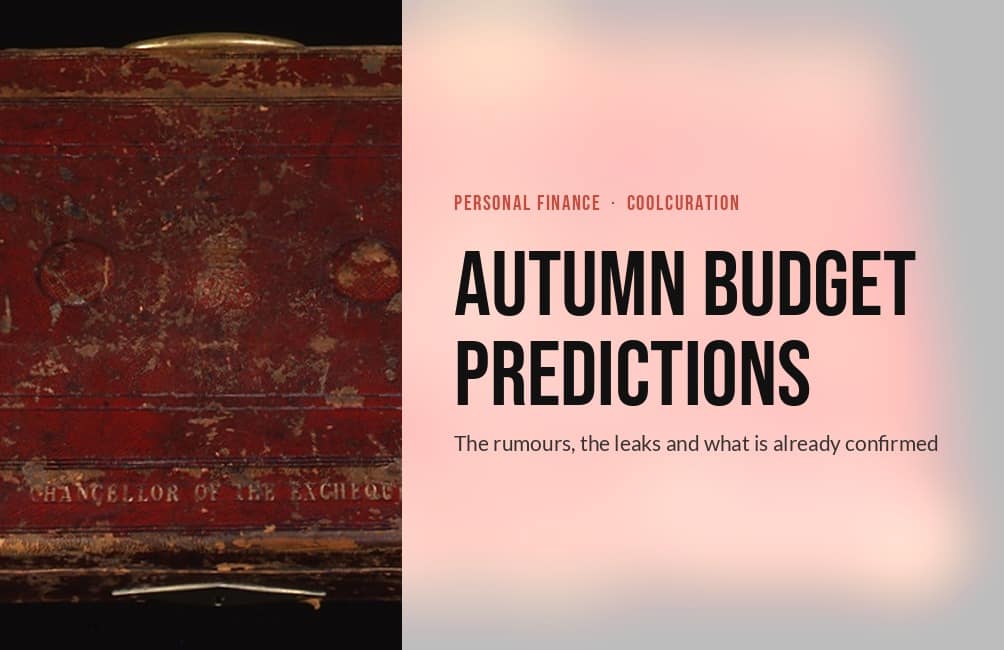
This article is general information, not tax or financial advice, and CoolCuration is not authorised by the Financial Conduct Authority. The rumours on this page were newspaper reports, not government announcements; the outcomes come from the GOV.UK Budget documents published on 28 October 2026. Many measures need legislation before they take effect, so check GOV.UK before you act, and consider a qualified financial adviser for your own circumstances. Tax treatment depends on the individual circumstances of each client and may be subject to change in future. This article contains affiliate and referral links, which are paid links. If you click one and buy or sign up, I earn a commission or referral bonus at no extra cost to you. Brands don't choose what I feature or what I say about them. Cover photograph: Gladstone's Red Box from The National Archives, no known copyright restrictions, cropped and blurred.
What's trending





Recent posts
- Autumn Budget 2026: What It Means for Your Money
 Last updated: 28 October 2026. I checked every figure in this Autumn Budget 2026 guide against the Treasury's GOV.UK documents that day. By Stiv · Design, technology and personal finance Affiliate disclosure: This article contains affiliate and referral links, which are paid links. If you click one and buy or sign up, I earn a… Read more: Autumn Budget 2026: What It Means for Your Money
- Best Action Cameras UK 2026: Seven Picks for WinterLast updated: 27 October 2026 By Stiv · Design, technology and personal finance Affiliate disclosure: This article contains affiliate and referral links, which are paid links. If you click one and buy or sign up, I earn a commission or referral bonus at no extra cost to you. Brands don't choose what I feature or… Read more: Best Action Cameras UK 2026: Seven Picks for Winter
- Self Assessment Deadlines 2026/27: Every Date and PenaltyLast updated: 18 October 2026. I checked every one of these Self Assessment deadlines and penalties against HM Revenue and Customs (HMRC) pages on GOV.UK that day. By Stiv · Design, technology and personal finance Affiliate disclosure: This article contains affiliate and referral links, which are paid links. If you click one and buy or… Read more: Self Assessment Deadlines 2026/27: Every Date and Penalty


No Comments.