
Last updated: 4 May 2026
By Stiv · Design, technology and personal finance
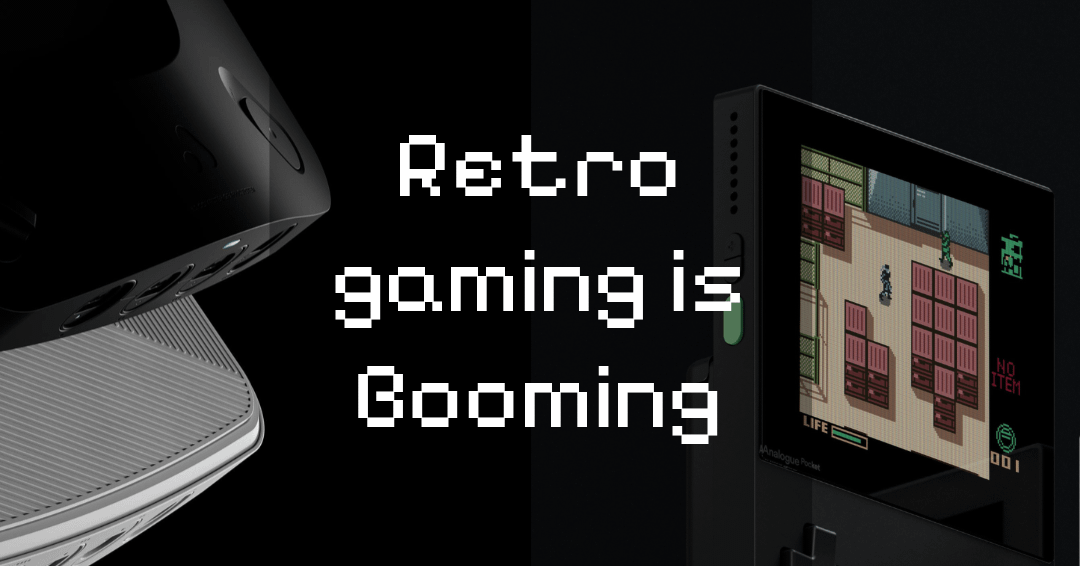
Retro gaming in the UK is having a moment. Actually, it is having much more than a moment. The global retro gaming console market hit $3.8 billion in 2025 and is on track to reach over $4 billion this year. Old cartridges are selling for serious money on eBay. Companies like Analogue are building premium FPGA consoles that sell out in minutes. And a growing number of us are dusting off our childhood game collections rather than queuing up for the latest blockbuster release. So what is actually going on? And if you want in, what is the best way to play retro games in the UK right now?
This article contains affiliate or referral links. If you click through and sign up I may earn a commission or referral bonus at no extra cost to you. It does not affect my editorial view.
Why Are We All Going Back to Old Games?
The simplest answer is nostalgia. If you grew up in the late 1980s or 1990s, you are now in your thirties or forties with disposable income and a very specific itch to scratch. You remember the exact feeling of booting up Pokemon Red on the school bus or pulling off a last-lap overtake in Mario Kart 64. Modern games are brilliant, but they rarely deliver that same uncomplicated joy.
There is also a fatigue factor. Today's big-budget titles often demand dozens of hours, constant online connectivity, and regular microtransaction spending. By contrast, retro games tend to be pick-up-and-play experiences. A session of Tetris or Super Mario Bros Deluxe takes minutes, not months. For people with busy lives, that simplicity is genuinely appealing.
Then there is discovery. Younger gamers who grew up with the PlayStation 4 or Nintendo Switch are now curious about what came before. Pixel art has never gone away as an aesthetic; modern indie hits like Celeste and Sea of Stars prove that the retro look still resonates. For a generation raised on those games, going back to the originals feels like a natural next step.
The Numbers Behind the Boom
This is not just anecdotal. The global retro gaming console market was valued at $3.8 billion in 2025, with projected growth to $4.18 billion in 2026. That represents a 10% compound annual growth rate, which significantly outpaces the broader gaming console market's typical 3 to 5% expansion. By 2033, the retro segment could be worth over $8 billion.
In the UK specifically, the picture is just as strong. The 20-year nostalgia cycle has firmly centred on the early 2000s, with the PlayStation 2, GameCube and original Xbox now among the most sought-after consoles. Prices for original hardware and games have stabilised after the pandemic-era bubble, but demand remains high. UK high-street retro shops have increased prices by 15 to 20% compared to 2024 levels, reflecting sustained interest rather than speculation.
Original Hardware vs Emulation: The Big Debate
If you want to play retro games in 2026, you broadly have three options. Each comes with trade-offs.
Option 1: Buy the original console
This is the purist approach. Track down a working Game Boy, N64, or SNES, buy the cartridges, and play exactly as you did 25 years ago. The experience is authentic, but it comes with practical downsides. Old consoles can be unreliable. Screens on original handhelds are unlit and hard to see. Cartridge batteries die, killing your save files. And prices on the secondary market can be steep, particularly for rarer titles.
If you are considering this route, Back Market is worth a look. They sell certified refurbished consoles and handhelds at lower prices than buying new-old-stock, and everything comes with a warranty. It is a sensible middle ground between hunting on eBay and paying collector premiums.
Option 2: Software emulation handhelds
Budget devices from companies like Anbernic and Miyoo run software emulators that can play ROMs from dozens of systems. You can pick one up for under £100 and load thousands of games onto a microSD card. The convenience is unbeatable. However, emulation is not perfect. Input lag, audio glitches, and graphical quirks are common, particularly with more complex systems like the N64 and PlayStation. For casual play, it is fine. For anyone who cares about accuracy, it is a compromise.
Option 3: FPGA consoles
This is the premium option, and it is where things get really interesting. FPGA (Field-Programmable Gate Array) technology recreates original console hardware at a circuit level. Rather than software pretending to be a Game Boy, an FPGA chip physically reconfigures itself to become one. The result is hardware-accurate gameplay with virtually no input lag.
The two standout FPGA products right now both come from Analogue. The Analogue Pocket is a portable handheld that plays Game Boy, Game Boy Color and Game Boy Advance cartridges natively, with adapter support for Game Gear, Neo Geo Pocket, Atari Lynx and more. We have been using one for several months and it is genuinely impressive. You can read our full Analogue Pocket review or our UK buyer's guide for the deep dive.
For home console fans, the Analogue 3D does the same thing for the N64. It plays every original N64 cartridge from any region, outputs in 4K via HDMI, and supports both original and wireless controllers. If GoldenEye, Ocarina of Time, or Banjo-Kazooie shaped your childhood, the Analogue 3D is the definitive way to revisit them on a modern TV.
Why the UK Is a Tricky Market for Retro Hardware
Most premium retro hardware ships from the US or China. For UK buyers, that means dealing with international shipping, import VAT at 20%, and courier handling fees. The Analogue Pocket, for example, costs $239.99 at retail but lands at roughly £270 to £300 once all charges are factored in. The Analogue 3D follows a similar pattern.
On the flipside, the UK has a thriving second-hand market for original cartridges and consoles. Car boot sales, charity shops, and platforms like eBay and Vinted are all solid hunting grounds. The key is knowing what to look for. Cartridges with dead save batteries are common and cheap to fix if you are handy with a soldering iron. Consoles with cosmetic damage but working internals often go for a fraction of the price of pristine units.
For refurbished tech with a warranty and less hassle, Back Market remains our go-to recommendation. Their grading system takes the guesswork out of buying pre-owned electronics, and they ship within the UK.
Is Retro Gaming Just Nostalgia, or Something More?
Nostalgia is clearly a driving force, but it does not explain the whole picture. The retro gaming boom also reflects genuine frustration with modern gaming's direction. Games-as-a-service models, always-online requirements, day-one patches, and aggressive monetisation have pushed many players towards simpler experiences. A cartridge does not need a 40GB update. It does not have a battle pass. You slot it in and it works.
There is also a growing appreciation for game preservation. Original cartridges and consoles will not last forever. Companies like Analogue are building products specifically designed to keep these games playable for future generations, using hardware-level recreation rather than imperfect software emulation. The openFPGA framework on the Analogue Pocket, for instance, lets community developers build FPGA cores for systems that might otherwise be lost to time.
Whatever your motivation, whether it is chasing childhood memories, discovering classics for the first time, or simply wanting to play something that respects your time, retro gaming has never been more accessible or more appealing.
Frequently Asked Questions
What is the best way to play retro games in the UK?
It depends on your budget and priorities. For casual play, a budget emulation handheld offers the most games for the least money. For authenticity and accuracy, FPGA devices like the Analogue Pocket (handheld) and Analogue 3D (home console) are the gold standard. For a middle ground, refurbished original consoles from Back Market come with a warranty and cost less than buying from collectors.
How big is the retro gaming market?
The global retro gaming console market was valued at $3.8 billion in 2025, with projections pointing to over $4 billion in 2026. Growth is running at roughly 10% per year, well ahead of the broader gaming market.
Why are old games so expensive now?
Supply is limited and demand keeps rising. Prices spiked during the pandemic when people had money to spend and nowhere to go. While the bubble has settled somewhat, popular titles and complete-in-box sets remain expensive. Loose cartridges for common games are still reasonably affordable.
Is FPGA better than emulation?
For accuracy, yes. FPGA recreates original hardware at a circuit level, which eliminates the input lag and graphical quirks common in software emulation. However, FPGA devices are significantly more expensive and typically support fewer systems out of the box. Software emulation is a perfectly good option for casual players.
Can I play retro games on a modern TV?
Yes. FPGA consoles like the Analogue 3D output natively via HDMI. For original consoles, you can buy AV-to-HDMI converters, though quality varies. The best results come from dedicated upscalers like the RetroTINK range, which are designed specifically for retro gaming signals.
You might also like
- Raspberry Pi 400 - A complete computer in a keyboard. Great for tinkering, coding and DIY retro gaming projects.
- Gift Guide for Kids and Big Kids - Cool gift ideas for the gamer (or big kid) in your life.
- Back Market Discount Code - Save on refurbished consoles, phones and laptops with our referral code.
- Chip App - Automate your savings so you can afford the next retro console purchase without thinking about it.
- Google Pixel Watch 4 Review - Another piece of tech we have been living with for months. Here is our honest take.
What's trending





Recent posts
- Premium Bonds Alternatives UK 2026: Prize Savings Accounts Compared
 Four Premium Bonds alternatives open to new savers, with each provider's published odds, prize tables, access rules and protection.
 - Best Audiobooks October 2026: 10 UK Listens RankedTen new audiobooks for October 2026, from a full-cast Dracula with Jonathan Bailey to Russell T Davies reading his own television memoir.
- Louis Fratino at David Zwirner ReviewLast updated: 4 October 2026 By Tristan · Arts, exhibitions and creative culture This is an opinion piece. Views expressed are the author's own and do not constitute professional advice. Exhibition reviewMayfair Saunas, subway cars and a lot of skin in Mayfair Louis Fratino at Zwirner is the American painter's first solo show in London,… Read more: Louis Fratino at David Zwirner Review



No Comments.