
Last updated: 11 April 2026
By Stiv · Design, technology and personal finance
This article contains affiliate or referral links. If you click through and sign up I may earn a commission or referral bonus at no extra cost to you. It does not affect my editorial view.
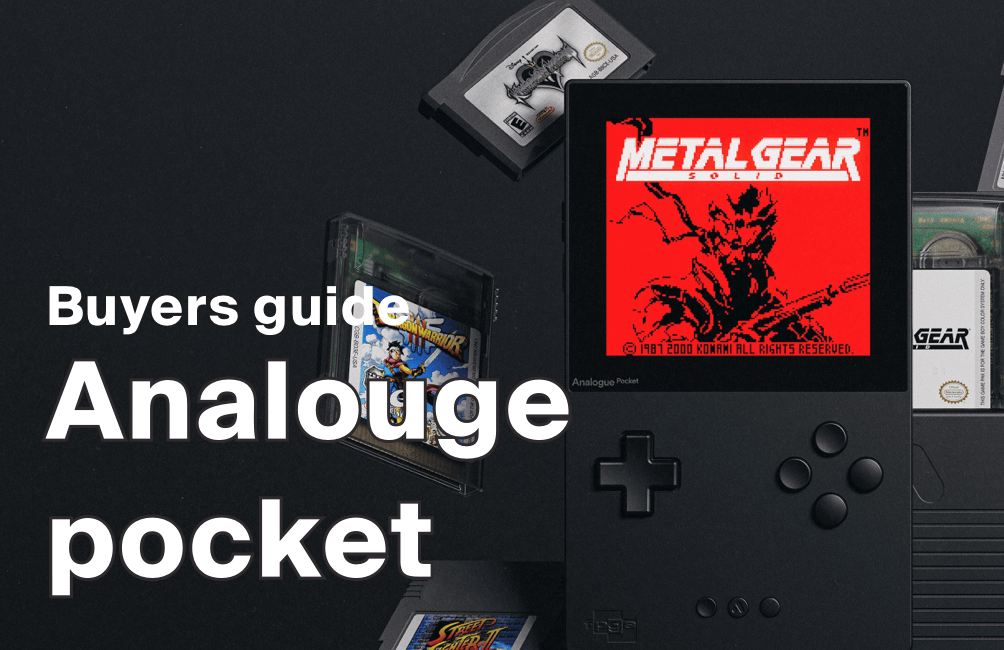
The Analogue Pocket UK buyer's guide covers everything you need to know before spending upwards of £270 on what might be the finest retro gaming handheld ever made. This FPGA-powered device plays Game Boy, Game Boy Color and Game Boy Advance cartridges straight out of the box. With adapters and community cores, it goes much further. We are talking Game Gear, Neo Geo Pocket, SNES, Mega Drive, arcade classics and more. If you have ever wondered whether the Analogue Pocket is worth importing to the UK, this guide has your answers.
What Is the Analogue Pocket?
The Analogue Pocket is a premium handheld games console designed by US company Analogue. It first launched in December 2021 and has been in high demand ever since, with restocks regularly selling out within minutes. As of March 2026, the standard model costs $239.99 (approximately £190 before shipping, VAT and import fees).
What sets it apart from budget retro handhelds is the technology inside. Instead of software emulation, the Pocket uses FPGA (Field-Programmable Gate Array) chips. In practice, this means the device physically reconfigures its hardware to replicate the original console at a circuit level. The result is near-perfect accuracy, minimal input lag, and audio fidelity that software emulators struggle to match.
It is built around an Altera Cyclone V FPGA chip, with a second system FPGA running Analogue OS. You slot original cartridges into the rear of the device and play them on a stunning modern screen. Simple as that.
Analogue Pocket UK Specs at a Glance
Here is a quick rundown of the hardware:
- Display: 3.5-inch LCD, 1600 x 1440, 615 ppi, Gorilla Glass
- Chipset: Dual FPGA (Altera Cyclone V primary + system FPGA)
- Battery: 4,300 mAh lithium-ion, roughly 6 to 10 hours
- Weight: 276g
- Dimensions: 88mm x 149mm x 22mm
- Ports: USB-C, 3.5mm headphone jack, microSD, Game Boy link cable
- Controls: D-pad, four face buttons (diamond layout), two shoulder buttons, Start, Select, Home
- Audio: Stereo speakers
- Extras: Nanoloop built-in synthesiser/sequencer, sleep mode, save states (up to 128 per core)
The display deserves extra attention. At 615 ppi, it offers exactly ten times the resolution of the original Game Boy. That means pixel scaling is perfectly clean with no blurring or interpolation. Analogue also includes "Original Display Modes" that recreate each system's screen characteristics, from backlight effects to pixel grid patterns and LCD subpixel rendering.
Every System the Analogue Pocket Can Play
This is the section most people are here for. Compatibility breaks down into three tiers: native cartridge support, adapter-based cartridge support, and community openFPGA cores loaded via microSD.
Native Cartridge Support (Built In)
These systems work straight out of the box using the Pocket's rear cartridge slot:
- Nintendo Game Boy (1989) - the full library of original DMG titles
- Nintendo Game Boy Color (1998) - all GBC cartridges, plus dual-mode titles
- Nintendo Game Boy Advance (2001) - the complete GBA cartridge library
Analogue claims compatibility with the entire 2,780+ cartridge library across all three formats. In testing, reproduction cartridges and flash carts also work without issues.
Adapter Cartridge Support (Sold Separately)
Analogue sells cartridge adapters that slot into the Pocket's cartridge bay. Each adapter lets you play physical games from a different system:
- Sega Game Gear - standalone adapter. Three display modes: Analogue GG, Original GG, Original GG+
- SNK Neo Geo Pocket / Neo Geo Pocket Color - part of the $99.99 Adapter Set. Four display modes covering both NGP and NGPC
- Atari Lynx - part of the Adapter Set. Three display modes including Analogue Lynx and Original Lynx
- NEC TurboGrafx-16 / PC Engine / SuperGrafx - part of the Adapter Set. Plays HuCard games from all three platforms. Four display modes
With every adapter purchased, you can play physical cartridges from seven distinct console families on a single handheld. That is a serious amount of gaming history in your pocket.
openFPGA Cores (Community-Developed, via microSD)
In July 2022, Analogue launched openFPGA. This framework lets developers create FPGA cores for the Pocket hardware. Because these run on FPGA rather than software emulation, accuracy is exceptionally high. Cores are free to download and easy to install via tools like the Pocket Updater Utility.
Here are the major systems supported via openFPGA as of early 2026:
Home consoles:
- Nintendo Entertainment System (NES) / Famicom (including Famicom Disk System)
- Super Nintendo (SNES) / Super Famicom
- Sega Genesis / Mega Drive
- Sega Master System
- Sega SG-1000
- Atari 2600
- PC Engine / TurboGrafx-16 (also available via cartridge adapter)
Handhelds:
- Game Boy / Game Boy Color / Game Boy Advance (ROM-based, alongside native cartridge support)
- Sega Game Gear (also available via adapter)
- Neo Geo Pocket / Neo Geo Pocket Color (also available via adapter)
- Bandai WonderSwan / WonderSwan Color
- Watara Supervision
- Pokemon Mini
Arcade and other:
- Dozens of arcade cores covering titles from Capcom, Sega, Konami, Taito, Namco, and Irem (including the M92 core)
- PDP-1 (running Spacewar!, arguably the first ever digital video game)
The openFPGA library keeps growing month by month. If a system had a strong presence on the MiSTer FPGA platform, there is a good chance a Pocket port exists or is in development.
How Much Does the Analogue Pocket Cost in the UK?
This is where things get a bit painful for UK buyers. The Analogue Pocket is only sold direct from Analogue's US-based online store. There is no UK retailer or Amazon listing.
As of March 2026, the base price is $239.99 (up from $219.99, following a tariff-related increase). On top of that, UK buyers need to factor in:
- International shipping: approximately $42 (around £33)
- UK import VAT: 20% on the total (goods + shipping)
- Courier handling fee: typically £8 to £12 depending on carrier
All in, expect to pay somewhere between £270 and £300 for the standard Pocket. The aluminium edition runs $499.99, which pushes the UK total well above £500.
Here is a breakdown of the wider ecosystem (all USD):
- Analogue Pocket (standard): $239.99
- Analogue Pocket (aluminium): $499.99
- Analogue Dock (TV output via HDMI): $99.99
- Adapter Set (Lynx, NGP, TG-16): $99.99
- Game Gear Adapter: sold separately
Stock is frequently limited. At the time of writing, the latest batch ships in June 2026. Sign up for notifications on the official Analogue Pocket page to avoid missing the next restock.
The Analogue Dock: Big-Screen Retro Gaming
The Analogue Dock is a separate accessory that turns the Pocket into a home console. Slot the device in and it outputs to your TV via HDMI at 1080p. You can connect up to four controllers wirelessly via Bluetooth (8BitDo controllers work natively) or wired via USB.
It is worth flagging that the Dock is the only way to get video output from the Pocket. There is no standard USB-C display output. If you want to play on a television, the Dock is a mandatory purchase. Some users find this frustrating, and it is probably the most common criticism of the device.
Nanoloop: A Hidden Bonus for Musicians
The Pocket also includes Nanoloop, a built-in digital audio workstation. It is a synthesiser and sequencer designed for music creation and live performance. You can shape, stretch and morph sounds directly on the device. Moreover, the Pocket connects to external DAWs, synthesisers and drum machines via USB-C and optional MIDI cables. For chiptune artists and electronic musicians, this is a genuinely useful feature that you will not find on any competing handheld.
Is the Analogue Pocket Worth It for UK Buyers?
That depends on what you value. If you want the cheapest way to play retro games, a budget emulation handheld from Anbernic or Miyoo will do the job for under £100. Devices like the Steam Deck can emulate everything up to the PlayStation 3 for a similar price to the Pocket.
However, if you care about hardware-level accuracy, premium build quality and playing original cartridges on a gorgeous 615 ppi screen, nothing else comes close. The FPGA approach delivers an experience that software emulation simply cannot replicate, particularly for input-sensitive games and audio-driven titles.
For UK collectors who already own a stack of Game Boy or GBA cartridges, the Pocket is not just a nice-to-have. It is the definitive way to experience those games in 2026. Just be prepared for the import costs and the stock availability lottery.
We will be publishing a full hands-on review of the Analogue Pocket on CoolCuration soon. If you are interested in other refurbished tech options, our Back Market review covers how to buy certified pre-owned devices in the UK.
Frequently Asked Questions
Does the Analogue Pocket use emulation?
No. It uses FPGA technology, which reconfigures hardware at a circuit level to replicate original consoles. This is fundamentally different from software emulation and delivers superior accuracy with lower latency.
Can I play ROMs on the Analogue Pocket?
Yes, through community-developed openFPGA cores. You load core files and ROMs onto a microSD card. Analogue does not officially promote ROM usage, but the openFPGA framework fully supports it.
Does the Analogue Pocket ship to the UK?
Yes. Analogue ships internationally from the US. UK buyers should expect to pay around $42 shipping, plus 20% import VAT and a courier handling fee. Total cost typically falls between £270 and £300 for the standard model.
What cartridges work without adapters?
Game Boy, Game Boy Color and Game Boy Advance. All three formats fit the built-in cartridge slot.
How many systems can the Analogue Pocket play in total?
With native support, adapters and openFPGA cores combined, the Pocket can play games from over 20 different systems. These range from the 1977 Atari 2600 through to the 2001 Game Boy Advance, plus dozens of arcade titles.
What is the battery life?
Analogue rates the 4,300 mAh battery at 6 to 10 hours depending on brightness, volume and which system you are running. Sleep mode is very efficient and barely drains the battery between sessions.
Is there a cheaper alternative to the Analogue Pocket?
For software emulation, handhelds from Anbernic (like the RG40XX series) offer broad compatibility for well under £100. However, these use emulation rather than FPGA, so accuracy and latency will not match the Pocket. For original cartridge play specifically, the Analogue Pocket has no real competitor.
You might also like
- AeroPress Coffee Maker - Another product that punches well above its weight. The perfect companion for long gaming sessions.
- Gift Guide for Techies - Our full roundup of the coolest tech gifts for gadget lovers.
- Back Market - Prefer refurbished tech? Here is how to save on certified pre-owned devices in the UK.
- Chip App - Automate your savings so you can build up funds for the next big tech purchase without thinking about it.
- Soundcore Sleep A20 Review - If you love niche tech that does one thing brilliantly, this review is for you.
What's trending





Recent posts
- Best Audiobooks October 2026: 10 UK Listens Ranked
 Ten new audiobooks for October 2026, from a full-cast Dracula with Jonathan Bailey to Russell T Davies reading his own television memoir.
 - Louis Fratino at David Zwirner ReviewLast updated: 4 October 2026 By Tristan · Arts, exhibitions and creative culture This is an opinion piece. Views expressed are the author's own and do not constitute professional advice. Exhibition reviewMayfair Saunas, subway cars and a lot of skin in Mayfair Louis Fratino at Zwirner is the American painter's first solo show in London,… Read more: Louis Fratino at David Zwirner Review
- What Is a Sprive Boost? Seven Days, and What It Actually PaysA Sprive boost lifts your cashback rate for seven days, and it arrives on its own. What mine paid, and why Supercharge is a display toggle rather than extra cashback.



No Comments.