
Last updated: 9 October 2026
By Tristan · Arts, exhibitions and creative culture
About fifty Magrittes, 46 artists who came after him, and it costs nothing to get in.
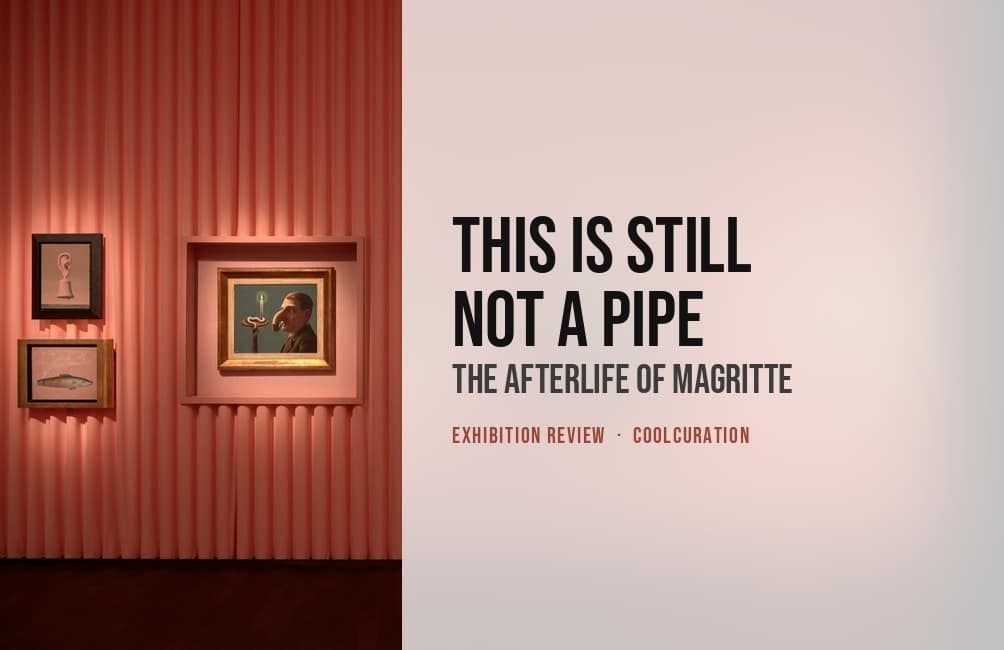
This Is Still Not a Pipe is the best show to see in London this year, by far. Subtitled The Afterlife of Magritte, it fills Gagosian's Grosvenor Hill gallery with more than a hundred works. Around fifty are by René Magritte himself, from 1926 to the year he died. The rest come from 46 artists who followed him. They range from Ed Ruscha and Yoko Ono to Sarah Lucas. Entry is free, and it runs until 12 December 2026.
This is an opinion piece. Views expressed are the author's own and do not constitute professional advice.
Cool Factor: 5/5
01 / The show
What's on: This Is Still Not a Pipe at Gagosian
Curated by Jasper Sharp and Bernard Lagrange, with the Fondation Magritte, at 20 Grosvenor Hill until 12 December 2026.
The title comes from a Magritte drawing in the show. La Trahison des images. Ceci continue de ne pas être une pipe (The Treachery of Images. This Is Still Not a Pipe, 1952) is his own update of the 1929 painting everyone knows. The pipe is the same. The caption now says it still is not one.
Around that joke, the gallery has gathered loans from museums and private collections across Magritte's whole career. According to Gagosian's exhibition page, it was planned with the Fondation Magritte. Lenders include the Neue Nationalgalerie in Berlin, Museum Voorlinden and the Heidi Horten Collection. Time Out calls it the first major London exhibition of Magritte in more than 30 years.
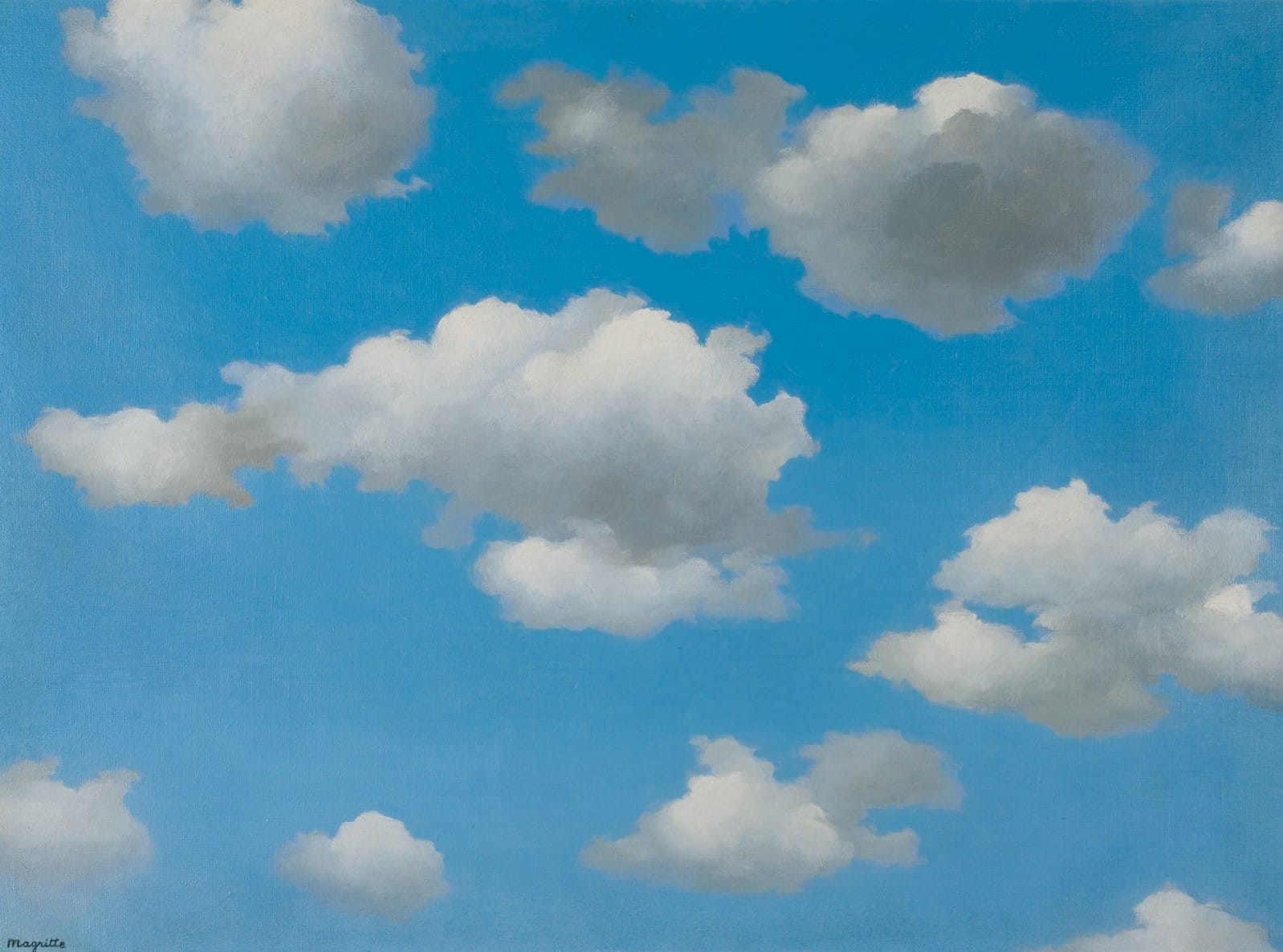
The Voorlinden loan is La Malédiction (The Curse, 1931). According to Gagosian, it is the earliest single canvas Magritte painted of nothing but cloudy sky, 54 x 73cm (21¼ x 28¾ in).
Larry Gagosian sums up the premise in the press release: "It is difficult to imagine a world today without Magritte."
02 / The critics
What the critics are saying about This Is Still Not a Pipe
The Standard, FAD Magazine, the Guardian and James Nicholls.
The London Standard's Martin Roth put it in four words: "This is a joy." He also praised a gallery "transformed into a dazzling curtained space". The newer works, he wrote, "chime with his wit, rather than adopt slavish worship."
In FAD Magazine, Herbert Wright called the four-room presentation "calming and simply gorgeous". He went further, too. "Without the Magrittes, the other artists at Grosvenor Hill would still have made this world-class group show."
Meanwhile Jonathan Jones in the Guardian found it "full of quirky, unexpected treasures". He singled out La Clef des songes (The Interpretation of Dreams, 1935) as "a modern masterpiece". Finally, the art writer James Nicholls gave it five stars and called it "beautifully conceived, superbly installed and dramatically lit".
03 / The setting
Why This Is Still Not a Pipe lands in Mayfair, ninety years on
The 1936 International Surrealist Exhibition was held at the New Burlington Galleries, a short walk away.
Gagosian is marking two anniversaries. The first is local. In 1936 the International Surrealist Exhibition opened at the New Burlington Galleries, a few streets from Grosvenor Hill. As a result, Magritte's name travelled well beyond Belgium. The second is twenty years since Magritte and Contemporary Art: The Treachery of Images at LACMA in Los Angeles. That 2006 to 2007 show had installations by John Baldessari.
The LACMA show was the first big look at Magritte's influence on artists after the war. This Is Still Not a Pipe asks the same question, then brings it up to date. Several LACMA artists are back as well, including Robert Gober and Ed Ruscha.
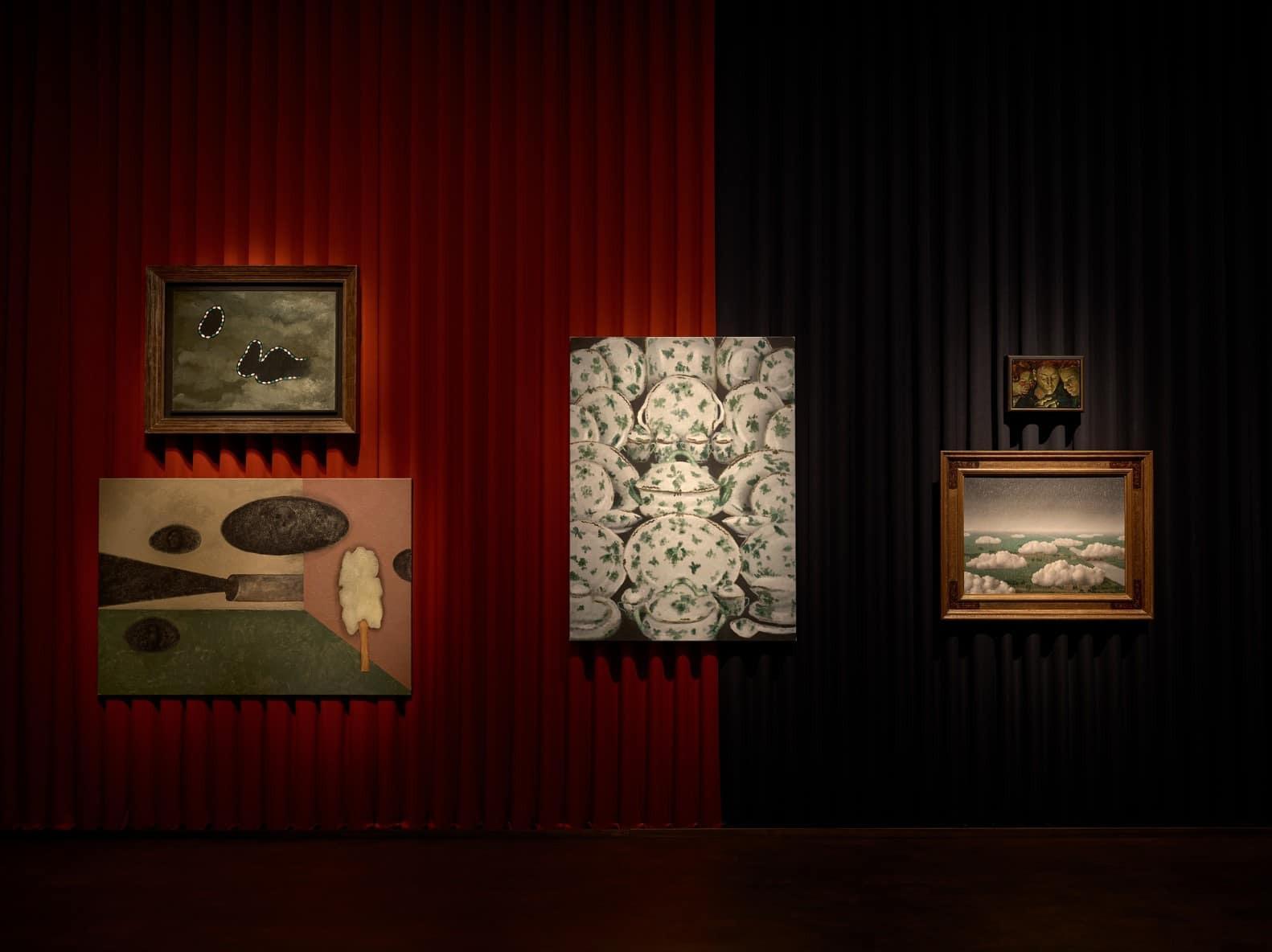
Grosvenor Hill itself is a big, warehouse-scale space tucked behind Bond Street. Earlier this year it held Christo's Air, which needed every metre of ceiling. This time, though, the rooms are hung with pleated curtains and built round low stages. In one room the curtains switch from red to black halfway along the wall, with a Magritte cloudscape hung against the black.
04 / The entrance
A drunk lamppost, and a photograph of a funeral
I went on a Wednesday afternoon in early October. The reception holds no Magrittes at all. Instead, Alex Da Corte's Streetlamp for Drunk (2018) stands about three metres tall. It is a red-lit lamppost on splayed legs, as if it had been out all night. Close by are Georges Thiry's black-and-white photographs, including Enterrement de René Magritte (The Funeral of Magritte, 1967). So the show opens on the day he was buried. Every room after that shows he is still around.
Da Corte is a good guide to the whole thing. In a Gagosian Quarterly interview, he points out that Magritte paints real things: a boot, an apple, a rose. Instead, what makes the pictures strange is their scale, their placing and the company they keep. "Images of objects will fail you because they're not the object itself," as he puts it.
05 / Room two
Magritte's own hat, a Koons train and a sky that is day and night at once
The big second room is where the conversation between Magritte and his heirs really starts. A long, low black stage runs down the middle with fifteen sculptures on it. Two are by Magritte, and next to them sit his own bowler hat and suitcase. Along the stage runs Jeff Koons's stainless steel Jim Beam - J.B. Turner Train (1986), almost three metres long.
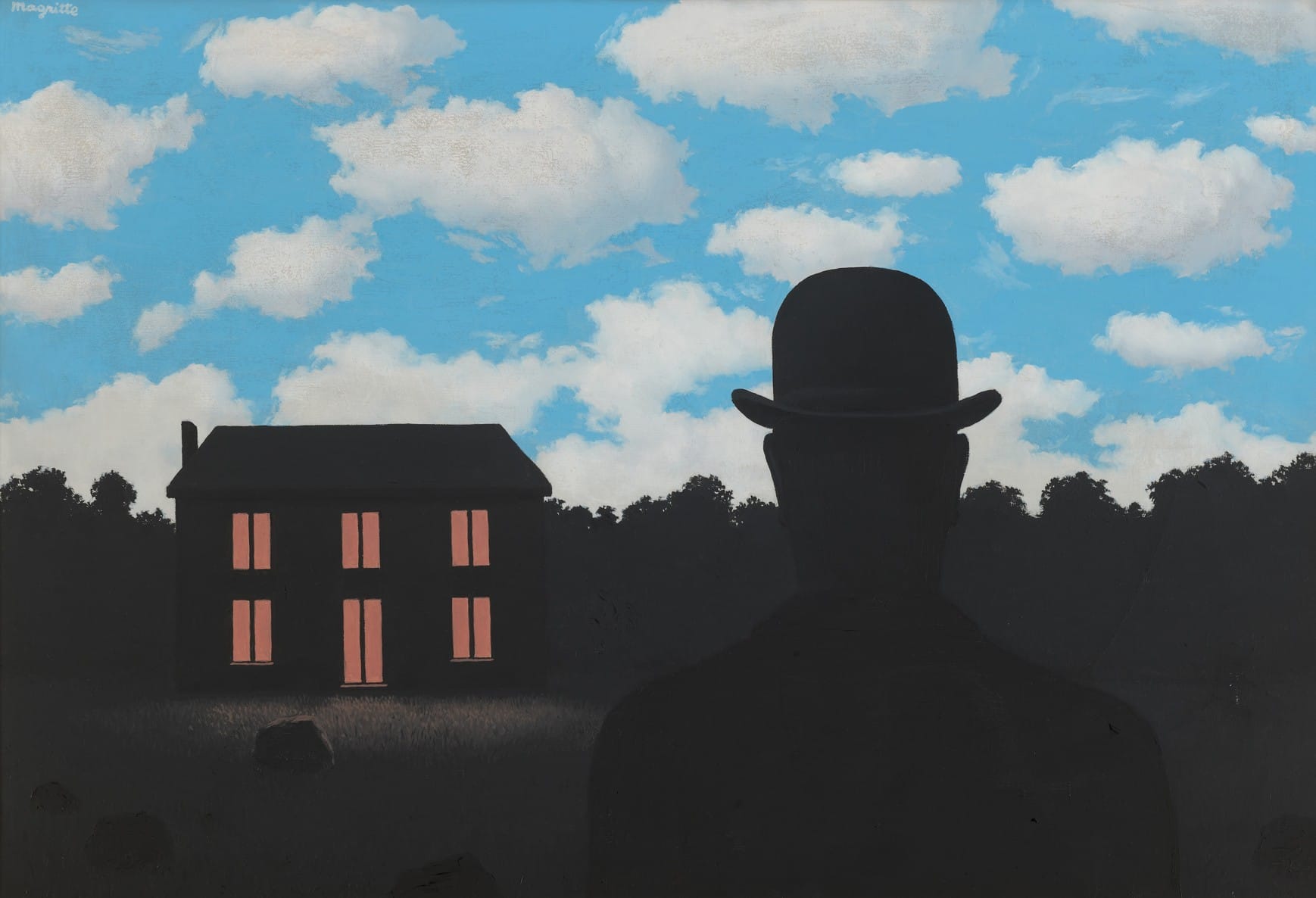
On the walls, the picture to stand in front of is L'Empire des lumières (The Dominion of Light, 1961). It is a night street under a daytime sky, lent by the Heidi Horten Collection. According to Gagosian, it is the last of that series. It is also the only one with a bowler-hatted figure against the sky. For scale, a 1954 version sold for $121.2 million at Christie's in 2024, as Artnet reported. Here you can see one for nothing.
Nearby, L'Art de vivre (1967) gives a suited man a vast balloon of a head. Beside it, George Condo's The Apple Picker (2009) has a tiny apple for a head. The clouds are here too, in paintings and in the sculpture Ciel-bouteille (about 1943), a bottle painted with sky. Yoko Ono answers them with Sky TV (1966), a television showing a live feed of the sky outside. One cloud painting stayed with the Guardian's Jones. "A painting of puffy white clouds held me across the gallery and still floats ineffably in my mind."
06 / Room three
Twenty-five works on one wall
The third room packs about 25 works onto a single wall, roughly half of them by Magritte. Michael Craig-Martin's An Oak Tree (1973) sits among them. It is a glass of water on a shelf, with a text insisting it is an oak tree. In effect, it is the pipe argument restated more than forty years on.
The Magrittes on this wall show his range. La Folie des grandeurs (Megalomania, about 1942) builds a woman out of tapering slices of torso. Then there are the drawings. FAD's Wright singled out an untitled 1966 sheet of a fish and clouds. Newer pieces by Soshiro Matsubara, Matthew Barney and Bennett Miller fill out the hang.
The smaller works repay close looking, too. One framed gouache turns a three-masted ship into the sea itself. Its sails and hull are painted in the same ripples as the water.
07 / The pipe
Why This Is Still Not a Pipe is still not a pipe
One drawing gives the show its title. One painting gives it a self-portrait.
The 1929 pipe painting belongs to LACMA in Los Angeles, so it is not in the show. Instead, the 1952 version does the job. It is ink on paper, smaller and drier. The new caption keeps a joke going that Magritte told for decades.
The real pipe picture is La Lampe philosophique (The Philosopher's Lamp, 1936), which hangs in the final room. It is 50 x 66cm (19¾ x 26 in), on loan from a private collection in Brussels. A man in profile, usually read as Magritte, has a nose that curls into his own pipe. Beside him, a candle winds round itself like a snake.
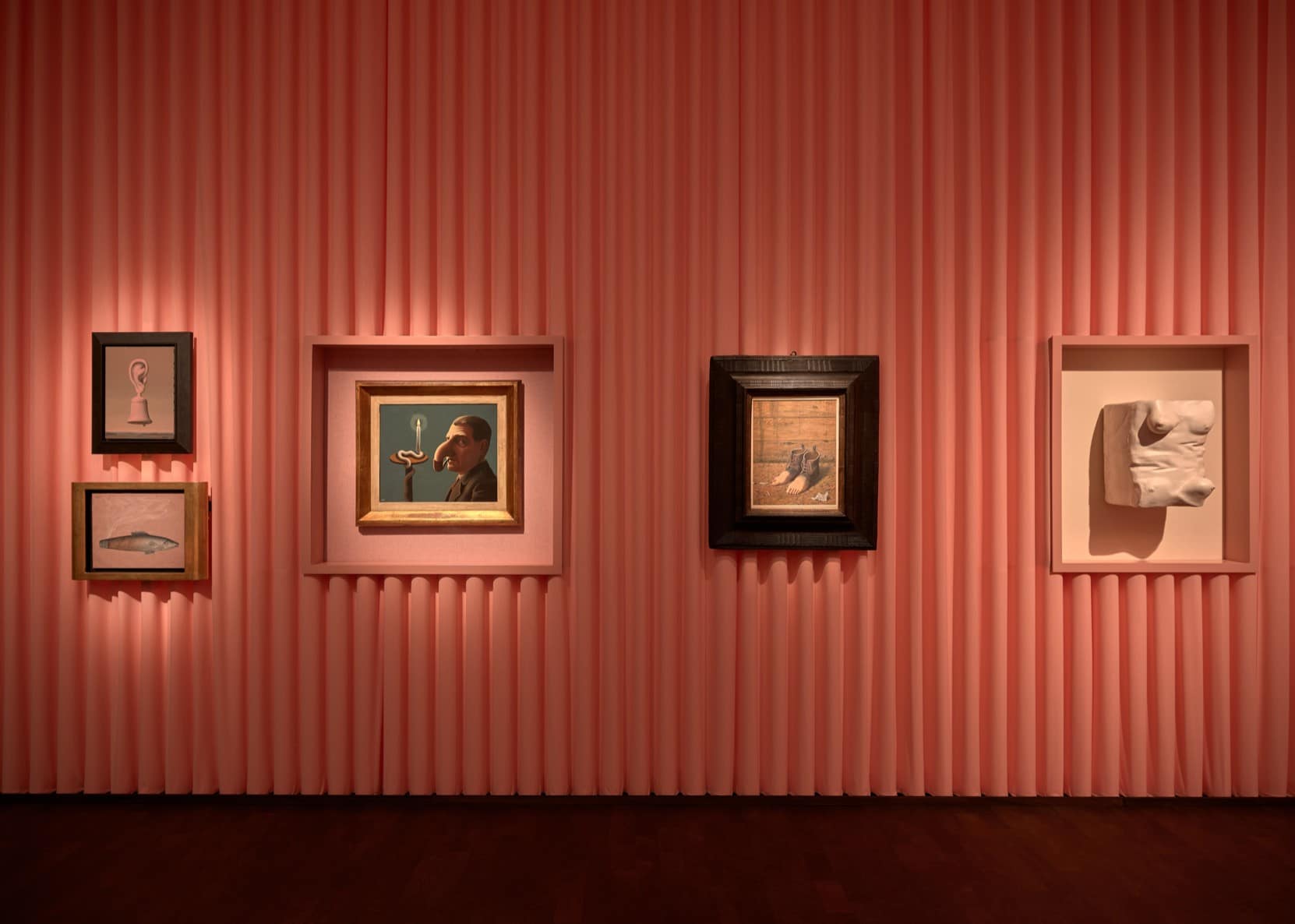
Magritte described it as a thinker shut inside his own head, held captive by his pipe. It also links all three shows. It was at LACMA in 2006. He also made it just before the 1936 London show, which hung a gouache of it.
Magritte's own bowler hat and suitcase sit on the stage in room two.
08 / The final room
Pink and slate curtains, and a stage made of brick
The last room has the same layout as room two. This time, though, the stage is red brick. Pleated curtains run round the walls, dusty pink on one side and slate blue on the other. Every painting is lit on its own.

On the brick, Sarah Lucas's SLAG (2022) sprawls across a chair. It is a figure made of stuffed grey tights in gold platform shoes. Isabelle Albuquerque's Orgy For Ten People In One Body: 7 (2021) reclines nearby. Both are more provocative than Magritte's own nudes. As the Standard's Roth put it, "Sarah Lucas's SLAG sculpture makes for fine company here."
Round the walls, the pairings get sharper. Magritte's Le Musée d'une nuit (1927) divides its frame into compartments. So do Betye Saar's Window of Sirens (1966) and an untitled 1992 piece by David Hammons beside it. Then Le Bouquet tout fait (The Readymade Bouquet, 1956) meets Charles LeDray's Backward Suit (2010 to 2013), a tweed jacket on a hanger.
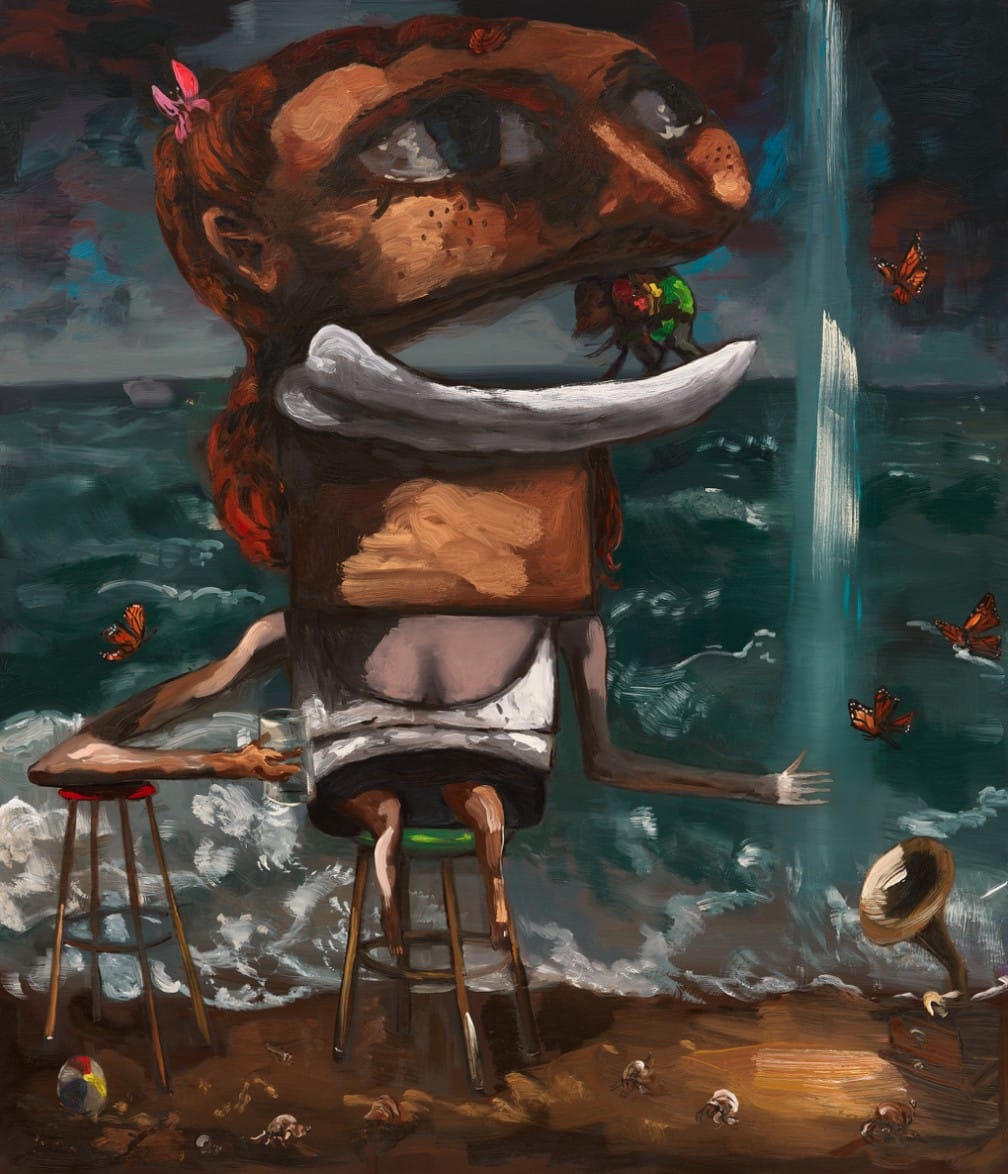
This room also holds the oldest Magritte on show, Les Fleurs du voyage (The Flowers of the Journey, 1926). It hung in his first solo show in Brussels in 1927. Next to it hang three paintings from his brash 1948 vache period, made partly to annoy Paris. Finally, Dana Schutz's new The Singer (2026), at 203.2 x 175.3cm (80 x 69 in), matches their energy.
09 / The small print
What stops This Is Still Not a Pipe being perfect
The stages get busy. With fifteen sculptures on the black stage in room two, the smaller pieces can disappear behind the Koons train. Magritte's own objects work best with space around them, and here they share it.
The 1929 pipe painting is not here. Anyone going for the original Treachery of Images will need a flight to Los Angeles. Still, the 1952 drawing and La Lampe philosophique carry the title well.
Neither touches the score. The Magrittes alone would justify the trip, and the pairings add to them rather than distract.
10 / Why now
Why Magritte matters more in 2026, not less
The curators make the case themselves. Jasper Sharp told Artnet before the opening: "the most contemporary artist in the entire exhibition is probably going to be Magritte himself." Then his co-curator Bernard Lagrange added, "He's a rare artist that's managed to become culturally iconic beyond the art world."
Sharp also told Country Life, "He had an incredibly deadpan way of painting." Plenty of painting today is made in that same flat, playful way. Before he painted full time, Magritte designed wallpaper, posters and adverts. That helps explain the finish.
Meanwhile Da Corte ties the work to AI. A picture that is not the thing it shows is exactly the problem everyone now has with generated images. So the question the 1929 pipe asked now applies to every picture on your phone, and This Is Still Not a Pipe puts it in front of you again.
11 / Value
Value for money: a museum show for nothing
This Is Still Not a Pipe is free. That matters, because this is a museum-level loan list. Works have come from Berlin, Wassenaar and Vienna, and from private collections that rarely lend. At a public museum, a show like this would normally come with a ticket price.
The one thing you might pay for is the catalogue. Gagosian has confirmed a fully illustrated one, so ask at the front desk.
If you are making a day of it, Mayfair has more free shows within walking distance. Our Frieze London guide lists the free gallery shows nearby. Over on Cork Street, Quentin James McCaffrey at Alison Jacques made a sharp comparison. It closed on 3 October.
12 / Getting there
Practical info for This Is Still Not a Pipe at Gagosian
- Where: Gagosian, 20 Grosvenor Hill, London W1K 3QD.
- When: until Saturday 12 December 2026.
- Hours: Tuesday to Saturday, 10am to 6pm. Closed Sunday and Monday.
- Price: free, with no booking.
- Nearest Tube: Bond Street, on the Central, Jubilee and Elizabeth lines, is about five minutes' walk. Green Park is about ten.
- Contact: +44 20 7495 1500 or [email protected], including for access questions.
Give it at least an hour, because there are more than a hundred works across four rooms. Also, weekday afternoons are calmer than Saturdays, especially in the run-up to Christmas.
13 / The verdict
The verdict on This Is Still Not a Pipe
Cool Factor
★★★★★
5 out of 5
This is the best show to see in London this year, by far. It runs from Magritte's first solo show in 1927 to the last Empire of Light. It even puts his own hat and suitcase in the room. Then it proves his point about images with 46 artists who came after him.
Overall, This Is Still Not a Pipe is a 5/5 Ice cold. It earns that for L'Empire des lumières, La Lampe philosophique and a rare run of early canvases. And it costs nothing. The only things short of perfect are a crowded central stage and a famous painting that stayed in Los Angeles. Neither is a reason to miss it. Go before 12 December, and go on a weekday.
This Is Still Not a Pipe: FAQs
Is This Is Still Not a Pipe free?
Yes. This Is Still Not a Pipe is free to visit until 12 December 2026, with no booking.
Is the original Ceci n'est pas une pipe painting in the show?
No. The 1929 Treachery of Images belongs to LACMA in Los Angeles. Instead, the show has his 1952 ink version, which gives the exhibition its title.
How many Magritte works are in the exhibition?
Around fifty, including paintings, drawings, gouaches and sculpture, from 1926 to 1967. They hang alongside work by 46 other artists.
What are the opening hours?
Tuesday to Saturday, 10am to 6pm. The gallery is closed on Sundays and Mondays.
Which artists are shown alongside Magritte?
Names include Ed Ruscha, Yoko Ono, Vija Celmins, Betye Saar, Jeff Koons and Robert Gober. Sarah Lucas, Mona Hatoum, Maurizio Cattelan, George Condo and Dana Schutz are there too.
Is This Is Still Not a Pipe worth visiting?
In my view, it is the best show to see in London this year. This Is Still Not a Pipe is a museum-scale loan show that costs nothing.
How long should I allow for This Is Still Not a Pipe?
At least an hour, because there are more than a hundred works across four rooms.
More from CoolCuration
- Louis Fratino at David Zwirner: another free Mayfair show this autumn, with Fratino's art-history borrowings in his own words.
- Anish Kapoor at the Hayward Gallery: the red balloon, the Vantablack and whether the ticket is worth it before 18 October.
- Not a Koons: the £30 money box that plays on Koons, for anyone who liked the steel train.
- Great Women Artists: a survey of women artists across five centuries, and a good next step after Saar, Celmins and Ono.
- Gifts for artists and creatives: our full collection for anyone who leaves a gallery wanting to make something.
What's trending



Recent posts
- This Is Still Not a Pipe Review: Magritte at Gagosian
 My This Is Still Not a Pipe review: around fifty Magrittes and 46 artists who followed him, free at Gagosian until 12 December. Cool Factor 5/5.
 - Best ETF Platform UK 2026: What It Really Costs to Hold ETFsWhich is the cheapest way to hold ETFs in the UK? I priced eight platforms on the same job, on a £2,000 pot and a £20,000 one, and the ranking flips.
- Figma Creator Micro Review: Beautiful, But Do You Need It?My Figma Creator Micro review: beautiful design and admirable build, but a price I found hard to justify. Cool Factor 3/5.


No Comments.