
Last updated: 10 April 2026
By Tristan · Arts, exhibitions and creative culture
This is an opinion piece. Views expressed are the author's own and do not constitute professional advice.
This article contains affiliate or referral links. If you click through and sign up I may earn a commission or referral bonus at no extra cost to you. It does not affect my editorial view.
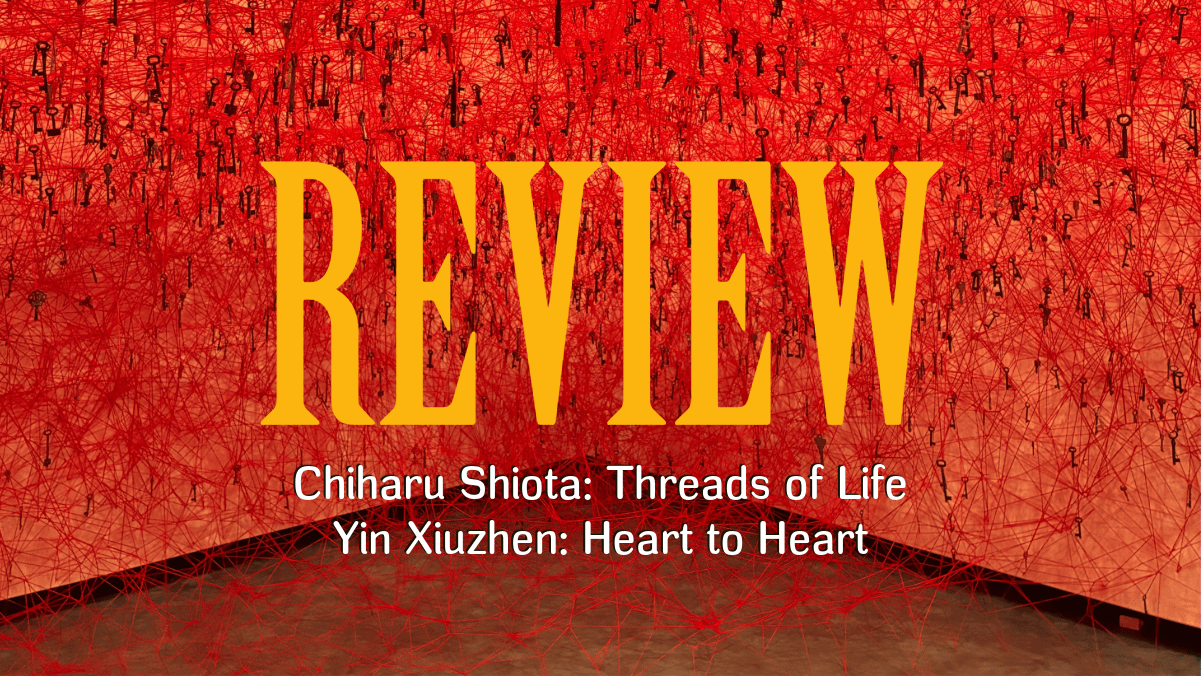
Our Chiharu Shiota Hayward review covers two concurrent exhibitions at the Hayward Gallery on London's Southbank: Threads of Life and Yin Xiuzhen's Heart to Heart. For £19 you get entry to both shows, and honestly, that felt like a steal. One of these exhibitions left us speechless. The other left us a little lukewarm. Together, they make for a genuinely memorable afternoon.
Cool Factor: Chiharu Shiota — 5/5 | Yin Xiuzhen — 3/5
What's on at the Hayward Gallery?
Running from 17 February to 3 May 2026, these two exhibitions take over the entire Hayward Gallery. Downstairs, Chinese artist Yin Xiuzhen presents Heart to Heart, her first major UK survey spanning 30 years of work. Upstairs, Japanese artist Chiharu Shiota fills the top-floor galleries with Threads of Life, a series of immersive thread installations exploring memory, connection, and loss. Both artists work with everyday materials like clothing, thread, and found objects. Beyond that shared starting point, the experiences could not be more different.
Chiharu Shiota: Threads of Life — First impressions
You know something special is happening the moment you reach the top of the Hayward's concrete staircase. A video screen greets you with a film of Shiota's own body entangled in tubes pumping red dye, accompanied by the sound of a heartbeat. It sets the tone perfectly. This is art that gets under your skin before you even enter the first room.
Then you step through, and the scale hits you. Thousands of yards of bright red woollen thread fill the entire gallery from floor to ceiling, wall to wall, creating an intricate web so dense it turns the light crimson. In the centre of it all, a pair of old wooden doors stand ajar, inviting you to walk through. Above your head, around 20,000 rusty old keys dangle from the threads like strange metallic rain.
The Upside Down in thread
It is hard not to draw parallels to Stranger Things and the Upside Down. Walking through the red thread installation genuinely felt like stepping into another dimension: familiar objects suspended in an alien atmosphere, everything connected by something you cannot quite see. If you enjoyed the eerie beauty of the Stranger Things stage show, Shiota's work takes that otherworldly quality and cranks it up to eleven. There is also something wonderfully reminiscent of the flying keys scene in the first Harry Potter film. Twenty thousand of them overhead, each one unique, each with its own history and story.
Shiota's use of red thread draws on the Japanese belief in the "red thread of fate," the idea that certain people are destined to meet, bound together by an invisible cord. In practice, though, the symbolism fades into the background. What stays with you is the sheer physical experience of being inside it. Your voice drops. Your pace slows. The space handles you, rather than the other way around.
State of Being and Letters of Thanks
After the red room, a white dress floats within a dense cocoon of tightly woven black thread. This piece, State of Being (Dress), felt genuinely magical. Where the red room overwhelms with scale, the dress captivates through stillness. It hovers like a ghost caught mid-movement, wrapped so precisely in dark thread that every fold and crease takes on weight and meaning. Shiota treats clothing as a second skin, something that holds the memory of the body long after the person has gone. In this piece, that idea becomes completely tangible.
Next comes Letters of Thanks, a corridor of red thread cascading from the ceiling with 10,000 handwritten thank-you letters suspended mid-flutter. The concept is lovely, and the visual is undeniably striking. However, after the intensity of the red room and the quiet poetry of the dress, this installation felt a touch less impactful for us. It photographs beautifully, but the emotional register sits slightly below the two pieces that came before it.
During Sleep: The showstopper
And then you walk into the final room, and everything changes again. During Sleep fills the gallery with metal-framed hospital beds, each one engulfed in a dense canopy of black thread so thick and intricate it looks like the room itself has grown a nervous system. The scale is beyond anything in the rest of the show. It is mind-boggling to stand in front of and even harder to imagine installing.
On select dates (7 March, 11 April, and 2 May), performers actually climb into these beds as part of a live performance piece. Sadly, the beds were empty when we visited. Even so, the rumpled sheets left behind became their own kind of evidence, traces of bodies passing through, proof of presence in absence. The whole installation recalled Anselm Kiefer's monumental works at White Cube a few years back: rows of decaying beds filling a vast space, heavy with history and atmosphere.
This room alone is worth the admission price. As a Chiharu Shiota Hayward review highlight, During Sleep is the piece that will stay with us longest. It is art at its most ambitious: physically overwhelming, conceptually rich, and deeply, quietly affecting.
Cool Factor — Chiharu Shiota: Threads of Life
★★★★★
5 out of 5 — Ice cold
If the show leaves you wanting to take a piece of Shiota's world home, the Southbank Centre shop sells a limited edition Ukiyo-e woodcut print from the artist. At £3,250 for an edition of 120, it is a serious collectors' piece, but a stunning one.
Yin Xiuzhen: Heart to Heart — First impressions
Downstairs, Yin Xiuzhen's Heart to Heart occupies the Hayward's lower galleries. The first room transforms the space into a mock airport arrivals hall, complete with a baggage carousel, trolleys, and airport seating. Inside battered suitcases on the carousel, miniature cityscapes built from reclaimed fabric represent cities like London, Seoul, New York, and Shenzhen. Overhead, a giant aeroplane constructed entirely from second-hand clothing hovers above the scene.
It is playful, colourful, and immediately engaging. However, for us, the first room landed more on the comical side than the profound one. The fabric buildings are charming in a whimsical, craft-project kind of way, and the soft-sculpture plane drew plenty of smiles from families. There is a serious message buried in there about globalisation, migration, and the portable nature of home, but the delivery softens the critique almost entirely.
A Heart that didn't quite beat
The centrepiece of Yin's show is A Heart to Heart, a monumental walk-in sculpture shaped like a human heart, constructed from donated second-hand clothing. Grounded in the Chinese concept of xin (heart-mind), the piece invites visitors to step inside and reflect. We did go in. Unfortunately, it did not land for us. The interior felt somehow unfinished, as though the concept had not been pushed far enough. We appreciate on-the-nose work when it commits fully, but this sat in an awkward middle ground: too literal to be mysterious, not immersive enough to be transformative.
The second space: Where Yin finds her stride
In contrast, the upper level of Yin's exhibition improved considerably. Collective Subconscious (Blue) is a minibus sliced in half and extended into a long caterpillar-like vehicle, its body stretched over a metal frame and covered in 400 stitched garments. With tiny wheels lining each side, it looks like an overgrown Hungry Caterpillar on a road trip. One reviewer aptly compared it to those children's caterpillar cakes. You peer in through the side door down a fabric-lined corridor and imagine the ghosts of everyone who once wore those clothes.
Elsewhere on this level, fabric-wrapped shelves and reclaimed market chairs carried a quieter power. These smaller pieces felt more considered, more grounded in Yin's core concern: what happens to the things people leave behind when cities change too fast. A video piece, Washing River, shows locals scrubbing blocks of frozen polluted river water, a futile and poignant gesture against environmental destruction. These moments rescued the second half of the exhibition from the whimsy of the first room.
Cool Factor — Yin Xiuzhen: Heart to Heart
★★★☆☆
3 out of 5 — Cool
Value for money
At £19 for a standard adult ticket covering both exhibitions, this represents excellent value. You will easily spend two to three hours here, possibly more if you take your time with Shiota's installations (and you should). Southbank Centre members get free entry. Concessions are also available. For context, many comparable London shows charge more for a single exhibition. Getting two for under twenty quid feels generous, especially when one of them is genuinely world-class.
The verdict
Chiharu Shiota's Threads of Life is, without exaggeration, one of the most beautiful and immersive exhibitions we have seen in London. The three main installations build on each other perfectly, moving from overwhelming scale to intimate poetry to jaw-dropping ambition. It is art that makes your body respond before your brain catches up. If you see one show this spring, make it this one.
Yin Xiuzhen's Heart to Heart is a decent companion piece. The second space holds some genuinely strong work, and the Collective Subconscious van is brilliantly inventive. However, the first room's playfulness undercuts the emotional weight, and the centrepiece heart sculpture did not land for us. It does the job but does not reach the heights of the show upstairs.
Together, they make for a properly good afternoon at the Hayward. The Brutalist architecture of the gallery suits both artists perfectly, and at £19 all-in, the combined ticket is a no-brainer. Both exhibitions run until 3 May 2026, so do not leave it too late. Book tickets via the Southbank Centre.
Overall, Chiharu Shiota earns a full 5/5 Ice cold. The red thread room, the floating dress, and During Sleep combine to create something genuinely unforgettable, an exhibition so immersive and intricate that it redefines what you expect from a gallery visit. It did not quite hit that same peak with Yin Xiuzhen, whose Heart to Heart lands at a solid 3/5 Cool: respectable, occasionally brilliant, but not consistent enough to match the floor above. What prevented Yin from scoring higher was the uneven first room and a centrepiece that felt undercooked. What earned Shiota the full five stars was every single second of walking through her web-like world, barely breathing, completely absorbed.
Frequently asked questions
Is Chiharu Shiota at the Hayward Gallery worth visiting?
Absolutely. Threads of Life is one of the standout exhibitions in London right now. The three main installations are breathtaking in scale and detail. If you enjoy immersive art, this is essential viewing. Time Out gave it five stars, and we agree entirely.
How much are tickets for Chiharu Shiota and Yin Xiuzhen at the Hayward?
A standard adult ticket costs £19 and covers both exhibitions. Concessions are available, and Southbank Centre members get free entry. Prices may vary with demand.
How long should I spend at the Hayward Gallery exhibitions?
Allow at least two to three hours for both shows. The Shiota half can get busy, so expect some queuing between installations. Take your time with it. The slower pace actually suits the work well.
Can I see both exhibitions with one ticket?
Yes. A single ticket grants access to both Chiharu Shiota: Threads of Life (upper galleries) and Yin Xiuzhen: Heart to Heart (lower galleries). Both run until 3 May 2026.
Are there live performances at Threads of Life?
On select dates (7 March, 11 April, and 2 May 2026), performers sleep in the beds of the During Sleep installation. These performances are included with exhibition entry. Check the Southbank Centre website for timings.
Is the Hayward Gallery accessible?
Yes. The Southbank Centre offers step-free access, blue badge parking, and a range of accessibility provisions. Full details are on their Access page.
More from CoolCuration
- Anish Kapoor at the Hayward Gallery Review. The show that followed Shiota into the same rooms, and a very different verdict.
- Stranger Things: The First Shadow Review — Our take on the West End show that conjures its own kind of Upside Down.
- Howard Hodgkin Indian Leaves Print — A collectible print edition for art lovers who want gallery-quality work at home.
- Gift Guide for Artists and Creatives — Curated picks for anyone who appreciates great design and contemporary art.
- Rose Wylie at the Royal Academy Review — Another London exhibition that left a lasting impression on us.
- National Art Pass — Save on gallery entry across the UK with the Art Fund's annual pass.
- Chip App — An easy way to save towards your next gallery trip, weekend away, or collectors' edition print.
What's trending





Recent posts
- Best Audiobooks October 2026: 10 UK Listens Ranked
 Ten new audiobooks for October 2026, from a full-cast Dracula with Jonathan Bailey to Russell T Davies reading his own television memoir.
 - Louis Fratino at David Zwirner ReviewLast updated: 4 October 2026 By Tristan · Arts, exhibitions and creative culture This is an opinion piece. Views expressed are the author's own and do not constitute professional advice. Exhibition reviewMayfair Saunas, subway cars and a lot of skin in Mayfair Louis Fratino at Zwirner is the American painter's first solo show in London,… Read more: Louis Fratino at David Zwirner Review
- What Is a Sprive Boost? Seven Days, and What It Actually PaysA Sprive boost lifts your cashback rate for seven days, and it arrives on its own. What mine paid, and why Supercharge is a display toggle rather than extra cashback.


No Comments.