
By Tristan · Arts, exhibitions and creative culture
This is an opinion piece. Views expressed are the author's own and do not constitute professional advice.
This article contains affiliate or referral links. If you click through and sign up I may earn a commission or referral bonus at no extra cost to you. It does not affect my editorial view.
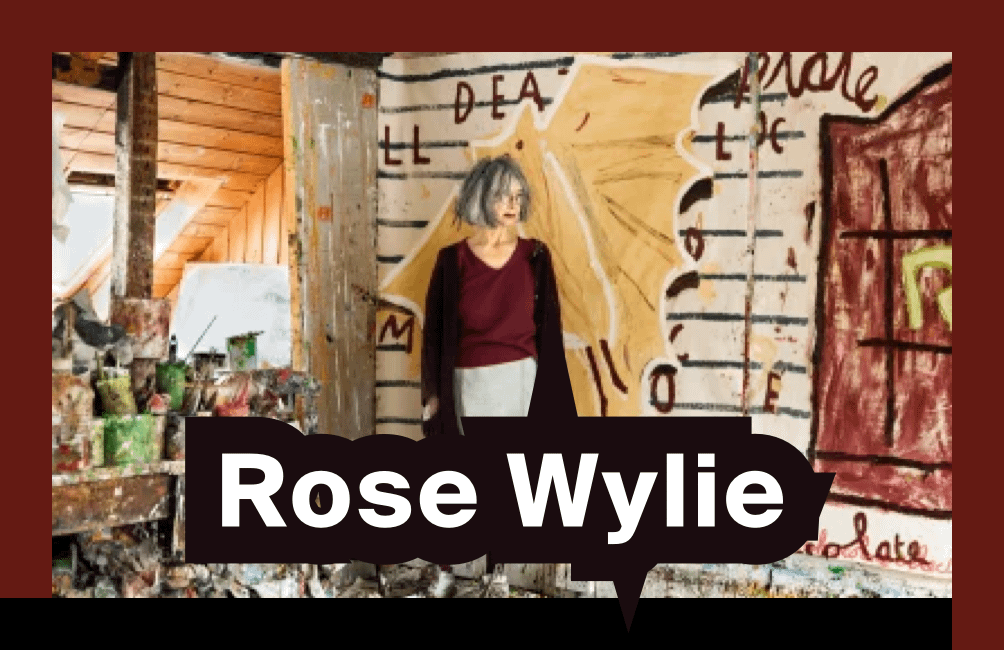
The Rose Wylie Royal Academy exhibition places one of Britain’s most distinctive painters within the formal context of Burlington House. Rather than framing Wylie as an outsider voice, the exhibition situates her practice within a lineage of British painting that values scale, gesture and visual directness. The result is not a retrospective spectacle but a measured presentation that clarifies the structural intelligence beneath her deliberately awkward surface language.
As with other focused RA exhibitions, the strength of the show lies in pacing. The galleries unfold in a steady sequence, allowing Wylie’s visual vocabulary to accumulate gradually.
The Opening Rooms: Scale and Surface
The first galleries establish the physical fact of Wylie’s painting. The canvases are large. Figures stretch, tilt and flatten across the surface. Text appears in thick, hand-painted lettering. At first glance, the compositions seem informal, almost casual. Seen in proximity to one another, a more deliberate structure becomes clear.
The spacing in these opening rooms is generous. Each painting is given room to operate independently. This is important. Wylie’s work relies on contrast between figure and ground, word and image, density and blank space. The RA hang respects that rhythm.
The architectural neutrality of the white walls amplifies the paintings’ raw colour. Unlike domestic settings or smaller institutions, the RA galleries allow the works to assert themselves without compression.
The Central Galleries: Text, Memory and Repetition
Moving deeper into the exhibition, repetition becomes more evident. Motifs reappear. Figures echo earlier gestures. Wylie’s handwritten text becomes a structural device rather than an illustrative one. Words interrupt images. Images interrupt words.
Here, the exhibition begins to clarify Wylie’s sustained concerns with memory and observation. The apparent looseness of the brushwork gives way to a more analytical reading. Edges are reconsidered. Areas are repainted. Surfaces reveal adjustment and return.
In these rooms, the viewer can stand directly opposite single large canvases. This frontal positioning strengthens the dialogue between body and painting. Wylie’s scale is not decorative. It is confrontational in a quiet way. The paintings demand distance, then reward close inspection.
The Later Rooms: Confidence Without Resolution
Toward the final galleries, the palette intensifies. Colour becomes bolder. Figures occupy more assertive positions within the frame. Yet the exhibition avoids constructing a neat developmental narrative. There is no imposed arc of improvement or refinement.
Instead, the show presents continuity. Wylie’s language remains consistent across decades. What shifts is emphasis. Some works lean into figuration more explicitly. Others flatten space almost completely. The Royal Academy installation allows these variations to sit side by side without forcing hierarchy.
The controlled lighting supports this approach. Unlike exhibitions that dramatise late works, the RA maintains an even tone. The paintings operate on their own terms.
How the Exhibition Functions as a Whole
Taken together, the Rose Wylie Royal Academy exhibition forms a steady argument for the seriousness of her practice. The show avoids framing her through novelty or age. Instead, it presents her as a painter concerned with structure, scale and the mechanics of looking.
The sequencing encourages slow viewing. There is no overwhelming wall text. The paintings carry their own weight. This clarity strengthens the exhibition’s impact.
For London audiences, the context is significant. The Royal Academy has historically positioned itself as both guardian of tradition and platform for contemporary voices. Wylie’s presence within these galleries quietly bridges those roles. Her work, often described as naive, reads here as deliberate and sustained.
Available Editions and Merch from the Show
If you want something tangible from the exhibition without committing to a major purchase, the Royal Academy shop is usually the best place to start. Expect a mix of editioned prints, smaller formats, and wearable items that keep Wylie’s visual language intact.
- Study for Red Twink print (Rose Wylie) – an easy, wall-friendly way to live with the work if you want colour and attitude without the scale of the paintings.
- Rose Wylie “Girl in Lights” pink sweatshirt – proper exhibition merch that feels like a wearable artwork rather than a generic logo souvenir.
You can browse the full range of editions and shop items on the Royal Academy website (the selection can change during a run, so it is worth checking before you visit).
Exhibition Shop Highlights
The exhibition shop includes a focused selection of Rose Wylie catalogues, postcards and prints. The catalogue is particularly useful for readers wanting a deeper understanding of recurring motifs and working methods.
For those considering adding a piece to their home, smaller print formats and exhibition ephemera offer an accessible entry point. As with other RA shows, the merchandise avoids excess and remains tightly aligned with the exhibition itself.
Why This Exhibition Matters in London Now
The Rose Wylie Royal Academy exhibition arrives at a moment when contemporary painting often leans toward hyper-polished surfaces or digital precision. Wylie’s work resists that. Her paintings foreground revision, awkwardness and visible decision-making.
In a city saturated with image production, that refusal to smooth out process feels relevant. The exhibition does not attempt to reposition Wylie as fashionable. Instead it underscores her persistence.
The strength of the show lies in its restraint. By allowing the work to remain direct and unembellished, the Royal Academy presents a clear case for Wylie as a painter whose apparent simplicity conceals structural rigour.
For viewers willing to look steadily rather than quickly, the exhibition offers a precise and grounded encounter with one of Britain’s most recognisable living painters.
What's trending




Recent posts
- Best Audiobooks October 2026: 10 UK Listens Ranked
 Ten new audiobooks for October 2026, from a full-cast Dracula with Jonathan Bailey to Russell T Davies reading his own television memoir.
 - Louis Fratino at David Zwirner ReviewLast updated: 4 October 2026 By Tristan · Arts, exhibitions and creative culture This is an opinion piece. Views expressed are the author's own and do not constitute professional advice. Exhibition reviewMayfair Saunas, subway cars and a lot of skin in Mayfair Louis Fratino at Zwirner is the American painter's first solo show in London,… Read more: Louis Fratino at David Zwirner Review
- What Is a Sprive Boost? Seven Days, and What It Actually PaysA Sprive boost lifts your cashback rate for seven days, and it arrives on its own. What mine paid, and why Supercharge is a display toggle rather than extra cashback.


No Comments.