
Last updated: 22 March 2026
By Stiv · Design, technology and personal finance
This is an opinion piece. Views expressed are the author's own and do not constitute professional advice.
This article contains affiliate or referral links. If you click through and sign up I may earn a commission or referral bonus at no extra cost to you. It does not affect my editorial view.
Cool Factor: 0/5
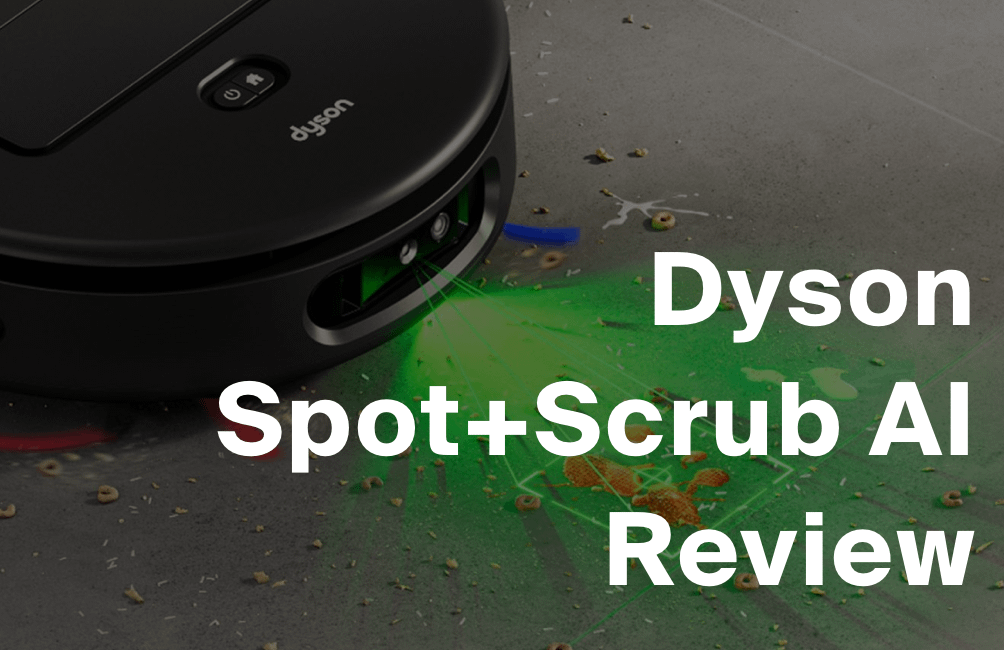
This Dyson Spot Scrub review is not one we ever expected to write. We've reviewed hundreds of products across CoolCuration and never once handed out a zero. Not once. But the Dyson Spot+Scrub AI, priced at a staggering £1,049.99, has earned the dishonour of being our first. It's a robot vacuum that somehow offers less suction than its predecessor, appears to be manufactured by a third-party Chinese ODM, and arrives stamped with a premium price tag that only the Dyson name can justify. For a vacuum cleaner, the Dyson Spot+Scrub AI really does suck. Just not in the way you'd want it to.
What is the Dyson Spot+Scrub AI?
The Dyson Spot+Scrub AI is Dyson's latest robot vacuum and its first to combine vacuuming and mopping in a single unit. It replaces the widely panned 360 Vis Nav from 2023, which was vacuum-only, lacked a self-emptying dock, and struggled with navigation despite costing a small fortune. The Spot+Scrub AI promises to fix all that with LiDAR navigation, AI-powered stain detection, a self-cleaning wet roller, and a cyclonic docking station that empties, washes, and dries the robot automatically.
On paper, it sounds like Dyson finally caught up with the competition. In practice, it feels more like they outsourced the homework and slapped their logo on top.
First impressions: familiar in all the wrong ways
Unbox the Spot+Scrub AI and the first thing you notice is how generic it looks. Gone is the distinctive D-shaped design of the 360 Vis Nav. In its place is a round, black, chunky disc that could have rolled off the same production line as a dozen other mid-range robot vacuums. That's because, by all accounts, it did.
Reports from multiple tech outlets, including The Verge, have linked the Spot+Scrub AI to Picea Robotics, a Shenzhen-based Original Design Manufacturer (ODM). Picea is the same company that manufactures robots for iRobot (Roomba), Shark, and, ironically, Anker's eufy brand. The robot vacuum community has drawn clear comparisons between the Spot+Scrub AI and Picea's R2 ODM platform, which also underpins recent Roomba models. So when you're paying over a grand for this Dyson, just know that much of the hardware under the hood may share DNA with machines costing less than half the price.
That's not inherently a problem. Plenty of brands use ODM partners. But when your entire brand identity is built on British engineering innovation, and your marketing leans heavily on decades of in-house R&D, shipping what appears to be a rebadged ODM product feels dishonest. It's like paying for a Ferrari badge and finding a Nissan Micra engine under the bonnet. Nothing against the Micra, mind. It's a perfectly decent little car. But you wouldn't pay £200K+ for a Micra.. so paying £1050 for an extra branded Picea feels a bit steep.
The experience: less suction, more questions
Here's where things get properly disappointing. The 360 Vis Nav, for all its flaws, packed 22,000Pa of suction. It was genuinely powerful. The Spot+Scrub AI? Just 18,000Pa. That's an 18% drop in suction power from the model it's supposed to improve upon. Multiple independent reviewers have flagged this, including Trusted Reviews and T3, both of whom noted the reduction. T3 described it as "bizarre" that the successor has less suction than the original.
For context, the Roborock Saros 10 also delivers 22,000Pa. Many competitors in the £400 to £600 range match or exceed the Spot+Scrub AI's suction figures. You're paying a premium for less performance, wrapped in a shinier box.
The mopping function is fine. The heated roller system is a decent idea, and the AI stain detection does work in some scenarios. But "fine" and "decent" are not words that justify a four-figure price tag. TechRadar's full review noted navigation issues, intermittent self-emptying failures, and an unintuitive app. The MyDyson app has been criticised across the board for lacking the polish and flexibility of competitors from Roborock, Dreame, and Ecovacs. When you're spending this much, you expect the software to match the hardware. Neither delivers.
The docking station is also enormous. At 9kg and finished in cheap-looking black plastic, it's a far cry from the sleek, compact units offered by rivals like Dreame. It dominates whatever corner of the room you put it in, and the post-clean drying cycle is loud enough to be genuinely annoying if the dock is in a living space.
Value for money: absolutely none
At £1,049.99 from dyson.co.uk, the Spot+Scrub AI is among the most expensive robot vacuums on the market. And for what? Less suction than its predecessor, a generic ODM platform, a clunky app, and a bulky dock. You are paying for the word "Dyson" and nothing more.
For most people's needs, a eufy L60 robot vacuum will do a better job for a fraction of the price. The eufy L60 offers LiDAR navigation, 5,000Pa suction (more than enough for daily cleaning), laser-guided mapping, and a self-emptying station, all for around £200 to £250. It won't mop your floors with heated water, but it also won't cost you over a thousand pounds to find out the mopping is merely "acceptable."
If you want a premium robot vacuum with mopping, the Roborock Qrevo Curv and Dreame L40 Ultra both outperform the Dyson on suction, navigation, mopping quality, and app experience, and both frequently dip below £800 during sales. The Dyson Spot+Scrub AI isn't even the best robot vacuum at its price. It might not even be in the top five.
A word about Dyson and the UK
It would be remiss not to mention the wider context here, because it makes the brand's premium positioning feel even more hollow.
Sir James Dyson was one of the most prominent business voices backing the Leave campaign during the 2016 EU referendum, arguing that Brexit would create wealth and jobs in British industry. Three years later, Dyson moved its global headquarters to Singapore. He subsequently lost a libel case against the Daily Mirror, which had called him a "hypocrite" for doing exactly that. The High Court ruled the article was honest opinion.
In July 2024, Dyson cut approximately 1,000 jobs in the UK, around a quarter of its British workforce. This followed 600 UK job cuts in 2020. Meanwhile, Sir James remains one of the largest individual landowners in England, with approximately 36,000 acres of farmland across Lincolnshire, Oxfordshire, Somerset, and Gloucestershire, more land than the Sandringham Estate. In September 2025, he told The Times that Brexit was worth it, "even if it's made people poorer."
So when Dyson asks UK consumers to pay over a grand for what appears to be an outsourced robot vacuum with less suction than the one it replaced, it's worth asking: who exactly is this brand serving?
Can you get it cheaper? Yes. Does it matter? Not really.
At the time of writing, the Dyson Spot+Scrub AI is discounted to £899 on Amazon. That's £150 off the RRP, and we still can't defend it. You're saving money on a product that delivers less suction than the one it replaced, runs on what appears to be a shared ODM platform, and comes with an app that feels less like a flagship smart home experience and more like a final-year computer science project that scraped a 2:2.
For posterity, we should note that the unit we tested was dutifully christened "Little James" in the MyDyson app, after the man himself. Little James worked fine, in the sense that it moved around the floor and picked things up. But the app experience was genuinely poor. Map editing was clunky, dock controls were buried in submenus, and the whole thing felt like it had been built by a team that had never actually used a competitor's product. Roborock and Dreame are miles ahead on software, and they don't charge you a grand for the privilege of finding that out.
We'd love to return Little James. Instead, we're selling it on Back Market, where at least someone will get it at a price that's closer to what it's actually worth. The circle of life for overpriced tech.
The verdict
The Dyson Spot+Scrub AI is a profoundly disappointing product from a company that should know better. It delivers less suction than the model it replaces, relies on a third-party ODM platform that's shared with far cheaper competitors, comes with a clunky app and a bulky dock, and costs over a thousand pounds for the privilege. It is the clearest example we've seen of a company trading on brand name alone.
Save your money. Buy a eufy L60 for a fifth of the price and spend the rest on something that actually respects your wallet. Or if you want premium performance, look at Roborock or Dreame, brands that are innovating rather than outsourcing and mark up.
Cool Factor
☆☆☆☆☆
0 out of 5 — Meltdown
Overall, a historic 0/5 Meltdown, the first we've ever awarded. The Dyson Spot+Scrub AI earns it through a combination of reduced suction power versus its predecessor, apparent outsourced ODM manufacturing that undermines Dyson's core brand promise, a bloated price tag of £1,049.99 that no amount of AI buzzwords can justify, and a wider corporate track record that makes the premium positioning feel cynical. It didn't hit 1/5 Lame because even "Lame" suggests there's something there worth acknowledging. We struggled to find it.
Frequently asked questions
Is the Dyson Spot+Scrub AI worth buying?
In our opinion, no. At £1,049.99 it offers less suction than its predecessor (18,000Pa vs 22,000Pa), appears to use the same ODM platform as far cheaper competitors, and comes with an app that multiple reviewers have criticised. Alternatives from eufy, Roborock, and Dreame offer better performance for significantly less money.
Why does the Dyson Spot+Scrub AI have less suction than the 360 Vis Nav?
Dyson has not officially explained the drop from 22,000Pa to 18,000Pa. T3's review suggested it may be related to the additional mopping hardware packed into the body. Regardless, it means the newer, more expensive model is objectively weaker in one of the most important metrics for a vacuum cleaner.
Is the Dyson Spot+Scrub AI made by Dyson?
Multiple reports have linked the Spot+Scrub AI to Picea Robotics, a Shenzhen-based Original Design Manufacturer that also produces robot vacuums for iRobot, Shark, and eufy. This means the underlying hardware platform may be shared with significantly cheaper products from other brands. Dyson has not publicly confirmed or denied this.
What is a good alternative to the Dyson Spot+Scrub AI?
For most households, the eufy L60 offers excellent daily cleaning with LiDAR navigation and a self-emptying station for around £200 to £250. If you want a premium robot vacuum with mopping, the Roborock Qrevo Curv or Dreame L40 Ultra are both highly rated and cost significantly less than the Dyson.
How does the Dyson Spot+Scrub AI compare to the eufy L60?
The Dyson costs roughly four to five times as much. It offers higher suction (18,000Pa vs 5,000Pa) and adds mopping with heated water. The eufy L60 offers LiDAR mapping, a self-emptying station, and solid daily vacuuming at a fraction of the price. For most UK homes, the eufy represents far better value.
Did James Dyson support Brexit?
Yes. Sir James Dyson was one of the most prominent business supporters of the Leave campaign in 2016. He later moved Dyson's global headquarters to Singapore in 2019 and lost a libel case against the Daily Mirror, which had criticised this decision. In 2024, Dyson cut around 1,000 UK jobs, roughly a quarter of its British workforce.
More from CoolCuration
- eufy S1 Pro — Our pick for a premium robot vacuum that actually delivers on its promises.
- Best smart speakers UK — Build a smarter home without blowing your budget on overpriced tech.
- Back Market — Save serious money on refurbished tech and stop overpaying for brand names.
- Hive thermostat — A smart home upgrade that actually earns its keep through lower energy bills.
- Gift guide for techies — Curated picks for gadget lovers who appreciate quality over hype.
What's trending






Recent posts
- Premium Bonds Alternatives UK 2026: Prize Savings Accounts Compared
 Four Premium Bonds alternatives open to new savers, with each provider's published odds, prize tables, access rules and protection.
 - Best Audiobooks October 2026: 10 UK Listens RankedTen new audiobooks for October 2026, from a full-cast Dracula with Jonathan Bailey to Russell T Davies reading his own television memoir.
- Louis Fratino at David Zwirner ReviewLast updated: 4 October 2026 By Tristan · Arts, exhibitions and creative culture This is an opinion piece. Views expressed are the author's own and do not constitute professional advice. Exhibition reviewMayfair Saunas, subway cars and a lot of skin in Mayfair Louis Fratino at Zwirner is the American painter's first solo show in London,… Read more: Louis Fratino at David Zwirner Review



No Comments.