
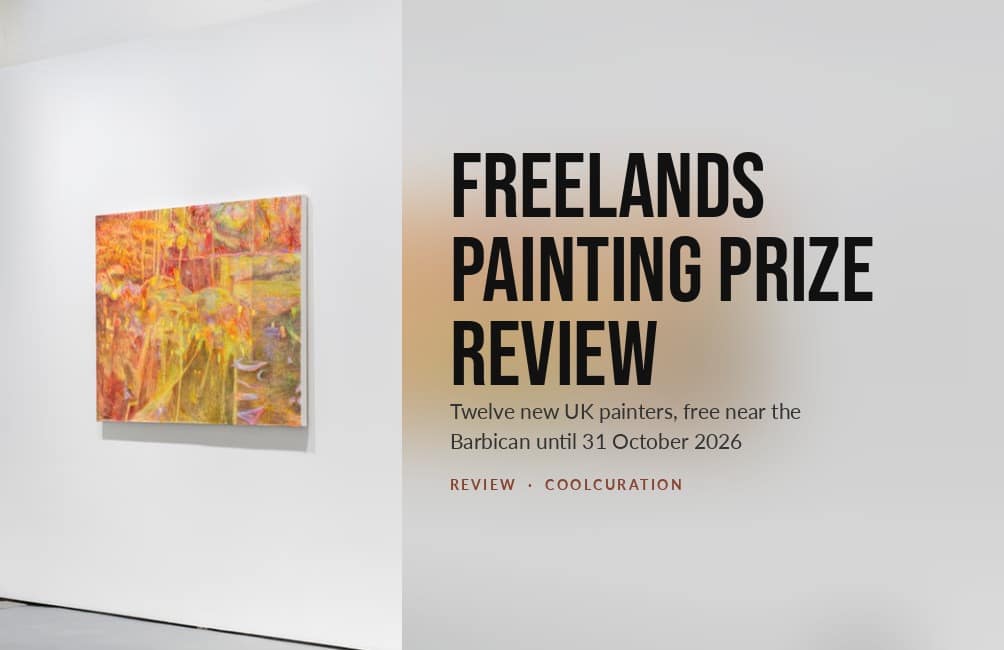
Freelands Painting PrizeUntil 31 Oct 2026
Twelve new painters, a first-ever winner, and the one we liked best
Last updated: 12 October 2026. I checked every date and detail in this Freelands Painting Prize review against Freelands Foundation's own pages on 12 October 2026.
By Tristan · Arts, exhibitions and creative culture
This is an opinion piece. Views expressed are the author's own and do not constitute professional advice.
Cool Factor: 4/5
The Freelands Painting Prize 2026 hangs twelve paintings by this year's UK art school graduates in Freelands Foundation, a free gallery a short walk from the Barbican. It runs until 31 October, and we went on Saturday 10 October.
Our favourite was Yuchen Zhan's Otherworld, a big oil painting of a place that doesn't exist. However, the jury gave the prize, awarded for the first time this year, to Charli-Ann Padilla's Vanilla flavoured coke. That decision is the one thing we disagree with, and it is why this review lands on four stars rather than five.
What is the Freelands Painting Prize?
Freelands Foundation launched the Freelands Painting Prize in 2020, and 2026 is its seventh year. Every UK university or art school with an undergraduate Fine Art or Painting course can nominate one final-year student. Then an independent jury picks a shortlist for an exhibition in London.
This year's jury was the painter Christina Kimeze, Eliza Gluckman, who directs the UK Government Art Collection, and the artist Matthew de Kersaint Giraudeau, who leads the MA Fine Art Sculpture course at Camberwell College of Arts. Together they chose twelve graduates from twelve different schools. The list runs from Central Saint Martins and City & Guilds of London Art School to Newcastle, Salford and Lincoln.
For the first time, the jury also named a winner. Charli-Ann Padilla from the University of the West of England gets a consultation and £1,000 of painting materials from Wallace Seymour, the prize partner. So the prize is paint and advice rather than cash.
Padilla described her own approach in the University of the West of England's announcement: "I now birth shapes and figures through feeling, not reference."
Freelands Foundation and the gallery on Errol Street
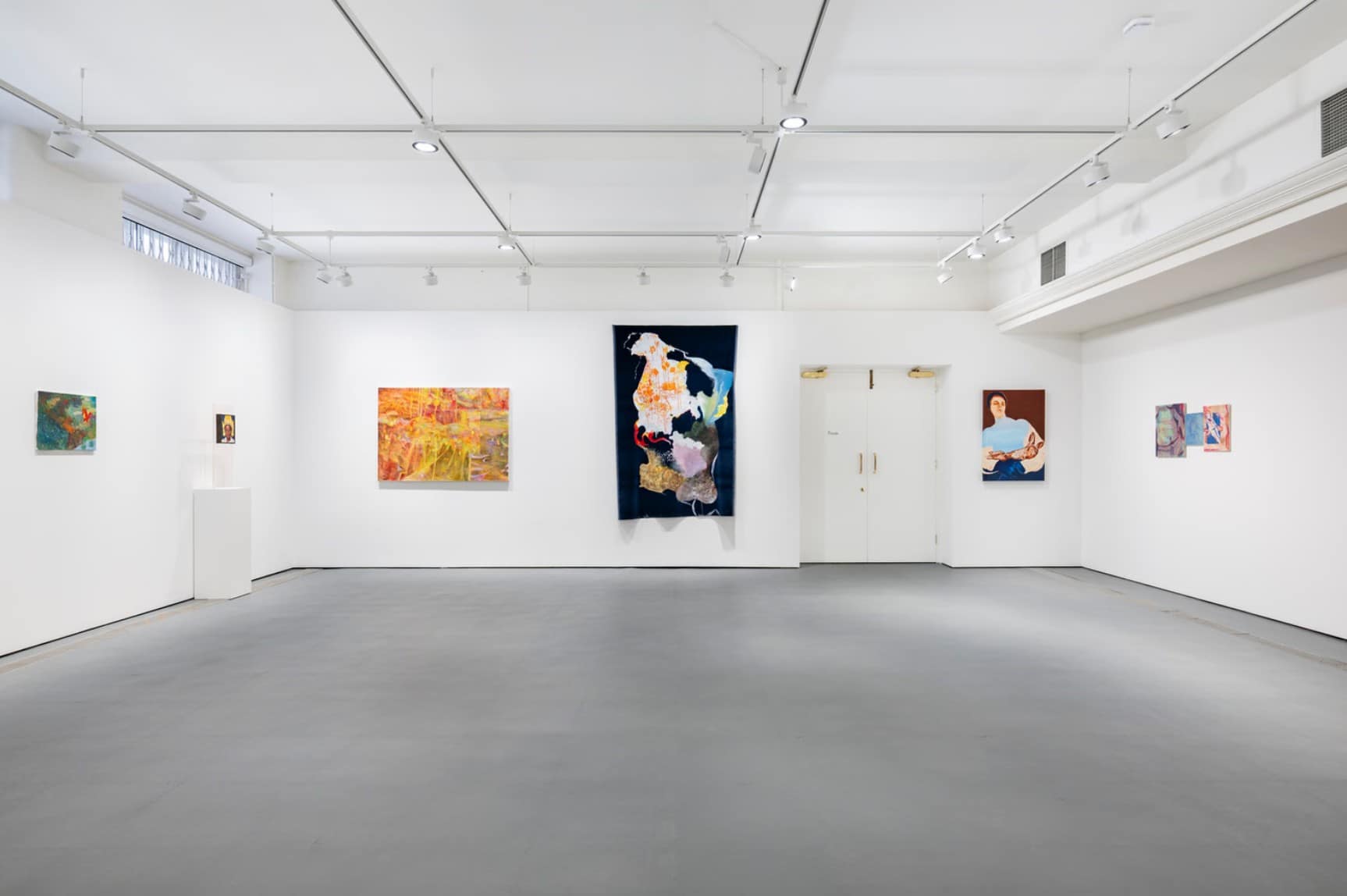
Freelands Foundation is a charity that supports artists, art education and cultural institutions across the UK. Its gallery sits at 12 Errol Street, EC1Y, between Old Street and the Barbican. The show fills one white room with grey floors, high windows and a set of double doors.
The show has moved around. Last year, nine graduates showed off site at Greatorex Street in Whitechapel, for ten days. This year the exhibition is back in the Foundation's own gallery, with twelve artists and a run of nearly four weeks.
Rosie Hermon, the Foundation's curator, told the University of Salford that the show presents "a diversity of practice from early career painters". The range shows in the scale alone. The smallest work is Robert McLeod's Undressing, an oil on a panel 15cm (5.9in) square, about the size of a CD case. Meanwhile, the biggest is Lucy Grant's Blue Velvet Three, acrylic and oil pastel on hanging velvet at 215 x 143cm (84.6 x 56.3in), taller than a door.
Yuchen Zhan's Otherworld: our favourite
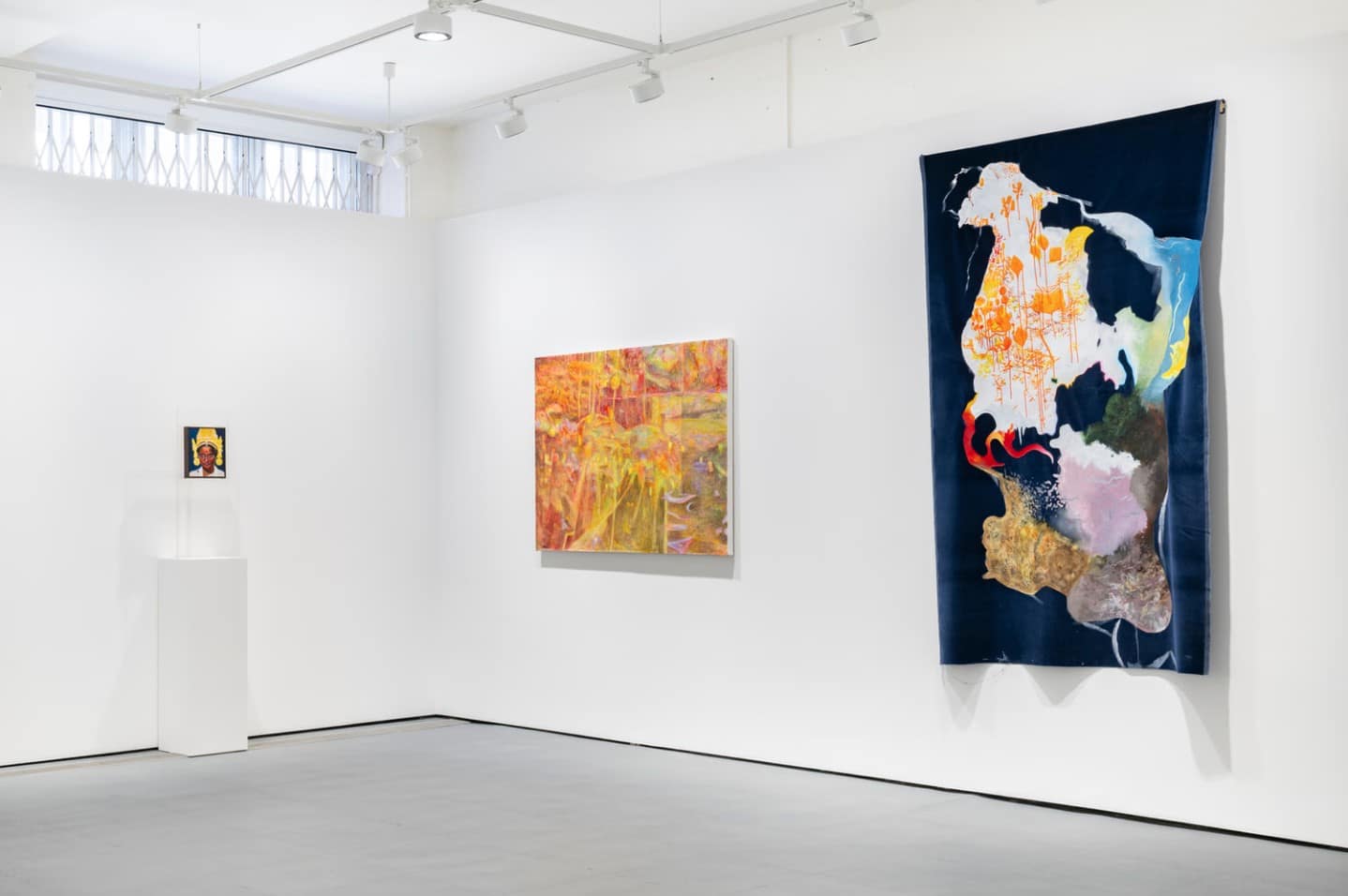
Zhan graduated from the University of Brighton. Otherworld (2025) is an oil on canvas measuring 108 x 150cm (42.5 x 59.1in), so it is about as wide as a UK king-size bed. It hangs on the back wall between Bhovan's small Radhe and Grant's velvet.
It shows a landscape that isn't anywhere you could visit. Reds, oranges and yellows glow from inside the canvas, like lights drifting across a night sky. Behind them, though, abstract shapes and a faint grid stop it settling into a real view. As a result it sits halfway between a landscape and an abstract painting. That strange world was the first thing that drew us to it, and the colour was the second.
Then there is the size. The jury chose this shortlist from images on a screen, and their essay says they picked works they wanted to see in person. Otherworld is that kind of painting. At a metre and a half wide, it works far better in the room than in a photo, which is the main reason to see it at the gallery rather than online.
"Its impossibility is only possible through paint."
Matthew de Kersaint Giraudeau, juror, on Otherworld in his essay "Between the Question and the Answer"
The winner: Charli-Ann Padilla's Vanilla flavoured coke
Padilla's painting is emulsion and pigment on canvas, 58 x 46cm (22.8 x 18.1in), which makes it one of the smaller works here. A thick, foamy form fills most of the canvas. Around it, the paint has dried and cracked.
In his essay, de Kersaint Giraudeau reads the form as cola foam, iced cake or whipped cream, and the cracked paint as a dry desert floor. Paint is the subject here as much as anything it depicts, and that fits a prize built around how painting is taught.
Even so, it wasn't the painting we would have picked. Our favourite on the day was Otherworld, and the winner announcement didn't match that.
Paint as material, and paintings of pictures
Four of the twelve are about the stuff of paint, or about painting from another image.
Richie Batchelor from Coventry University shows Possible virilising effects, acrylic on linen and fabric across joined canvases, 94.5 x 50cm (37.2 x 19.7in). Fragments of bodies repeat from canvas to canvas, and the handling changes each time, from stains and scratches to drawn lines and silhouettes. Lucy Grant from Winchester School of Art hangs Blue Velvet Three loose on the wall instead of stretching it. Drips, stains and oil pastel lines run across the dark velvet like seams in rock.
Dexter Landesman-Chung, from City & Guilds of London Art School, paints from photographs and film stills. His Padfoot, welcome home (2025) is 101.5 x 152.5cm (40 x 60in). It catches a dog just after it has jumped off a sofa, with a cushion knocked to the floor and a gap in the curtains behind.
Rajesh Bhovan from Central Saint Martins shows Radhe (2024), a small oil at 21 x 29cm (8.3 x 11.4in), displayed in a case on a plinth rather than on the wall. It comes from a frame of Jean Renoir's 1951 film The River, set in Kolkata, and the title names the Hindu goddess Radha. Bhovan paints the face in sharp focus, while the gold crown sits back in softer paint.
Bodies, desire and invented worlds
The next group deals with bodies, without a single straightforward portrait among them. Molly Tomlinson from the University of Northampton shows Postcoital Dysphoria, an oil 160cm (63in) square of lace bras painted in close detail. Next, Naomi Ashall from the University of Chichester pins Hurting, acrylic on raw cotton duck, 180cm (70.9in) square, straight to the wall. In it, a figure covers their face with their hands, and dripping paint wipes the face out.
Robert McLeod's tiny Undressing shows a man pulling off his shirt, seen from behind, with the hands in the sharpest focus. By contrast, Sandy Kiralawella from Newcastle University makes the only piece that leaves the wall. Sex in Solitude (2025) is a mixed-media installation, 167 x 60 x 71cm (65.7 x 23.6 x 28in), built around a painted Mercedes-Benz bumper with a couple embracing across it.
Finally, two more painters join Zhan in inventing their own worlds. Topaz Joelle from the University of Lincoln shows Lucifer's Beginning, an acrylic at 41 x 51cm (16.1 x 20.1in). In it, a smoking cat, a motif that recurs across Joelle's work, crosses a landscape made of dots and dashes. Karlien De Mot from The Art Academy, London, shows The sea inside (2025), an oil at 105 x 70cm (41.3 x 27.6in) of a foreshortened figure holding a rabbit.
So in one room you get underwear, a film still, a cat with a cigarette and a car bumper.
Where the Freelands Painting Prize 2026 falls short
The winner is our one real disagreement. We would have picked a different painting. The jury's essay puts a lot of weight on paint as a material, and Padilla's canvas is the clearest example of that in the room. However, the painting that did the most for us was Otherworld. So look at the winner alongside the other eleven and make your own call before 31 October.
Beyond that, three limits come with the format rather than with any one artist:
- One work per artist. You see a single painting from each graduate, not a body of work. If one catches your eye, the jury essay and the artists' reading list on the Freelands exhibition page are the way to find out more.
- Four open days a week. The gallery opens Wednesday to Saturday only, so the show has just 16 open days in total. Sunday visits are out, so plan around a Saturday or a weekday lunchtime.
- An all-English shortlist. All twelve schools on this year's list are in England, so nothing from Scotland, Wales or Northern Ireland made it this time.
Why the Freelands Painting Prize matters now
According to Freelands, the prize now gets entries from most of the UK's eligible art schools. That makes the shortlist a yearly snapshot of how painting is being taught across the country, picked from that year's graduates.
The timing helps too. October is Frieze month in London, and our Frieze London guide covers the fairs, which charge for tickets. This show is free, and it is about painters at the very start of their careers rather than the ones already selling at the fairs.
Is the Freelands Painting Prize worth visiting?
Yes. It is free and there's no booking, so the only cost is getting to Errol Street. If you are planning a free afternoon of painting, the Magritte show at Gagosian is also free until 12 December; our This Is Still Not a Pipe review has the details.
Padilla's prize is £1,000 of paint and materials. If you know a painter just out of art school, our gifts for artists and creatives guide has ideas at much smaller budgets.
Practical info for the Freelands Painting Prize 2026
- Where: Freelands Foundation, 12 Errol Street, London EC1Y 8LX.
- When: until 31 October 2026, Wednesday to Saturday, 12pm to 6pm. Closed Sunday to Tuesday.
- Price: free, and no booking needed.
- Getting there: Freelands puts it an 8-minute walk from Old Street, 9 minutes from Barbican and Moorgate, and 14 minutes from Liverpool Street.
- Walkthrough: Saturday 24 October, 2pm to 3.30pm, with curator Rosie Hermon, jury members and some of the artists. It's free, but you need to register.
- Panel talk: The Matter of Painting, Wednesday 28 October, 6.30pm to 8.30pm. It's free, and you need to register.
- Drop-in introductions: every Wednesday and Friday at 1pm.
- Access: if you have access needs, call the Foundation on 020 3598 7081 before your visit.
See the exhibition page and events
The verdict
Cool Factor
★★★★☆
4 out of 5
Twelve graduates, twelve schools and twelve very different ways of painting, free, in one room. The Freelands Painting Prize 2026 gets a 4/5 Stone cold from us.
Overall, a solid 4/5 Stone cold. The Freelands Painting Prize earned it with Yuchen Zhan's Otherworld, whose strange world, colour and size all work best in person, and with a room covering everything from a 15cm panel to a car bumper. It stopped short of Ice cold because the prize went to a painting we wouldn't have picked. Go before 31 October, and decide for yourself whether the jury got it right.
FAQs
Is the Freelands Painting Prize 2026 worth visiting?
Yes. It's free, there's no booking, and it shows twelve recent UK graduates in one room. We gave it 4/5 Stone cold, and our favourite was Yuchen Zhan's Otherworld.
How much does the Freelands Painting Prize exhibition cost?
Nothing. Entry to the Freelands Painting Prize exhibition is free and you don't need to book. The walkthrough on 24 October and the panel talk on 28 October are also free, but you need to register for both.
Who won the Freelands Painting Prize 2026?
Charli-Ann Padilla from the University of the West of England, for Vanilla flavoured coke. It is the first year the prize has named a single winner, and she gets a consultation and £1,000 of materials from Wallace Seymour.
When does the exhibition close?
It closes on 31 October 2026. It's open Wednesday to Saturday, 12pm to 6pm, and closed Sunday to Tuesday.
Who can enter the Freelands Painting Prize?
You can't enter yourself. Each UK university or art school with an undergraduate Fine Art or Painting course nominates one final-year student, and an independent jury picks the shortlist from those nominations.
Where is Freelands Foundation?
Freelands Foundation is at 12 Errol Street, London EC1Y 8LX. The nearest stations are Old Street, Barbican and Moorgate, each under ten minutes' walk.
More from CoolCuration
- Quentin James McCaffrey at Alison Jacques: fifteen small invented interiors, if Otherworld sent you looking for more imagined places.
- Louis Fratino at David Zwirner: a painter further into his career, and the artists he borrows from.
- Royal Academy ceramic watercolour palette: eight hand-made watercolours in a palette the size of a matchbox.
- Great Women Artists: the Phaidon survey to read after a show of new names.
- Barbican Cross Section print: a £12 A3 print from the shop nine minutes' walk from the gallery.
- Gifts for designers: design-led picks for anyone who spends their days making things look right.
What's trending



Recent posts
- Freelands Painting Prize 2026 Review: Twelve New Painters, One Disagreement
 Twelve new UK painters, free near the Barbican until 31 October. We gave the Freelands Painting Prize 2026 a 4/5, and our favourite wasn't the winner.
 - Khalif Tahir Thompson Review: Send in the Clowns at Victoria MiroKhalif Tahir Thompson's first show with Victoria Miro brings eight paintings of Brooklyn to London. Our 3/5 review of Send in the Clowns.
- Best Portable Projectors UK 2026: What £400 to £1,600 BuysOptoma prints 1,200 lumens and 550 on the same spec sheet, for the same projector. Eight portable projectors I would actually buy this winter, sorted by the room they suit, with every UK price checked at the till. #projectors #homecinema #uktech #gadgets #winterevenings

No Comments.