
Last updated: 10 April 2026
By Tristan · Arts, exhibitions and creative culture
This is an opinion piece. Views expressed are the author's own and do not constitute professional advice.
This article contains affiliate or referral links. If you click through and sign up I may earn a commission or referral bonus at no extra cost to you. It does not affect my editorial view.
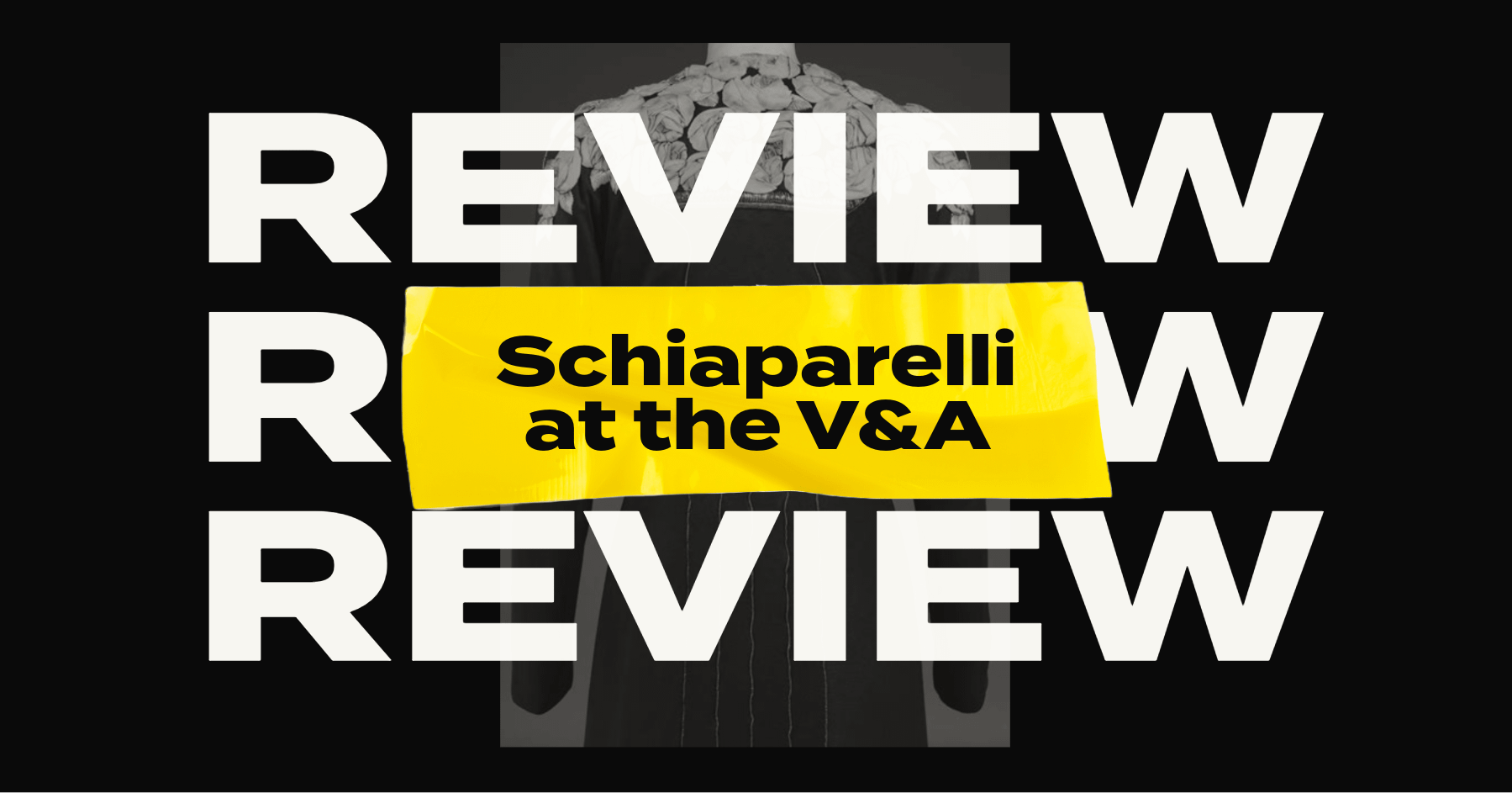
We went into the Schiaparelli V&A exhibition not knowing quite what to expect. We are not fashion journalists. We are curious culture-watchers who appreciate design, craftsmanship, and the occasional moment where something genuinely stops you in your tracks. Schiaparelli: Fashion Becomes Art at the V&A delivered that moment several times over. This is our honest Schiaparelli V&A review, covering whether this blockbuster show justifies its ticket price, what the standout pieces are, and why it deserves your attention even if you have never owned a couture anything.
Cool Factor: 4/5 (Stone cold)
Cool Factor
★★★★☆
4 out of 5
What's on?
Schiaparelli: Fashion Becomes Art is the UK's first exhibition dedicated to Maison Schiaparelli. It runs in the Sainsbury Gallery at V&A South Kensington from 28 March to 8 November 2026. There are over 400 objects on display, including around 100 fashion ensembles, 50 artworks, alongside accessories, jewellery, perfumes, photographs, furniture, and archival material. The show traces the house from Elsa Schiaparelli's radical beginnings in 1920s Paris through to the contemporary vision of creative director Daniel Roseberry.
The artworks are not just backdrop, either. There are original pieces by Salvador Dali, Pablo Picasso, Jean Cocteau, Man Ray, and Eileen Agar. The exhibition was curated by Sonnet Stanfill, Lydia Caston, and Rosalind McKever, and the exhibition design is by London studio Nebbia. Advance booking is recommended, and tickets are priced at £28 on weekdays and £30 on weekends. V&A Members get free entry.
First impressions
Walking into the Sainsbury Gallery on a weekday morning, the first thing we noticed was the scale. The space is huge, and Nebbia's design uses that scale brilliantly. Rather than a straightforward chronological stroll, the layout guides you through rooms that double back on themselves. You catch glimpses of garments from a distance before circling back to see them up close. It creates a genuine feeling of discovery, almost like deja vu, which feels fitting for an exhibition about Surrealism.
The very first room sets the tone perfectly. A series of early trompe l'oeil knitwear pieces from 1927 greets you. These are not museum relics gathering reverence in a glass box. They look like something you could genuinely wear today. A black-and-white knit with a bow effect that would not be out of place on a contemporary knitwear brand's Instagram. It was a smart curatorial choice to lead with these pieces, because it immediately establishes that Schiaparelli was not just about headline-grabbing shock value. She started with craft and wearability.
The crowd was steady but manageable on the morning we visited, and we spent a solid two hours inside. You could rush it in 90 minutes, but you would miss the detail, and the detail is where this show really earns its ticket price.
The experience
The original Schiaparelli: 1920s to 1950s
The historical sections are where this exhibition absolutely sings. The show builds from Elsa's early sportswear and practical daywear through to her extraordinary evening designs and surrealist collaborations. Along the way, you get a vivid picture of a woman who was designing trouser suits for women at a time when that was genuinely scandalous, and who ran a fashion empire employing 400 people.
The Skeleton dress stopped us in our tracks. It is one thing seeing it in a book or online. Standing in front of the only known surviving example, you notice how the raised quilted padding mimics bones with this unsettling anatomical precision. Displayed alongside it are Dali's original sketches of female skeletons in fashionable poses, complete with a handwritten note about how much he enjoyed the idea of bones on the outside. You feel like you have stumbled into a private conversation between two creative minds working at full tilt.
Similarly, the Lobster dress sits next to Dali's famous Lobster Telephone. The pairing makes something click. Schiaparelli provided the silhouette, Dali painted the lobster. According to the curators, the dress actually inspired the telephone rather than the other way around. That sort of detail elevates the show from a fashion retrospective into something more like an art history seminar that happens to look gorgeous.
The Cocteau evening coat from 1937 is another highlight. Two embroidered profiles face each other across the back, and the negative space between them forms a vase of pink roses. The craftsmanship is extraordinary. This is the kind of piece that rewards close looking, and thankfully the display cases let you get close enough to appreciate the needlework. If you enjoy the intersection of art and craft that runs through something like a William Nicholson exhibition, you will find a similar appreciation for making here.
The perfume section was a pleasant surprise. Bottles shaped like female figures, candles, and even a pipe-shaped men's fragrance. This last one is a knowing nod to Magritte, and it raised a smile. Elsa had a sense of humour that comes through consistently. Buttons shaped like peanuts, acorns, circus acrobats, and mermaids. The playfulness is infectious.
A dedicated section also explores Schiaparelli's London branch in Mayfair, which is a lesser-known part of the story. She dressed Marlene Dietrich, Greta Garbo, and Josephine Baker. She costumed over 30 films. One suit worn by Dietrich features gold buttons sculpted by Alberto Giacometti depicting female silhouettes in relief. The sheer range of creative collaboration on display here is remarkable.
Daniel Roseberry and the modern house
The final rooms shift to contemporary Schiaparelli under Roseberry, who has led the house since 2019. This is where the exhibition becomes more divisive, and honestly, we found ourselves slightly conflicted too.
On one hand, Roseberry's work is visually stunning. A dinner jacket sprouting gold palm trees from its shoulders drew an audible reaction from the people around us. The corseted bubble dress inspired by a mille-feuille is genuinely beautiful. And the Ariana Grande gown from the 2025 Oscars, on loan to the V&A, connects the historic pieces to a very current cultural conversation. Roseberry clearly understands the house's DNA and channels it with confidence.
On the other hand, these sections occasionally felt a touch promotional. There is a fine line between celebrating a living fashion house and advertising it, and the exhibition wobbles on that line once or twice. If you are someone who has followed CoolCuration's culture coverage and appreciates the way we approached the Rose Wylie RA show, you may share our slight discomfort. That said, the objects genuinely speak for themselves. A sci-fi robot baby assembled from wires and salvaged tech products from Roseberry's Spring/Summer 2024 collection is properly weird and wonderful.
The broader question the exhibition raises is whether fashion can genuinely be art while simultaneously functioning as a commercial enterprise selling pieces at stratospheric prices. This tension is honestly part of what makes the show interesting. Schiaparelli herself operated at the intersection of creativity and commerce. The fact that the modern house does too is not a betrayal of her legacy. It is a continuation of it.
Value for money
At £28 weekday or £30 weekend, this is not cheap. For context, the Tracey Emin show at Tate was £23, and the Samurai exhibition at the British Museum came in at £17. The Chiharu Shiota at Hayward Gallery was £19. So Schiaparelli sits at the premium end of London's exhibition pricing.
Is it worth it? On balance, yes. The sheer volume of objects on display is generous. Over 400 items across multiple rooms gives you a lot to engage with, and the artworks by Dali, Picasso, Man Ray, and Cocteau would justify a gallery visit in their own right. We spent two hours there without feeling like we had exhausted it. If you are a V&A Member, this is a straightforward recommendation since it is included in membership.
The V&A shop is well stocked with Schiaparelli merchandise, from tote bags and prints to jewellery and homeware. If you want to take the experience home, the official exhibition catalogue is a beautifully illustrated 272-page hardback by V&A Publishing. It is available on Amazon and makes a solid gift for anyone interested in fashion history or Surrealism.
Buy the exhibition catalogue on AmazonThe verdict
This is a properly ambitious exhibition that takes a designer many people outside the fashion world may not know well and makes a compelling case for her as one of the most important creative figures of the 20th century. The Surrealist collaborations are thrilling. The craftsmanship is extraordinary. The playfulness and humour running through the entire show means it never feels like a dry lecture. And the Daniel Roseberry sections, despite occasionally tipping towards the promotional, bring genuine energy and spectacle.
Cool Factor
★★★★☆
4 out of 5
If you care about design, Surrealism, or the question of what happens when art and commerce collide, this is one of the best shows in London right now. Even if fashion is not your thing, the quality of the objects and the intelligence of the curation will reward your attention.
Overall, a solid 4/5 Stone cold. The Schiaparelli V&A exhibition blew us away with the depth of the Surrealist collaborations, the quality of the display, and the sheer ambition of staging 400+ objects across a single narrative arc. It did not quite reach Ice cold because the premium ticket price stings slightly, the contemporary sections occasionally veer into advertisement territory, and the notable absence of certain iconic pieces (Kylie Jenner's lion head dress, for one) left small gaps. However, this is a show we would happily recommend to anyone with even a passing interest in art, design, or the creative process. Catch it before November.
This review includes an affiliate link to the exhibition catalogue. If you purchase through this link, CoolCuration may earn a small commission at no extra cost to you. Our opinion remains editorially independent.
FAQs
Is the Schiaparelli exhibition at the V&A worth it?
Yes. With over 400 objects, original artworks by Dali, Picasso, and Man Ray, and some of fashion history's most iconic garments, there is plenty to justify the ticket price. It is especially good value if you are a V&A Member, as entry is included in membership. Even non-fashion fans will find the Surrealist connections genuinely fascinating.
How long do you need at the Schiaparelli exhibition?
Plan for around 90 minutes to two hours. You could move through it faster, but the detail on many of the garments and accessories rewards close looking. If you want to visit the shop and grab a coffee afterwards, allow closer to three hours for the full experience.
Do you need to book the Schiaparelli exhibition in advance?
Advance booking is recommended. The V&A offers timed entry slots, and popular weekend sessions can sell out. Weekday mornings tend to be quieter. You can book directly through the V&A website. Tickets are £28 on weekdays and £30 on weekends, with concessions available.
What is the Schiaparelli shoe hat?
The shoe hat is one of Schiaparelli's most famous designs, created in collaboration with Salvador Dali. It is a hat shaped like an upside-down high-heeled shoe, worn on the head. It dates from 1937-38 and perfectly captures the playful, absurdist spirit of their working relationship. A version is on display at the V&A exhibition alongside other Dali collaborations.
Is Schiaparelli a fashion brand or an artist?
Both. Elsa Schiaparelli (1890-1973) was an Italian-born designer who founded her fashion house in Paris in 1927. She collaborated extensively with Surrealist artists and famously said that dress designing was an art, not a profession. The house closed in 1954 and was revived in 2006. Today it operates as a functioning couture house under creative director Daniel Roseberry, while also being recognised as a significant cultural and artistic force.
How many objects are in the Schiaparelli V&A exhibition?
The exhibition features over 400 objects. This includes approximately 100 fashion ensembles, 50 artworks by artists such as Dali, Cocteau, Picasso, and Man Ray, as well as accessories, jewellery, perfume bottles, photographs, furniture, and archival materials spanning the 1920s to the present day.
More from CoolCuration
- National Art Pass - Get free entry to hundreds of museums and galleries across the UK, plus discounts on major exhibitions like this one.
- The Creative Act by Rick Rubin - A brilliant book on the creative process that pairs perfectly with the questions this exhibition raises about art and making.
- Gift guide for artists and creatives - Curated picks for anyone who appreciates design, craft, and creativity.
- Emma app - Keep your spending in check after splashing out on exhibition tickets and catalogue books.
- Audible - Listen to Elsa Schiaparelli's autobiography Shocking Life on Audible if the exhibition leaves you wanting more.
What's trending





Recent posts
- Best Audiobooks October 2026: 10 UK Listens Ranked
 Ten new audiobooks for October 2026, from a full-cast Dracula with Jonathan Bailey to Russell T Davies reading his own television memoir.
 - Louis Fratino at David Zwirner ReviewLast updated: 4 October 2026 By Tristan · Arts, exhibitions and creative culture This is an opinion piece. Views expressed are the author's own and do not constitute professional advice. Exhibition reviewMayfair Saunas, subway cars and a lot of skin in Mayfair Louis Fratino at Zwirner is the American painter's first solo show in London,… Read more: Louis Fratino at David Zwirner Review
- What Is a Sprive Boost? Seven Days, and What It Actually PaysA Sprive boost lifts your cashback rate for seven days, and it arrives on its own. What mine paid, and why Supercharge is a display toggle rather than extra cashback.


No Comments.