
Last updated: 8 April 2026
By Stiv · Design, technology and personal finance
This article contains affiliate or referral links. If you click through and sign up I may earn a commission or referral bonus at no extra cost to you. It does not affect my editorial view.
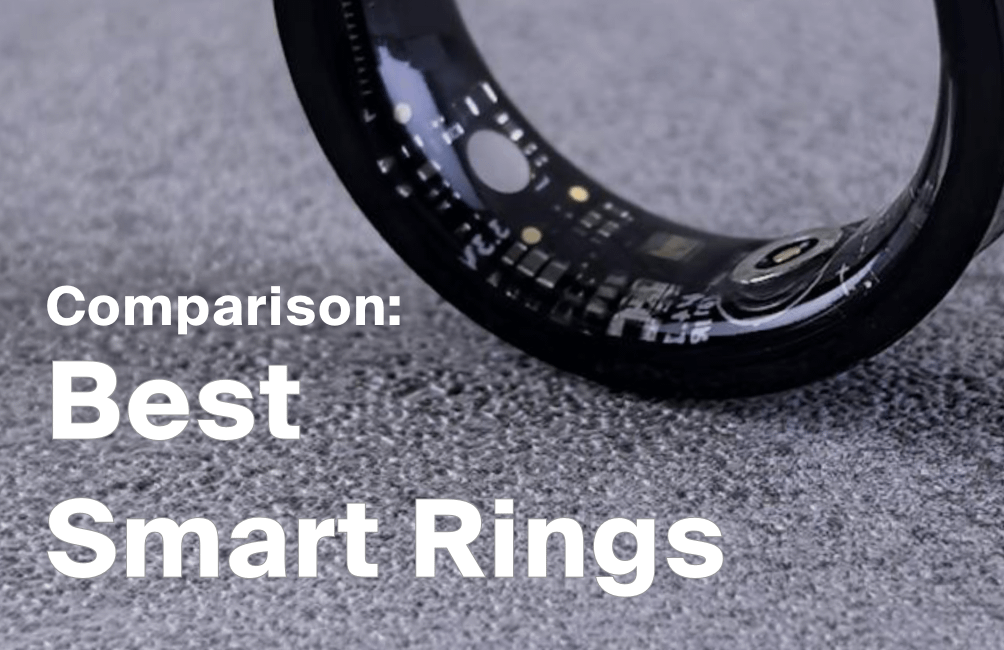
We have been wearing smart rings at CoolCuration for the past few months, and honestly, it has changed how we think about health tracking. Between the five of us on the team, we have tested every major option on the market right now. So if you are looking for the best smart rings UK buyers can actually get hold of in 2026, this is everything we have learned from wearing them day and night, through gym sessions, pub trips, rainy runs and too many late coffees.
Below, you will find hands-on verdicts for five rings, a head-to-head comparison table, a breakdown of how smart rings stack up against the Apple Watch, and a practical buying guide to help you pick the right one. Every product has been worn for weeks, not just unboxed for a quick look. Let's get into it.
What is a smart ring?
A smart ring is a small, sensor-packed wearable you slide onto your finger. It tracks health metrics like heart rate, heart rate variability (HRV), blood oxygen, skin temperature, sleep stages and daily activity. Unlike a smartwatch, there is no screen, no notifications, and no vibrations buzzing your wrist every five minutes. You wear it, forget about it, and check the companion app when you are ready.
For most people, the biggest draw is sleep tracking. Wearing a chunky watch to bed is uncomfortable, and that is where rings genuinely shine. They are lighter, slimmer and far less intrusive. Several of us on the team had given up on overnight tracking entirely before switching to a ring.
The trade-off? No GPS, no real-time workout display, and no message previews. Smart rings are passive trackers. They collect data quietly and let you review it later. If you want both, pairing a ring with a smartwatch is increasingly common, and something we will cover further down.
The best smart rings you can buy in the UK right now
1. Oura Ring 4 — the gold standard
Price: From £349 (ceramic) | Metallics from £349 to £499
Subscription: £5.99/month after first month free
Battery life: 5 to 8 days
Compatibility: iOS and Android
The Oura Ring 4 is the one everyone talks about for a reason. After three months of daily wear, the sleep data is the most detailed and consistent of any ring we tested. It tracks sleep stages, HRV, resting heart rate, blood oxygen and skin temperature, then rolls it all into a morning Readiness Score that genuinely influenced how we planned our days. One of us noticed it picked up a restless night after a late coffee that the Apple Watch missed entirely.
The all-titanium build is noticeably premium. It survived weeks of washing up, gym sessions and one accidental tumble onto a tile floor without a scratch on the silver model. The Stealth (matte) finish does pick up visible marks more quickly, so keep that in mind. The sizing kit arrived within three days and is essential: Oura's sizes do not match standard jewellery sizing, and the new fully round interior means many people go up a size from what they would expect.
Smart Sensing, Oura's upgraded sensor platform, adapts to the ring's position on your finger. Even when it twists 30 degrees mid-sleep, the readings stay solid. Auto-detection now covers over 40 activities, though it occasionally confused a stressful Teams call with light exercise.
The elephant in the room is the subscription. At £5.99 per month, it is not ruinous, but it stings for a ring that already costs £349. Without it, you lose almost all the detailed insights and are left with a very expensive piece of titanium. The Oura Advisor AI feature is improving, but it does not yet feel essential enough to justify the ongoing cost on its own. Still, the raw data quality is best in class.
Best for: Anyone who wants the most accurate sleep and recovery data available in a ring, and does not mind paying monthly for it.
For a deeper look at the Oura Ring 4 and how to get hold of one, see our Oura Ring 4 detail page.
Also available direct from ouraring.com.
2. Samsung Galaxy Ring — best for Samsung users
Price: £399 RRP (frequently on sale from £249 to £299)
Subscription: None
Battery life: Up to 7 days
Compatibility: Android only (Samsung Galaxy phone required for full features)
If you are already embedded in the Samsung ecosystem, the Galaxy Ring feels like a natural extension of your setup. It feeds directly into Samsung Health, and if you pair it with a Galaxy Watch, the data fusion between the two is genuinely useful. Sleep coaching in particular benefitted from having both devices feeding into the same platform.
In practice, we got around five to six days of battery, which is slightly less than Oura but perfectly manageable. The big win is the charging case. Unlike Oura's single puck, Samsung's case is shaped like an earbuds case and holds a spare charge, meaning you can top up on the go. It feels far more practical, especially when travelling.
Design-wise, the Galaxy Ring is sleek and lightweight. It is available in black, silver and gold, and the concave inner surface sits comfortably. Build quality matches the Oura.
Here is the catch, though: the Galaxy Ring does not work properly with iPhones. Samsung Health integration is the backbone of the experience, and that requires a Galaxy phone. If you are an iPhone user, skip this one entirely. Additionally, the sleep data, while good, is not quite as granular as Oura's. You get stages and a score, but the deeper insights around HRV trends and temperature shifts are less detailed.
The major selling point against Oura is no subscription fee. All features are included from day one, and at the current sale prices (it regularly drops below £300), the Galaxy Ring is surprisingly competitive on value.
Best for: Samsung Galaxy phone owners who want seamless ecosystem integration and no ongoing fees.
Also available from samsung.com/uk.
3. Ultrahuman Ring Air — best for subscription-haters
Price: From £229 (on sale) to £299 RRP
Subscription: None
Battery life: Up to 6 days
Compatibility: iOS and Android
The Ultrahuman Ring Air is the ring we recommend most often to people who refuse to pay monthly for their own health data. Every feature is unlocked from the moment you set it up, and the Ultrahuman app is genuinely excellent. It is clean, well-designed, and updated frequently.
PowerPlugs are the standout feature. These are modular health tools built on your biometric data: a Caffeine Window tells you the best time to have your coffee based on your circadian rhythm, Screentime Impact tracks how late-night phone use affects your sleep, and Circadian Phase Alignment helps optimise your body clock. They feel like genuinely useful additions rather than gimmicks.
Sleep tracking is strong, covering REM, deep, light and wakefulness stages alongside a recovery score. In our testing, it aligned closely with the Oura's readings on most nights, though the Oura did pick up a few more nuances during particularly disrupted sleep. The step counter drew some complaints from other reviewers for occasional inaccuracy, and we did notice some discrepancies compared to a Fitbit on days with mixed activity.
The Ring Air is comfortable and light. Available in six finishes (including a striking Brushed Rose Gold), it looks more like actual jewellery than any other ring on this list. Battery life consistently hit five to six days in our experience, which is perfectly workable.
Best for: iPhone or Android users who want premium build quality, strong health insights, and zero recurring costs.
Also available from ultrahuman.com.
4. RingConn Gen 2 — best budget smart ring
Price: £299
Subscription: None
Battery life: 10 to 12 days
Compatibility: iOS and Android
The RingConn Gen 2 is where things get interesting for anyone curious about smart rings but not ready to spend Oura money. At £299 with no subscription, it represents solid value, and the battery life is genuinely remarkable. We consistently got 11 days between charges, which makes every other ring on this list look power-hungry by comparison.
Sleep tracking is the headline feature, and it now includes sleep apnea monitoring developed with university research partners. While this is not a medical diagnostic tool, it does provide an AHI (apnoea-hypopnoea index) score that could prompt a conversation with your GP. That is a unique feature at this price point.
The charging case is arguably the best in the category. It feels premium, holds extra charges, and keeps the ring safe when you are not wearing it. Samsung's case is good, but this one edges it.
However, the app does feel less polished than Oura's or Ultrahuman's. The data is all there, but the interface has a slightly generic quality. Third-party integrations (like Strava) are also missing, which limits how useful the data is for serious athletes. Some Amazon UK reviewers also noted that the black PVD coating scratches easily, and one reported rusting on the charging contacts after regular showering, so we would recommend removing it for water activities despite the 100m rating.
Best for: Curious newcomers who want impressive battery life and sleep apnea monitoring without breaking the bank.
Also available from ringconn.com.
5. Amazfit Helio Ring — the cheapest entry point
Price: From £149 on Amazon UK (reduced from £269)
Subscription: None for core features (Zepp Aura premium optional)
Battery life: 3 to 4 days
Compatibility: iOS and Android
The Amazfit Helio Ring is the most affordable smart ring on this list by a significant margin, and at its current reduced price of around £149, it is a genuinely tempting way to try ring-based tracking without committing hundreds of pounds.
Sleep tracking is solid. We got detailed breakdowns of sleep stages, and the recovery score each morning proved useful for deciding between a hard gym session and a rest day. The Zepp app has been substantially revamped since launch and now feels far more suited to ring-based data. If you already own an Amazfit watch, the ring integrates seamlessly, with the watch handling workouts and GPS while the ring takes over for overnight recovery.
The build is good: titanium alloy with a distinctive knurled gold-grey finish. It weighs under 4g and is comfortable around the clock. Water resistance is rated to 10 ATM (100m), which is the highest on this list.
The downsides are notable, though. Battery life is the weakest here at three to four days. More importantly, the Helio Ring only comes in three sizes: 8, 10, and 12. If none of those fit your finger, you are simply out of luck. For context, the Oura offers sizes 4 to 15. There is also no auto workout detection, meaning you need to manually log exercise through the app. And Amazfit is currently in a patent dispute with Oura, so the long-term product roadmap is uncertain.
Best for: Budget-conscious buyers or Amazfit watch owners who want affordable ring tracking and are lucky enough to fit one of the three sizes.
Also available from uk.amazfit.com.
Comparison table
| Ring | Price | Subscription | Battery | Best feature | Our verdict |
|---|---|---|---|---|---|
| Oura Ring 4 | From £349 | £5.99/month | 5-8 days | Sleep accuracy | Best overall, if you accept the sub |
| Samsung Galaxy Ring | £399 (often £249-£299) | None | 5-7 days | Samsung Health integration | Brilliant for Samsung users only |
| Ultrahuman Ring Air | From £229 | None | 5-6 days | PowerPlugs insights | Best value for no-subscription tracking |
| RingConn Gen 2 | £299 | None | 10-12 days | Battery life and sleep apnea | Great starter ring with epic battery |
| Amazfit Helio Ring | From £149 | None (premium optional) | 3-4 days | Price | Cheapest way in, limited sizing |
Smart ring vs Apple Watch: do you need both?
This is the question we get asked most often, and after months of testing, our honest answer is: yes, if you can justify it, wearing both is the ideal setup.
Here is why. Smart rings are significantly better for sleep tracking. You actually wear them to bed. Every single person on our team who tried sleeping with an Apple Watch gave up within a week because the bulk, the charging schedule, and the screen glow were too disruptive. A ring weighing 3 to 5 grams? You genuinely forget it is there. The sleep data from Oura and Ultrahuman in particular was more detailed and more consistent than anything we got from an Apple Watch overnight.
On the other hand, the Apple Watch is unbeatable for real-time workout tracking. GPS mapping on a run, live heart rate zones during a HIIT session, notifications, Apple Pay at the coffee shop afterwards: no ring can do any of that. If you are training for anything specific, a watch is essential.
Several of us now run a "ring at night, watch by day" setup. The ring handles sleep and recovery data while the Apple Watch covers everything else. If you are thinking about trying this, the Apple Watch Series 11 (from £369) is the sensible starting point, while the Apple Watch Ultra 2 is still available at clearance prices and is exceptional for outdoor sports.
Check Apple Watch Series 11 on Amazon
Check Apple Watch Ultra 2 on Amazon
If you are on the Android side, the Google Pixel Watch 4 is a strong alternative. We reviewed it in detail over on our Google Pixel Watch 4 review.
How to choose the right smart ring
Get the sizing right
Every ring on this list uses its own sizing system, and none of them match standard jewellery sizes. Always order the free sizing kit first. Wear the test ring for at least 24 hours, including overnight, before committing. Your fingers swell in the morning and shrink in cold weather, so a single afternoon try-on is not enough.
Consider subscription costs
Only Oura charges a monthly subscription (£5.99). Over two years, that adds roughly £144 on top of the ring price. Samsung, Ultrahuman, RingConn and Amazfit all include their full feature sets without ongoing fees. If the idea of paying monthly for your own biometric data feels wrong, that narrows the field quickly.
Check phone compatibility
The Samsung Galaxy Ring requires a Samsung Galaxy phone for full functionality. Every other ring on this list works with both iOS and Android. If you are an iPhone user, Samsung is off the table.
Set realistic battery expectations
Manufacturers quote best-case figures. In practice, with all sensors enabled, expect roughly one to two days less than the headline claim. The RingConn Gen 2 is the standout here, easily lasting over a week. The Amazfit Helio Ring, at three to four days, requires the most frequent charging.
Water resistance is not waterproof
All five rings are rated for swimming and showering. In practice, we had no issues with any ring in the shower or pool. However, hot tubs and saunas are generally not recommended, and one reviewer reported corrosion on the RingConn's charging contacts after prolonged exposure. When in doubt, take it off for extended water activities.
A note on health data accuracy
Smart rings are wellness tools, not medical devices. The data they provide can be incredibly useful for understanding trends in your sleep, recovery and stress, but no consumer wearable replaces professional medical advice. If a ring flags something concerning, such as consistently low blood oxygen or irregular heart rate patterns, treat it as a prompt to speak with your GP rather than a diagnosis. The NHS sleep and tiredness guidance is a good starting point for anyone looking to improve their sleep habits alongside wearable tracking.
For those interested in the sleep tech side of things, our review of the Soundcore Sleep A20 sleepbuds covers another wearable we have been testing overnight.
Frequently asked questions
Are smart rings worth it in the UK?
If sleep and recovery tracking are your priority, absolutely. Smart rings are lighter, more comfortable overnight, and less distracting than a smartwatch. The best smart rings UK buyers can get right now offer genuinely useful health data. That said, they do not replace a smartwatch for workout tracking, GPS or notifications. Think of them as complementary rather than a replacement.
Oura Ring vs Samsung Galaxy Ring: which is better?
Oura offers deeper, more granular health data, particularly for sleep. Samsung offers tighter integration with the Galaxy ecosystem and no subscription. If you use a Samsung phone and Galaxy Watch, the Galaxy Ring is the obvious choice. For everyone else, Oura's data quality gives it the edge, subscription notwithstanding.
Do smart rings work with iPhone?
All smart rings on this list work with iPhone except the Samsung Galaxy Ring, which requires a Samsung Galaxy phone. Oura, Ultrahuman, RingConn and Amazfit all have full-featured iOS apps.
Can you wear a smart ring and a watch at the same time?
Yes, and many people do. A common approach is to wear the ring overnight for sleep tracking and the watch during the day for workouts and notifications.
What's trending





Recent posts
- Premium Bonds Alternatives UK 2026: Prize Savings Accounts Compared
 Four Premium Bonds alternatives open to new savers, with each provider's published odds, prize tables, access rules and protection.
 - Best Audiobooks October 2026: 10 UK Listens RankedTen new audiobooks for October 2026, from a full-cast Dracula with Jonathan Bailey to Russell T Davies reading his own television memoir.
- Louis Fratino at David Zwirner ReviewLast updated: 4 October 2026 By Tristan · Arts, exhibitions and creative culture This is an opinion piece. Views expressed are the author's own and do not constitute professional advice. Exhibition reviewMayfair Saunas, subway cars and a lot of skin in Mayfair Louis Fratino at Zwirner is the American painter's first solo show in London,… Read more: Louis Fratino at David Zwirner Review



No Comments.