

Last updated: 5 May 2026
By Stiv · Design, technology and personal finance
Your savings account probably gives you a forgettable return while inflation slowly chews up the value of your cash. Plenty of us know we should look at the alternatives, yet investing can feel like a locked club where you need a pinstripe suit and a secret handshake to get past the door. So this guide on how to start investing UK-side is here to demystify it.
In this post, we will walk through the difference between saving and investing, explain what a Stocks and Shares ISA actually does, share what has worked for us starting with small amounts, and look at beginner-friendly apps including Freetrade, Lightyear, Robinhood UK, Monzo Investments and J.P. Morgan Personal Investing. Let's get into it.
Important: This article is for informational purposes only and does not constitute financial advice. CoolCuration is not authorised by the Financial Conduct Authority. All investing involves risk and your capital is at risk, which means you could get back less than you put in. Always do your own research, read the terms and conditions, and never invest more than you can afford to lose. Some links on this page are referral links. We may earn a small commission at no extra cost to you. Our opinions remain independent of any affiliate relationship.
Investing vs saving: why it matters when you start investing UK
First, it helps to understand the difference between saving and investing. Saving means putting money into a bank account for short-term goals like a holiday or an emergency fund. In return, your money earns modest interest and stays relatively stable.
Investing, on the other hand, means putting money into assets like stocks, funds or bonds with the aim of long-term growth. In exchange for that growth potential, you accept the risk that your money could go down as well as up.
Here is the uncomfortable bit: if your cash sits in a low-interest savings account, inflation can quietly shrink its real value over time. That is why compound interest tends to be so powerful. Even small amounts, invested consistently over years, can grow significantly. For a quick reality check, the free savings calculator at MoneyHelper is a useful place to start.
In short, saving alone may not cut it for long-term goals like retirement or financial freedom. From our experience, starting to invest early, even with modest sums, has made a noticeable difference over time.
DIY or done for you? The first decision before you start investing UK
Before picking an app, you need to decide how hands-on you want to be. This is arguably the most important choice you will make at the start.
DIY (self-managed)
With this approach, you pick your own stocks, ETFs and possibly bonds. You decide the level of risk, and you choose when to buy or sell. Apps like Freetrade, Robinhood UK and Lightyear assume you want control. Think of it like cooking dinner from scratch: you pick the ingredients, you flip the pancakes, and occasionally you burn one.
Done for you (managed)
With a managed approach, you answer a few questions about your goals and risk appetite. The provider then builds a portfolio for you and handles the rebalancing. That is the route for Monzo Investments and J.P. Morgan Personal Investing. Think of it like ordering a takeaway: you do not lift a pan, but you might get less spice than you would choose yourself.
Neither route is universally better. From our experience, DIY tends to suit people who enjoy learning and want control, while managed investing works well for those who prefer a hands-off approach.
The beginner app comparison
Below is a head-to-head look at five popular platforms for anyone looking to start investing UK-side in 2026.
| Feature | Freetrade | J.P. Morgan | Robinhood UK | Lightyear | Monzo |
|---|---|---|---|---|---|
| Best for | All-rounder DIY | Set-and-forget beginners | US stock fans with ISA | Low-cost global investing | Monzo users wanting simplicity |
| DIY or DFY? | DIY | DFY (Managed) | DIY | DIY | DFY (Managed) |
| Products | GIA, ISA, SIPP | GIA, ISA, JISA, LISA, Pension | GIA, ISA | GIA, S&S ISA, Cash ISA | GIA (managed funds) |
| Key highlight | Free ISA, large stock range | Managed portfolios, big-name backing | Commission-free US stocks | 0.10% FX, multi-currency | Three BlackRock fund bundles |
| FX fee | 0.99% (Basic), 0.59% (Standard), 0.39% (Plus) | N/A (managed funds) | 0.10% (US hours), 0.30% Fri evenings | 0.10% | N/A (managed funds) |
For a more detailed breakdown of FX fees across platforms, take a look at our cheapest investment app UK comparison.
Freetrade: the all-rounder
What we like: Freetrade offers a free, flexible Stocks and Shares ISA on its Basic plan, which is a low-friction way to start investing UK-side without paying platform fees up front. As of January 2026, all plans also include SIPPs, mutual funds, gilts and ready-made portfolios at no extra account cost. The stock range is large, covering UK, US and European markets. From our experience, it is a strong all-rounder for anyone looking to start investing UK-side with plenty of choice.
What to bear in mind: The best FX rates and some premium features sit behind paid tiers. Additionally, FX fees on the Basic plan (0.99%) are noticeably higher than competitors like Lightyear, so frequent buyers of US stocks may want to factor that in.
For our full breakdown, see the Freetrade review. Capital at risk.
J.P. Morgan Personal Investing: the done-for-you option
What we like: If the idea of picking individual stocks fills you with dread, this is one of the more straightforward routes. You answer a few questions, and J.P. Morgan builds and manages a diversified portfolio for you. The institutional backing is reassuring, and the product range includes ISAs, JISAs, LISAs and pensions.
What to bear in mind: Percentage-based fees are higher than ultra-cheap DIY platforms. For smaller pots, the cost drag can add up over time, so it is worth modelling the numbers before committing.
For our full take, head to the J.P. Morgan Personal Investing review. Capital at risk.
Robinhood UK: the US stock specialist
What we like: Robinhood launched in the UK in March 2024, and as of February 2026 it offers UK investors a way to start investing UK-side with a Stocks and Shares ISA that has no platform fee, no commissions and a 0.10% FX fee per trade during US market hours. The app is slick and built around accessing around 5,000 US-listed stocks and ADRs. Whole and fractional shares are both supported. According to Robinhood's own announcement, the ISA also includes a built-in contribution tracker.
What to bear in mind: The platform is heavily focused on US equities. You cannot currently invest in UK-listed shares directly (ADRs are available instead), and there is no SIPP. The FX fee also rises to 0.30% on Friday evenings (17:00 to 21:00 ET), so timing matters if you trade then. Promotional offers are time-limited and change periodically, so always check the current terms before signing up.
Lightyear: the low-cost global investor
What we like: Lightyear has rapidly become one of the cheapest ways to start investing UK-side in UK, US and European stocks. As of March 2026, FX fees sit at just 0.10%, and there are no trading commissions in either the GIA or the Stocks and Shares ISA. The platform also offers a Cash ISA and pays interest on uninvested cash via money market funds. For context, Lightyear was voted Best Investing App at the 2026 Good Money Guide Awards.
What to bear in mind: There is no SIPP, LISA or Junior ISA yet. Lightyear is self-directed, so you will need to pick your own investments. Research tools are improving but remain more basic than traditional brokers.
For our full review, see the Lightyear review. Capital at risk.
Monzo Investments: the tap-and-relax option
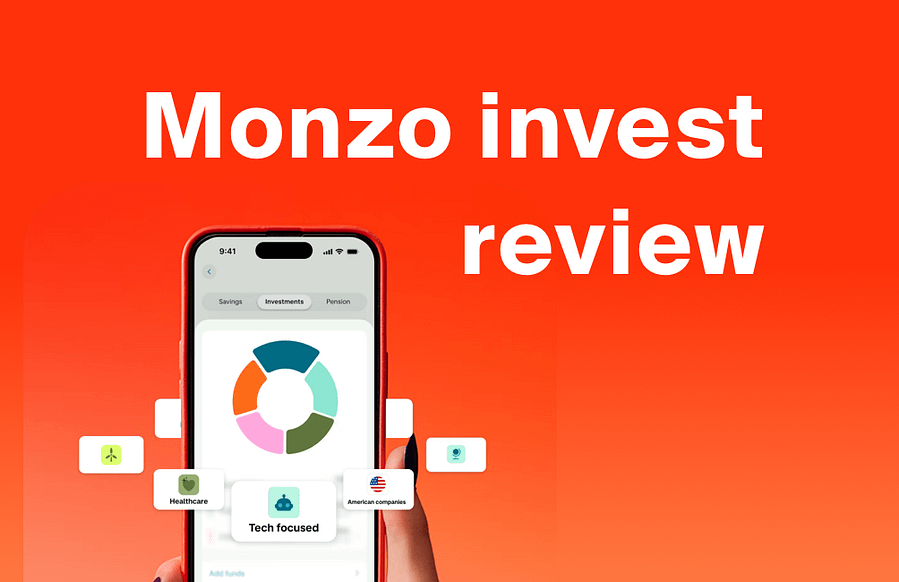
What we like: If you already use Monzo and want to start investing UK-side without downloading yet another app, this is a useful middle ground. Monzo offers three pre-made BlackRock fund bundles: Careful, Balanced and Adventurous. Setup takes seconds inside the Monzo app, and it is built around a fully managed experience.
What to bear in mind: You get very little choice compared to DIY platforms. The combined platform and fund fees are also higher than pure DIY apps. Currently, there is no ISA wrapper for Monzo Investments, so any returns may be subject to tax outside an ISA.
Spreading risk by combining platforms
Here is something many beginners overlook: you do not have to pick just one platform forever. From our experience, spreading across platforms can help you work out what suits you best.
For example, you could:
- Open a Stocks and Shares ISA with Freetrade, Lightyear or Robinhood UK for a tax-free long-term pot.
- Try a managed portfolio with J.P. Morgan Personal Investing to see if the hands-off approach works.
- Use a GIA with Lightyear or Monzo as a learning account for global stocks or managed funds.
Since April 2024, you can pay into multiple ISAs of the same type in a single tax year, as long as your total contributions across all ISAs do not exceed £20,000. So you could split your ISA allowance across Freetrade and Lightyear if you wanted. Just keep careful track of how much you have paid in across all accounts. Also worth noting: if you are weighing investing against paying down a mortgage, our overpay mortgage or invest guide walks through that trade-off.
What is a Stocks and Shares ISA?
If you are a UK resident and new to investing, the Stocks and Shares ISA is generally the first port of call for most people. It is a tax-efficient wrapper that shelters your investment growth and dividends from UK tax. For the 2026/27 tax year, the annual ISA allowance remains at £20,000.
Here is the key change to watch: from 6 April 2027, the Cash ISA allowance for under-65s will drop to £12,000, with the remaining £8,000 of the £20,000 allowance needing to go into other ISA types (such as a Stocks and Shares ISA). Over-65s keep the full £20,000 cash allowance, at least initially. The overall ISA allowance is also frozen at £20,000 until 2030. For more detail on ISA rules, see the official HMRC ISA guidance.
If you are looking for ideas on where to open one, take a look at our guide to the best investment ISA for 2026.
Understanding the fees
Fees might seem small, but they compound over time and can seriously dent returns. Here are the main ones to watch:
- Platform fee: What the app charges for holding your account. Some charge a flat monthly fee, others a percentage of your portfolio.
- FX fee: When you buy non-UK stocks, your pounds get converted to dollars or euros. The provider then charges a markup for this. Lightyear's 0.10% currently sits at the cheaper end of major UK apps.
- Fund fee: If you invest in funds or ETFs, the fund manager charges an ongoing cost embedded in the fund. This applies on all platforms.
- Trading commission: Some platforms charge per trade. Many newer apps have removed this entirely.
Always check the full fee breakdown before committing. Even small differences in fees can mean thousands of pounds over a decade.
How your money is protected
Investments and savings are protected differently under the Financial Services Compensation Scheme (FSCS). For eligible investments, the FSCS covers up to £85,000 per person, per firm if the firm itself fails. For cash deposits in UK-authorised banks and building societies, the limit is now £120,000 per person, per banking group following the December 2025 update. Both protect against the firm failing, not against market losses.
Always check that your chosen platform is FCA-regulated before you invest. Capital is at risk regardless of FSCS protection, because the scheme does not cover falls in the value of your investments.
Reminder: All investing involves risk and your capital is at risk. Past performance is not a guide to future returns. The information in this article is for general guidance only and is not personal financial advice. Always consider speaking to a qualified, FCA-regulated independent financial adviser before making investment decisions.
Where could you start investing in the UK?
To wrap up, here is a quick summary of how the platforms have stacked up for us:
- For a tax-free ISA with DIY stock picking: Freetrade for the widest range, or Robinhood UK if you focus on US equities.
- For the cheapest global access: Lightyear leads on FX fees at 0.10%, with a fee-free ISA.
- For hands-off managed investing: J.P. Morgan Personal Investing is well established. Monzo Investments is the simpler alternative if you already bank with Monzo.
That said, the right platform depends on your goals, your appetite for risk, and how hands-on you want to be. Take your time, do your own research, and start with whatever you can comfortably afford to risk.
Frequently asked questions about how to start investing UK-side
How much money do I need to start investing UK-side?
Less than you might expect. Many of the apps mentioned here let you begin with as little as £1. The size of your first deposit is far less important than consistency over time. From our experience, regular small contributions can add up significantly over the years.
Is investing just gambling?
No, not if you approach it thoughtfully. Gambling is high-risk, short-term speculation. Investing is a long-term strategy designed to grow wealth gradually. However, your money can still go down as well as up. Many UK platforms are covered by the FSCS up to £85,000 per person per firm if the platform itself fails, although this does not protect against market losses.
What is a Stocks and Shares ISA and why does it matter?
A Stocks and Shares ISA is a tax-efficient account for UK residents. Any investment growth, dividends and interest earned inside the ISA are free from UK income tax and capital gains tax. The current annual allowance is £20,000 for the 2026/27 tax year, and it is frozen at that level until 2030.
Can I have more than one Stocks and Shares ISA?
Yes. Since April 2024, you can pay into multiple ISAs of the same type in a single tax year. However, your total contributions across all ISAs must not exceed £20,000 in a tax year.
What happens if a platform goes bust?
Your investments are typically held separately from the platform's own money. On top of that, the FSCS covers eligible investments up to £85,000 per person per firm. Always check that your chosen platform is FCA-regulated before you invest.
Should I invest or pay off debt first?
This is highly personal and depends on the type and rate of debt you hold. The interest you pay on high-interest debt (such as credit cards) is often higher than the long-term returns you might earn from investing, which is why many sources suggest tackling that kind of debt first. For lower-interest debt, the picture is less clear-cut. If you are unsure, speak to a qualified financial adviser before making a decision.
Carry on reading
- Cheapest investment app UK: FX fees compared - a side-by-side look at FX fees across the main platforms.
- Best investment ISA for 2026 - our pick of providers for the new tax year.
- J.P. Morgan Personal Investing referral code - how to claim our referral offer for managed investing.
- Sprive vs Plum vs Chip - comparing three popular finance apps for everyday UK savers.
- Chip app guide - the easy-to-use savings and investing app explained.



No Comments.