
Last updated: 10 September 2026
By Stiv · Design, technology and personal finance
This review is based on my own experience using InvestEngine since the start of 2026, running a DIY, self-managed General Investment Account as a real-money "fun pot" alongside my JPMorgan and Monzo accounts.
This is an opinion piece. Views expressed are the author's own and do not constitute professional advice.
This article contains affiliate or referral links. If you click through and sign up I may earn a commission or referral bonus at no extra cost to you. It does not affect my editorial view.
Nothing here is financial advice. It is simply one person's experience, so please do your own research.
Capital at risk. The value of investments can go down as well as up and you may get back less than you invested. Past performance is not a reliable indicator of future results.
Cool Factor: 4/5
Welcome to my InvestEngine review. For about six months I have quietly tested InvestEngine, the UK commission-free ETF platform, with my own money. So this InvestEngine review is not a spec sheet. Instead, it is what the app is actually like to live with. In short, the fees impressed me, the ETF focus won me over, and paying money in has got a lot easier since I started. It still does not feel quite polished.
Thinking of trying InvestEngine?
The current InvestEngine welcome offer, and exactly how to claim it, are kept up to date on our referral page.
See the InvestEngine welcome offer
What is InvestEngine?
First, the basics. InvestEngine is a UK app that lets you invest in exchange-traded funds, or ETFs, with no dealing commission. It calls itself "The ETF Investing Platform", and that label is honest. You buy funds, not individual company shares. So there is no single-stock flutter here, only baskets of shares wrapped up in one ETF.
In its own words, InvestEngine offers "No buying and selling fees for 870+ exchange-traded funds". You can build your own mix, which it calls DIY, or hand it over to a ready-made Managed portfolio. For me, the DIY route was the draw. Because ETFs spread your money across hundreds of companies, the risk feels more balanced than picking single stocks. Honestly, that is a calmer way to start.
It also runs a "Powerfully simple" philosophy: "We don't believe in high fees, confusing products or noise." Mostly, it delivers on the fees. The noise part, as I will explain, is where my InvestEngine review turns more critical.
Who runs it, and is it safe?
Safety matters more than any bonus, so let us cover it early. The platform is operated by InvestEngine (UK) Limited, which is authorised and regulated by the Financial Conduct Authority under FRN 801128. You can check that entry yourself on the FCA Register. As always, I would encourage you to verify any provider before you fund an account.
Your investments also sit under the Financial Services Compensation Scheme. Eligible investments are protected up to £85,000 per person per FCA-authorised firm by the FSCS. Importantly, that cover only applies if InvestEngine itself fails, not if your investments fall in value. The FSCS never protects you from market losses, because the value of investments can go down as well as up. It is also separate from the £120,000 deposit cover you get with a bank. On top of that, your ETFs are held apart from InvestEngine's own money, which adds another layer of comfort.
Tax treatment depends on the individual circumstances of each client and may be subject to change in future. So if you use the ISA or the pension, do check how the rules apply to you.
Getting started and the app
Signing up was quick. After a short ID check, I was in within a day. There is one catch to note, though: you need £100 to open. After that first £100, you can top up from as little as £1, which is generous. Fractional investing does the heavy lifting here, so even a fiver buys a sliver of an ETF.
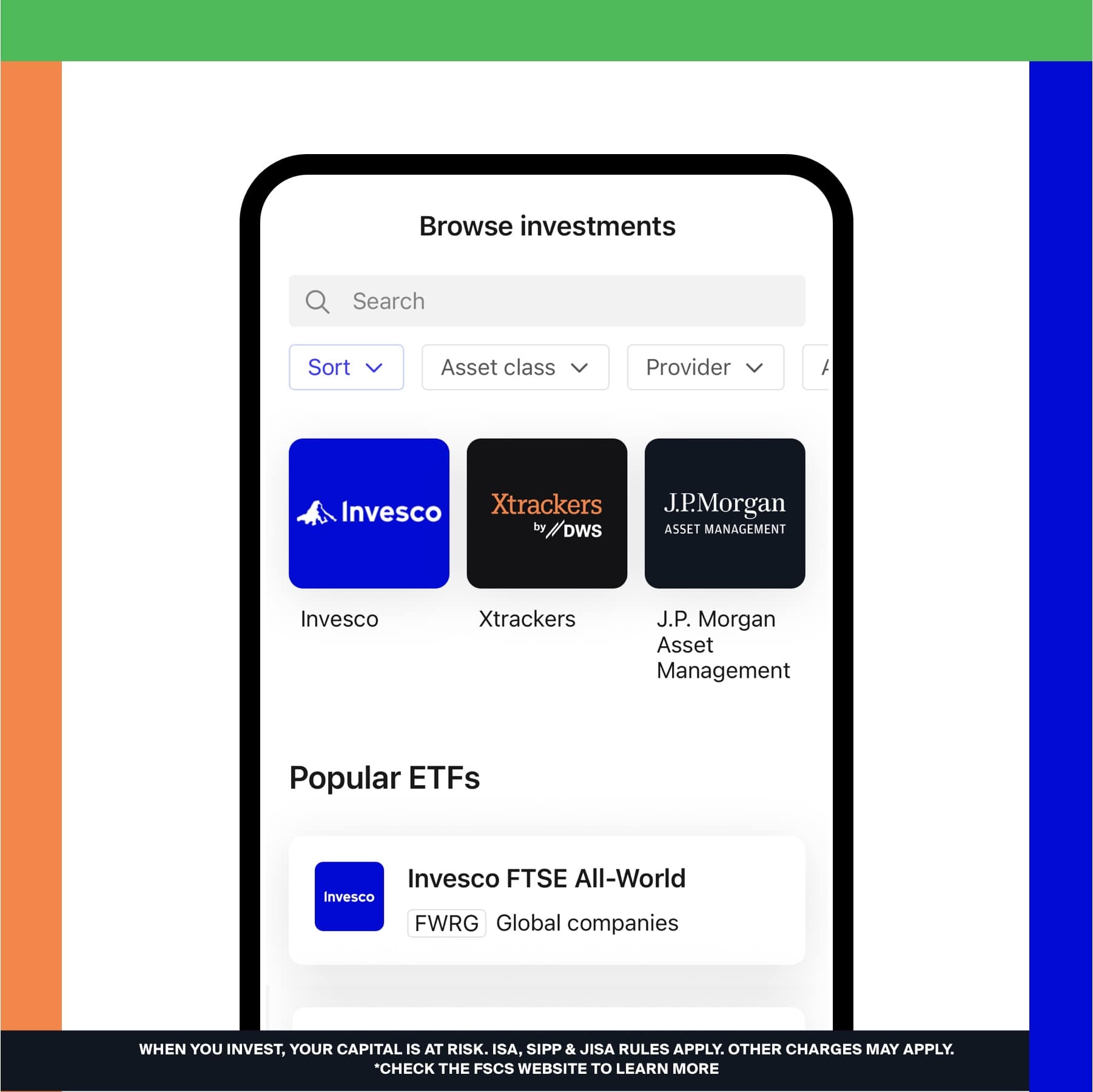
For this InvestEngine review I lived in the app for months, so I know its rhythm. On the whole, it is clean and quick. The information on each ETF is really useful: clear, detailed and laid out in a standard, readable way. Better still, InvestEngine pulls news and market articles into the app and pins them to the home screen. I really like that touch. In fact, only Finimize has done something similar in the apps I have tried, so credit where it is due.
InvestEngine fees, honestly
Now the part that made me stay: the fees. For DIY portfolios, including the ISA and the SIPP, InvestEngine charges no platform fee. That is not a teaser rate either. Even the pension is fee-free, after InvestEngine scrapped its old 0.15% SIPP charge back in December 2024.
You still pay the underlying ETF cost, of course, because every fund charges its own small annual fee. Yet those are tiny, often around 0.1% to 0.2%. If you prefer a Managed portfolio, InvestEngine adds 0.25% a year on top. Compared with many rivals, that is keen. For a fuller breakdown, see my guide to the cheapest investment apps in the UK.
So on cost, this InvestEngine review lands firmly positive. Low fees are the whole point, and here they are real rather than marketing.
DIY portfolios and auto-invest
My own pot is simple. I hold 100% in the Vanguard FTSE All-World ETF, which spreads across thousands of companies worldwide. It is the same broad benchmark Freetrade uses to represent "the market", so it felt like a sensible anchor for a fun-money experiment.
Building a DIY portfolio is easy enough. You pick your ETFs, set your target weights, and InvestEngine keeps things roughly in line. Auto-invest, which sits inside its Savings Plans, is the clever bit. Essentially, you set up a regular direct debit, then new money gets invested automatically across your chosen funds. As a result, you drip in steadily and ride out the bumps, a habit known as pound-cost averaging.
That said, I will be honest: I was never quite sure what "auto-invest is on" actually meant at a glance. The label is there, but the app does not explain it well. Once I understood it, I liked it. Still, getting to that point took longer than it should have.
Managed portfolios, Savings and LifePlans
If you would rather not choose funds yourself, InvestEngine offers hands-off options. Managed portfolios build and rebalance a mix for you, based on your risk appetite, for that 0.25% fee. There are also LifePlans, which are all-in-one funds you can hold and forget, plus a Savings option for cash you want to keep aside.
Managed portfolios have been closed to new customers for stretches of 2026 while InvestEngine reworks its portfolio-building questionnaire, and on 10 September 2026 my app showed them paused again: "New Managed portfolios are temporarily unavailable", with existing portfolios unaffected. When they are open, you fill in the questionnaire, InvestEngine builds and rebalances the portfolio for 0.25% a year, and each ETF's own cost sits on top. You can start one from £100, or from £10 a week through a Savings Plan. I will update this line when it changes.
If you would rather not choose anything at all, there is a gentler option. JPMorgan Personal Investing handles the whole thing for you, and it has been doing so far longer, having taken over from Nutmeg on 3 November 2025. In my view, that longer track record makes it a reassuring first home for hands-off, fully managed investing.
The welcome and referral bonus, framed straight
No InvestEngine review is complete without the bonus small print, because the headline can mislead. Yes, InvestEngine advertises "up to £200" for both referrer and referee, and up to £400 on a Business Account. However, the reward is randomly generated across five tiers. Crucially, InvestEngine's own terms show that around 75% of payouts land in the £20 to £24 band. The £150 to £200 top tier lands just 2% of the time.
My experience matches that maths exactly. I have had two rewards so far, one worth £50 and one worth £20. I have never seen anything close to £200, and I did not expect to. To qualify, you invest at least £100 of your own money, the referee must be new, and both sides must stay invested for 12 months or the bonus can be reclaimed. Fair enough, really: they reward loyalty, not a quick in-and-out.
Check the current InvestEngine welcome offer
Capital at risk. The value of investments can go down as well as up and you may get back less than you invested. Past performance is not a reliable indicator of future results.
Honest critical observations
Now for the part every honest InvestEngine review needs. There is plenty that frustrates me, and none of it is a dealbreaker, yet it adds up.
First, the money route. Adding cash used to mean three separate moves: money into the account, then into the GIA, then assigned to an ETF. Savings Plans and instant bank transfers have shortened that a lot and it no longer catches me out every time. Even so, it is still more taps than a rival that invests your deposit in one.
Second, it is ETF-only. There are no individual shares, no investment trusts and no unit trusts. For me that is fine, even a feature, but share-pickers will feel boxed in.
Third, the visual design and hierarchy need work. Bluntly, it looks a little confused, as though the final polish never arrived. It does the job, yet it lacks the care of Monzo or the settled feel of JPMorgan. That gap is one of the two things keeping this at 4 out of 5 rather than 5.
Fourth, the in-app articles. Pinning market news to the home screen is a good idea and I still like that it is there. The trouble is that the same pieces stay pinned for weeks, so the feed rarely gives me a reason to open the app.
How InvestEngine compares
Context helps, so here is where it fits. For this InvestEngine review I put it beside its rivals. On fees, InvestEngine undercuts Vanguard's own platform for many people, while offering a far wider ETF range. Against JPMorgan Personal Investing, it feels more DIY and less hand-held; JPM has the polish and the track record, InvestEngine has the lower fees. Compared with Monzo's investing, it is cheaper, but nowhere near as friendly for a nervous beginner.
Trading 212 and Freetrade come at it from the shares angle, so they suit people who want single stocks as well as funds. Lightyear sits close on low costs too. In truth, InvestEngine wins on ETF focus and price, then loses on warmth and finish. According to Finder's review, that low-cost, ETF-only positioning is exactly its calling card, which chimes with what I have found.
Value for money, and who it suits
Is it worth it? On price, easily. If you know you want ETFs and low fees, InvestEngine is one of the cheapest ways to do it in the UK, thanks to that no-platform-fee model, and my best investment ISA shortlist reflects that. The value is real.
This InvestEngine review would not be complete without asking who it suits, though, and that is the sharper question. In my view it is not ideal for a total beginner who does not yet know what an ETF is. For them, a fully managed option like Monzo or JPMorgan is gentler. Instead, InvestEngine fits the middle ground: mid-confidence investors who want to steer their own ship, without going all-in on picking individual shares. If that is you, it is a lovely stepping stone.
The verdict on this InvestEngine review
Cool Factor
★★★★☆
4 out of 5
So where does that leave us? InvestEngine earns 4 out of 5, Stone cold on my scale: properly impressive, and well worth the money. The fees are excellent, the ETF focus is refreshing, the idea is simple enough to explain in one sentence, and the app has visibly improved since I opened the account. What stops it reaching 5 is that the in-app articles update rarely and the whole thing still does not feel quite polished.
Overall, this InvestEngine review lands at 4/5, Stone cold. It earned that on price, on how much easier the app has become to use, and on a payment route that has improved a lot since I opened the account. It did not reach 5 because the articles update rarely and the design still sits a step behind Monzo's care or JPMorgan's polish. Come for the fees and the ETF focus, and expect a platform that is still improving rather than finished. For me, as a fun-money pot, it has been well worth the experiment.
InvestEngine review: frequently asked questions
Is InvestEngine worth it?
In my experience, yes, if you want low-cost ETF investing and you are happy to steer your own portfolio. The no-platform-fee model on DIY, the ISA and the SIPP is the standout. If you need lots of hand-holding, though, a managed rival may suit you better.
Is InvestEngine safe and FCA regulated?
Yes. InvestEngine (UK) Limited is authorised and regulated by the FCA under FRN 801128, and eligible investments are protected up to £85,000 per person per FCA-authorised firm by the FSCS. Remember, though, that this cover applies if the firm fails, not if your investments fall in value.
What are InvestEngine's fees?
DIY portfolios, the ISA and the SIPP carry no platform fee. You pay only each ETF's small annual cost. Managed portfolios then add 0.25% a year on top. In short, it is one of the cheaper options around.
InvestEngine vs Trading 212 or Vanguard: which is better?
It depends on what you want. Trading 212 lets you buy individual shares as well as ETFs, so it suits stock-pickers. Vanguard only offers its own funds and charges a platform fee, whereas InvestEngine spans 870-plus ETFs for free. For broad, low-cost ETF investing, InvestEngine is hard to beat.
How does the InvestEngine welcome bonus work?
You and your friend can each receive "up to £200", but the reward is randomly generated. Around 75% of payouts land in the £20 to £24 band, so keep your hopes realistic. You must invest at least £100 and stay invested for 12 months, or the bonus can be reclaimed.
Can I hold individual shares on InvestEngine?
No. InvestEngine is ETF-only, so there are no single company shares, investment trusts or unit trusts. If picking individual stocks matters to you, then a broker like Trading 212 or Freetrade will fit better.
More from CoolCuration you might like
- Premium Bonds vs investing - weigh a safe, tax-free stash against investing for growth.
- Best savings accounts UK - where to park cash you would rather not put at risk.
- Chip app - an auto-saving app that quietly builds the pot you can then invest.
- Sprive - overpay your mortgage with spare change and chip away at it faster.
- Best referral offers UK - more UK sign-up bonuses worth grabbing while you are at it.
Capital at risk. The value of investments can go down as well as up and you may get back less than you invested. Past performance is not a reliable indicator of future results.
Rates, fees and terms can change, so always check the latest details on InvestEngine's own site before you act. Tax treatment depends on the individual circumstances of each client and may be subject to change in future. This is not financial advice, and CoolCuration is not a financial adviser; if you are unsure, please consider speaking to a qualified financial adviser. This article contains affiliate or referral links. If you click through and sign up I may earn a commission or referral bonus at no extra cost to you. It does not affect my editorial view.
What's trending





Recent posts
- Girls Just Wanna Have Funds Review: Our Book of the Month
 Our Book of the Month: Girls Just Wanna Have Funds by Female Invest. The friendliest first investing book I have read, and the one place it leaves a UK reader short. Prices, formats and an honest verdict. #BookOfTheMonth #GirlsJustWannaHaveFunds #FemaleInvest #MoneyBooks #UKFinance
 - Philips OneBlade Review UK: 4/5 After Five YearsFive years with the same Philips OneBlade. One handle, a new blade every four months, and blades that work out at £1.65 a month. Here is what wore out, which blade I stopped buying, and the one design flaw that will eventually kill it. #philipsoneblade #grooming #shaving #ukreviews #coolcuration
- Best Smart Home Starter Kit UK 2026: Apple, Google or AlexaThree ways into a smart home and one box you replace if you change your mind. Apple, Google and Alexa priced side by side, plus the Matter kit that works with all three.



No Comments.