
Last updated: 28 October 2026. I checked every figure in this Autumn Budget 2026 guide against the Treasury's GOV.UK documents that day.
By Stiv · Design, technology and personal finance
Affiliate disclosure: This article contains affiliate and referral links, which are paid links. If you click one and buy or sign up, I earn a commission or referral bonus at no extra cost to you. Brands don't choose what I feature or what I say about them.
This is general information, not tax or financial advice. CoolCuration is not authorised by the Financial Conduct Authority. Most of these changes need new laws before they start, and the details can still move.
Want £50 off your energy bill as well?
The Budget help on bills arrives in 2027. New Octopus Energy customers get £50 of credit through my referral link once the switch completes. The steps are on my referral page.
What John Healey's first Budget means for your money
The Autumn Budget 2026 gives most households a little help with bills. It leaves Income Tax rates alone and puts more tax on savings interest and rent. Chancellor John Healey delivered it on Wednesday 28 October 2026. The full cash ISA allowance survives. Meanwhile, the minimum wage rises to £13.21 an hour and up to 20 million homes in England get £100 towards energy.
Help with bills in 2027, more tax on savings and rent from April
Nothing changes in your pay packet this month. The first change, to the Lifetime ISA, starts on 29 October 2026. Most of the rest begins on 1 January, 1 April or 6 April 2027. Further down, every change carries its start date.
Autumn Budget 2026 at a glance
These are the changes most likely to reach an ordinary household. Each comes from the Budget 2026 documents on GOV.UK, with the Treasury's start dates.
| Area | What changes | When |
|---|---|---|
| Energy bills | £100 Household Energy Payment for homes in Council Tax bands A to D in England | From January 2027 |
| Electricity | The 0% VAT rate on household electricity runs three months longer | To 1 July 2027 |
| Gas | Ofgem asked to scrap gas standing charges and move the cost onto the unit rate | Aim: end of 2027 |
| Fuel | The 5p fuel duty cut stays, and the planned inflation rise is put back | To 1 July 2027 |
| Pay | National Living Wage rises 3.9% to £13.21 an hour | 1 April 2027 |
| Cash ISAs | The planned cut to £12,000 for under-65s is scrapped; the limit stays £20,000 | Confirmed now |
| Savings tax | Tax on interest outside an ISA rises to 24%, 44% and 49% | 6 April 2027 |
| Rental income | Tax on property income rises to 24%, 44% and 49% | 6 April 2027 |
| Side hustles | Tax-free Trading Allowance rises from £1,000 to £3,000 | 6 April 2027 |
| Pensioners | New Pension Tax Allowance, so income up to the full new State Pension is not taxed | 6 April 2027 |
| First-time buyers | Lifetime ISA charge cut to 20% for homes over £450,000; Your First Home equity loans | 29 October 2026; loans from April 2027 |
Bills
Energy bills: a £100 payment, cheaper electricity and no gas standing charge
Energy got the biggest share of the help. The headline is the £100 Household Energy Payment. According to the Budget document, it goes to homes in Council Tax bands A to D in England. That covers up to 20 million households. Local councils pay it through the Council Tax system from January 2027. Scotland, Wales and Northern Ireland get funding to offer something similar, each in its own way.
Next, the zero rate of VAT on household electricity now lasts until 1 July 2027 instead of ending in April. The Treasury expects that to take around £50 off the annual Ofgem price cap from April. VAT first came off electricity on 1 October, which my October 2026 price cap guide covers.
The longer-term change is to gas standing charges. The government has asked Ofgem to abolish them, aiming for the end of 2027 or as soon as possible after that. The cost moves onto the price per unit instead. As a result, small users and people who rarely use gas should pay less. However, a heavy gas user could pay more, and the government's own Budget press release admits some households won't see an automatic saving. It says it will set out targeted help later.
Two smaller points matter too. A planned levy on gas bills to fund hydrogen is scrapped. Also, a new Warm Homes loan scheme will help spread the cost of solar panels, batteries and heat pumps. The £100 payment is separate from the Warm Home Discount. Check my Warm Home Discount guide to see if you also qualify for that £150.
Meanwhile, the quickest saving on a bill is still the one you make yourself. Octopus pays £50 of credit to a new customer once the switch completes and the first Direct Debit goes through. My Octopus referral page has the link, and the Octopus Energy guides cover the tariffs.
DrivingFuel duty, mileage and electric cars
Drivers get three things. First, the temporary 5p cut to fuel duty now runs for another six months, to 1 July 2027. Fuel duty had been due to start rising in January, so the rate stays at 52.95p a litre until then. The planned rise in line with the Retail Prices Index, an older measure of inflation, also moves to 1 July 2027.
Second, the tax-free mileage rate for people who use their own car or van for work rises permanently. It becomes 55p a mile for the first 10,000 miles and 35p a mile after that. That matters for carers, care workers, tradespeople and anyone who claims mileage from an employer.
Third, the government is cutting prices at local, lower-powered public chargers. It estimates a saving of about £150 a year for electric car drivers who rely on them. In addition, single bus fares in England outside London are capped at £2 for a year from 1 January 2027.
Work and payWages, the Trading Allowance and Income Tax
On 1 April 2027, the National Living Wage for workers aged 21 and over rises 3.9% to £13.21 an hour. The Treasury says that adds £910 a year before tax for someone working full time. For 18 to 20-year-olds it becomes £11.27. Meanwhile, 16 and 17-year-olds and eligible apprentices get £8.31.
For anyone with a side hustle, the Trading Allowance triples from £1,000 to £3,000 from 6 April 2027. So you can earn up to £3,000 a year from small trading or casual work without paying Income Tax on it. My Self Assessment guides explain when you still need to file a return.
Income Tax rates, employee National Insurance and VAT all stay the same. The thresholds stay frozen too, with the £12,570 Personal Allowance fixed until April 2031 under last year's Budget. That means a pay rise still pulls a little more of your income into tax each year. The promised review of the Personal Allowance did not lead to a rise.
The savings tax rise only bites on interest above your allowance, and money in an ISA stays tax-free.
Savings and ISAsCash ISAs stay at £20,000, but savings tax goes up
The biggest surprise for savers is a U-turn. Last year's Budget planned to cut the cash ISA limit for under-65s to £12,000 from April 2027. That cut is now scrapped. Everyone keeps the full £20,000 a year, in cash, stocks and shares or a mix.
On the other hand, savings interest outside an ISA gets taxed harder. From 6 April 2027, the rates rise by another 2 points. Basic rate becomes 24%, higher rate 44% and additional rate 49%. Last year's Budget had already set them at 22%, 42% and 47%, as my guide to the 2025 Budget explains, so this adds to that rise.
Most savers will not pay any of it, though. The Personal Savings Allowance on GOV.UK lets a basic rate taxpayer earn £1,000 of interest tax-free, and a higher rate taxpayer £500. The Treasury says 84% of taxpayers will see no increase in their tax bill from these two changes.
Here is a worked example. Say you pay basic rate tax and keep £40,000 in an easy access account paying 4%. That earns £1,600 a year, so £600 sits above your allowance. At today's 20% you pay £120. At 24% from April 2027 you would pay £144. In other words, the rise costs you £24 a year, half from last year's Budget and half from this one. Moving that money into a cash ISA would make the interest tax-free. The current top rates are in my best easy access savings guide.
For investors, the government will also design a new incentive for first-time stocks and shares ISA investors. It has given no figures or date yet.
The three providers I use myself
This is not a recommendation, and none of it is advice. It is simply what I use, so you can see real examples. Rates and offers change, so check each provider's own page first, and consider a qualified financial adviser if you are unsure what suits you.
Cash: the Chip Smart Cash ISA. My rainy day pot sits with Chip. For an ISA, its Smart Cash ISA pays 4.86% AER variable for new customers for the first 12 months, including a 1.36% boost. After that it drops to the standard rate, currently 3.50% AER variable, which tracks the Bank of England base rate. You can pay in up to £20,000 this tax year and withdraw at any time. Chip places the money with a panel of UK banks, including Barclays, Lloyds and HSBC. Eligible deposits are protected up to £120,000 per eligible person per UK-authorised bank, building society or credit union by the FSCS (since 1 December 2025). I checked these rates on Chip's site on 28 October 2026.
Chip's referral offer also runs until 23:59 on 31 October 2026. Join with a referral code, pay at least £1,000 into eligible Chip accounts (the Smart Cash ISA counts), keep at least £1,000 there for 90 days in a row, and Chip pays a £50 bonus. If your balance drops below £1,000, the 90 days start again, and Chip can change or end the offer at any time.
See the Chip £50 referral steps
Capital at risk. The value of investments can go down as well as up and you may get back less than you invested. Past performance is not a reliable indicator of future results. Eligible investments are protected up to £85,000 per person per FCA-authorised firm by the FSCS, but that cover only applies if a firm fails, not if your investments fall in value.
Investing, managed for you: JPMorgan Personal Investing. Here, JPMorgan picks and rebalances the funds for you. I hold eight managed pots there, including an ISA, and it came first on all-in cost in my ranking of managed investment platforms. Its management fee is 0.45% to 0.75% a year depending on the portfolio, and fund costs come on top. Its referral offer is currently six months without the management fee when you invest £500 or more. JPMorgan also runs a separate £100 offer if you invest £1,000 in one payment and leave it for six months. Which works out better depends on how much you put in, and my referral page compares the two.
See the JPMorgan referral offer
Investing, choosing your own: Freetrade. Freetrade is the app I use for my own self-managed ISA. Its Basic plan includes a stocks and shares ISA at no monthly cost, with commission-free UK trades. Buying non-sterling investments costs 0.99% in currency conversion on Basic. New customers who sign up through a referral and deposit at least £50 get one free share worth between £10 and £100. Freetrade picks it at random and weights the draw, so most free shares are worth nearer £10. The share goes into a general investment account, not the ISA. My Freetrade review covers the full fees.
See the Freetrade free share offer
Tax treatment depends on the individual circumstances of each client and may be subject to change in future.
One more thing to watch is the bank surcharge, an extra tax on bank profits. It doubles from 3% to 6% between 1 January 2027 and 31 March 2028. It pays for the energy help. Banks could pass some of it on through lower savings rates. So it is worth checking what your account pays every few months.
HomesFirst-time buyers, the Lifetime ISA and landlords
First-time buyers get two changes. The new Your First Home scheme in England offers a government equity loan of up to 20% of the price. You need a deposit of at least 2.5%, and the loan is interest-free for five years before charges gradually start. Household income must be under £110,000, or £140,000 in London. Price caps follow local median prices, at £650,000 in inner London and £500,000 in outer London. Pre-registration opens by the end of December 2026, full applications from February 2027, and the first loans from April 2027.
Your home may be repossessed if you do not keep up repayments on your mortgage. An equity loan is borrowing that you have to repay. Charges start after the first five years, so read the terms first.
The Lifetime ISA change starts first, at midnight on 29 October 2026. Say you use a Lifetime ISA on a first home over £450,000. The withdrawal charge then drops from 25% to 20%. In practice, that takes back the government bonus but no longer eats into your own money. Any other early withdrawal still carries the 25% charge. From April 2029, a new First Time Buyer ISA replaces the Lifetime ISA for new savers. It keeps the £4,000 yearly limit and the 25% bonus, drops the upper age limit and caps the bonus at £20,000. Existing Lifetime ISA holders can carry on as they are.
Here is what that means in pounds. Tembo's Budget breakdown takes £4,000 saved plus a £1,000 bonus. Under the old 25% charge, a buyer over the cap got back £3,750. Under the new 20% charge, they get back the £4,000 they paid in. My Tembo review covers its Lifetime ISA and HomeSaver accounts.
Landlords pay more. From 6 April 2027, tax on rental profits rises 2 points to 24%, 44% and 49% in England, Wales and Northern Ireland. A basic rate landlord with £10,000 of profit pays £2,400 instead of the £2,200 already planned.
PensionsPensions and the triple lock
Pensioners get a new Pension Tax Allowance from 6 April 2027 to 5 April 2030. It covers people over State Pension age. If your total income is no more than the full new State Pension, you won't pay Income Tax. Without it, frozen thresholds would have pulled some people on the State Pension alone into tax. The Treasury says around 500,000 pensioners benefit in 2027-28, and around 290,000 of them pay no tax at all. Above that level, the allowance tapers away.
The triple lock stays for this Parliament. So the State Pension keeps rising by the highest of 2.5%, inflation or earnings growth each year to April 2029. From April 2030, the formula changes. It becomes the highest of 2.5%, inflation, or the rise needed to keep the State Pension's value against earnings at its April 2029 level. In short, the pension stops pulling further ahead of wages, but it still rises every year.
Families and carersCarers, parents, student loans and the shopping bill
- Carer's Allowance: earn a penny over the weekly limit today and you lose the whole benefit. A taper replaces that cliff edge in England and Wales, taking £1 of allowance for each £1 earned above the limit. It needs a new IT system, so it starts in 2030-31.
- Parental pay: self-employed fathers, partners and adopters in Great Britain can claim parental pay from April 2029.
- Student loans: interest on Plan 2 and Plan 3 loans is capped at 6% from 1 September 2026 to 31 August 2027.
- Food and heating oil: import tariffs come off some foods, including baked beans and chocolate, from 26 November 2026. Kerosene heating oil is included too, until the end of 2028.
- Drinks: alcohol duty rises with inflation from 1 February 2027, so a pint or a bottle costs a little more.
Inflation is the backdrop to all of this. The Office for Budget Responsibility is the government's independent forecaster. It expects inflation to peak at 3.8% early next year, then fall back to the 2% target. Because of that, the Bank of England could still raise interest rates. My Bank of England base rate guide tracks each decision and what it does to mortgages.
How the rumours did
Autumn Budget 2026 against the predictions
Last week I rounded up every pre-Budget rumour in my Autumn Budget predictions post. Here is how they turned out.
| Rumour | What happened |
|---|---|
| Review of the £12,570 Personal Allowance | No rise. Pensioners get the new Pension Tax Allowance instead |
| Capital Gains Tax raised to Income Tax rates | Did not happen. The main rates stay at 18% and 24% |
| Mansion tax threshold cut to £1.5 million | Did not happen. The £2 million threshold stays, with new discounts and a deferral scheme |
| An extra £100 on the Warm Home Discount | Came in a different form: a £100 payment through Council Tax for bands A to D |
| Fuel duty kept at 52.95p after December | Yes, until 1 July 2027 |
| Bank surcharge raised from 3% to 8% | Raised to 6%, for 15 months only |
| Small business rates threshold raised to £18,000 | Yes, for shops, pubs and leisure venues in England from April 2027 |
| Online marketplaces collecting VAT for sellers | Yes, from October 2027 |
| National Living Wage of about £13.20 | £13.21 from 1 April 2027 |
| Alcohol duty up with inflation | Yes, from 1 February 2027 |
| Cash ISA cut to £12,000 (already law) | Scrapped. The limit stays £20,000 |
As in 2025, the reports about who pays were mostly right. The scariest stories, on Capital Gains Tax and the mansion tax, did not happen. For a second view, InvestEngine's Budget round-up notes that government borrowing costs fell slightly after the speech.
What I would do with the Autumn Budget 2026
For me, the practical list is short. Most of these changes start in 2027, so nothing needs doing in a rush today. That said, these are the four things I am checking in my own finances:
- How much interest my savings earn outside an ISA, since higher rates apply above the allowance from April 2027.
- Whether a Lifetime ISA still suits a deposit, now the charge on homes over £450,000 is 20%.
- My Council Tax band, since bands A to D in England get the £100 from the council in the new year.
- Any mileage or side income, because the new limits start on 6 April 2027.
Frequently asked questions
When do the Autumn Budget 2026 changes start?
Mostly in 2027. The Lifetime ISA change starts on 29 October 2026 and tariff cuts on some food on 26 November 2026. The energy payment and bus fare cap arrive in January. The wage rise follows on 1 April and the tax changes on 6 April 2027.
Is the cash ISA limit still being cut to £12,000?
No. The Chancellor scrapped the planned cut. So the cash ISA limit stays at £20,000 a year, whatever your age.
Who gets the £100 Household Energy Payment?
Households in Council Tax bands A to D in England, up to 20 million homes. Councils pay it through the Council Tax system from January 2027. The devolved governments get funding to offer similar help in Scotland, Wales and Northern Ireland.
Will I pay more tax on my savings?
Only on interest above your allowance and outside an ISA. From 6 April 2027 the rates become 24%, 44% and 49%. A basic rate taxpayer still gets £1,000 of interest tax-free each year, and a higher rate taxpayer £500.
Did Income Tax go up in the Budget?
The rates did not change. However, the thresholds stay frozen until April 2031, so more of your pay moves into tax as wages rise.
What is the Your First Home scheme?
It is a government equity loan of up to 20% for first-time buyers in England. You need a 2.5% deposit, and the loan is interest-free for five years. Applications open in February 2027 and the first loans follow from April 2027.
Is the triple lock ending?
Not in this Parliament. It continues to April 2029. From April 2030 the earnings part changes, so the State Pension keeps its value against wages rather than rising faster than them.
More from CoolCuration
- Energy switching bonus guide: the types of switching credit on offer and how to compare them before you move.
- Best free budgeting apps: the apps that make a £100 here and a £50 there easier to track.
- Chip referral code: the savings app that moves small amounts aside automatically, and how to join.
- Mortgage overpayment calculator: test whether spare cash does more on your mortgage or in savings.
- Gifts for homebodies: warm, cosy ideas for anyone planning to stay in and keep the heating down this winter.
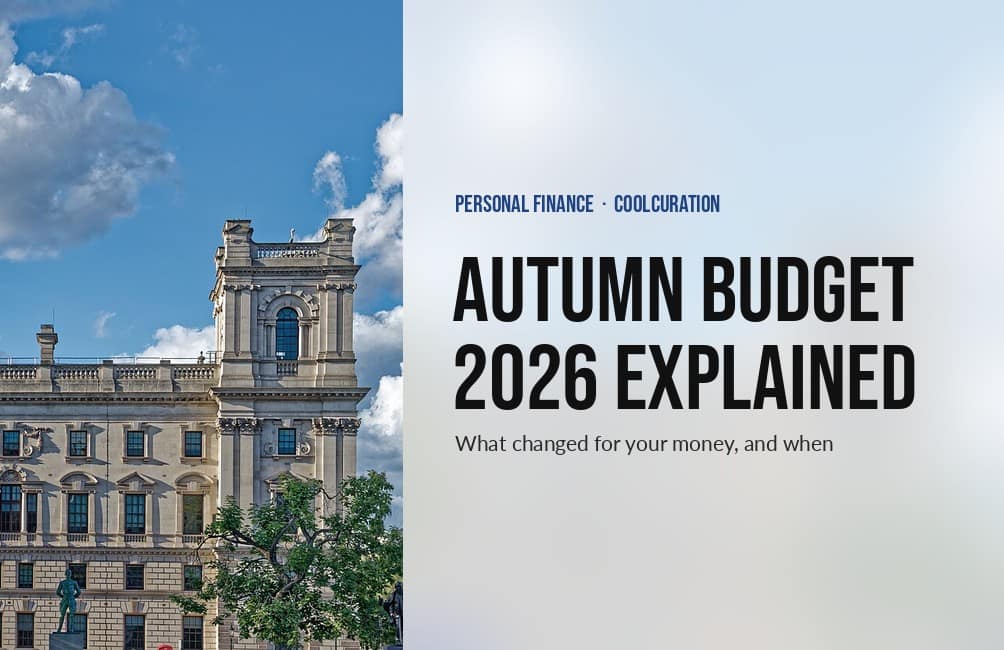
This article is general information, not tax or financial advice, and CoolCuration is not authorised by the Financial Conduct Authority. Many Budget measures need legislation before they take effect, and the details, rates and dates can change. Check GOV.UK before you act, and consider a qualified financial adviser for your own circumstances. Capital at risk. The value of investments can go down as well as up and you may get back less than you invested. Tax treatment depends on the individual circumstances of each client and may be subject to change in future. This article contains affiliate and referral links, which are paid links. If you click one and buy or sign up, I earn a commission or referral bonus at no extra cost to you. Brands don't choose what I feature or what I say about them. Cover photograph: HM Treasury, Westminster by Tilman2007 via Wikimedia Commons, licensed CC BY-SA 4.0, cropped and blurred. The cover image is shared under the same licence.
What's trending




Recent posts
- Autumn Budget 2026: What It Means for Your Money
 Last updated: 28 October 2026. I checked every figure in this Autumn Budget 2026 guide against the Treasury's GOV.UK documents that day. By Stiv · Design, technology and personal finance Affiliate disclosure: This article contains affiliate and referral links, which are paid links. If you click one and buy or sign up, I earn a… Read more: Autumn Budget 2026: What It Means for Your Money
- Best Action Cameras UK 2026: Seven Picks for WinterLast updated: 27 October 2026 By Stiv · Design, technology and personal finance Affiliate disclosure: This article contains affiliate and referral links, which are paid links. If you click one and buy or sign up, I earn a commission or referral bonus at no extra cost to you. Brands don't choose what I feature or… Read more: Best Action Cameras UK 2026: Seven Picks for Winter
- Self Assessment Deadlines 2026/27: Every Date and PenaltyLast updated: 18 October 2026. I checked every one of these Self Assessment deadlines and penalties against HM Revenue and Customs (HMRC) pages on GOV.UK that day. By Stiv · Design, technology and personal finance Affiliate disclosure: This article contains affiliate and referral links, which are paid links. If you click one and buy or… Read more: Self Assessment Deadlines 2026/27: Every Date and Penalty


No Comments.