
Last updated: 17 September 2026
By Stiv · Design, technology and personal finance
This is an opinion piece. Views expressed are the author's own and do not constitute professional advice. This Huel powder review UK contains a referral link.
Huel wants to replace your lunch. That is, frankly, a big ask. So this Huel powder review UK is built on years of me drinking vanilla v3.1 shaken in cold water at the desk, between meetings, while quietly judging whether powdered food really deserves a place in a real kitchen. Spoiler: it is better than you would expect, worse than the marketing claims, and your insides will absolutely have their own opinions for the first fortnight.
Cool Factor
★★★★☆
4 out of 5: Stone cold
Want £20 off your first Huel order?
The current new-customer referral discount and how to claim it are kept up to date on our referral page.
What is Huel powder?
Huel is a nutritionally complete powdered food brand founded in 2015 by Julian Hearn alongside nutritionist James Collier. The original Huel powder (I drank the v3.1 formula, and Huel now sells it simply as Powder) blends gluten-free oats, pea protein, ground flaxseed, brown rice protein, faba bean protein and a micronutrient mix of 26 essential vitamins and minerals. Each 100g serving delivers 400 calories, around 30g of plant-based protein, roughly 7g of fibre and a balanced fat profile from flaxseed, sunflower oil and coconut MCTs. Crucially, it is fully vegan, gluten-free and tested by ISO 17025-accredited laboratories.
The company motto, painted on the wall at the Tring HQ, is blunt: "Nutrition first. Taste a close second." That sums it up. Huel is not trying to be a milkshake. It is trying to be lunch that does not need thought, washing-up or a queue at Pret. Today the brand sells in more than 80 countries, with a Trustpilot score of 4.4 out of 5 from over 26,000 reviews. My £20 Huel referral discount applies to new customer first orders if you fancy trying it without committing the full RRP.
First impressions: opening the bag
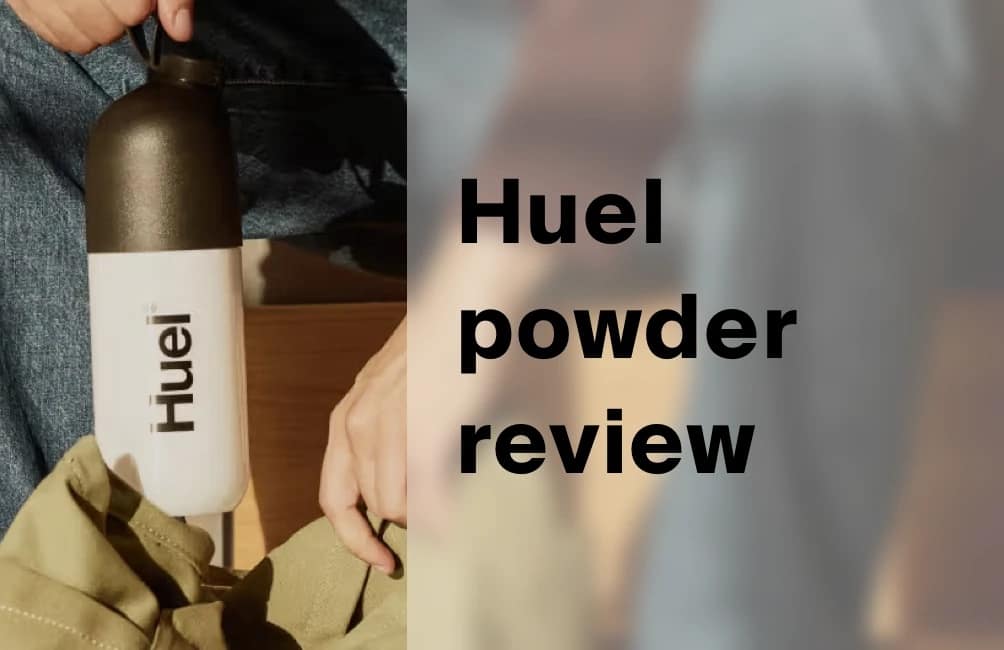
Pulling the resealable pouch out for the first time, two things stand out. First, the bag is enormous. Second, the included scoop is built like a small shovel. So you measure two scoops (around 100g) into a shaker, add 500ml of cold water, secure the lid, and shake for 20 seconds. Notably, the standard order does not come with a branded shaker bottle. You either bring your own or pay extra. Frankly, that is mildly annoying for a first-timer.
The first sniff of vanilla v3.1 is unmistakably oaty, with a baked-biscuit sweetness underneath. Then comes the first sip. Honestly, it is fine. Not a milkshake, not a smoothie, but recognisably food-flavoured. The texture is slightly chalky in plain water, with the powder settling at the bottom if you leave it too long. So if you go in expecting Yazoo, you will be disappointed. However, if you go in expecting a quick liquid meal that takes 30 seconds, you will be pleasantly surprised.
The taste, by flavour
Across this Huel powder review UK I have worked through several flavours. Vanilla is my staple. It is the safest starting point, neutral enough to drink daily without flavour fatigue, and it plays nicely with a banana or some peanut butter on weekends when I fancy bulking it out.
Chocolate is genuinely nice. It tastes like a slightly oaty chocolate Frijj, which sounds like an insult but is meant as praise. Of course, it divides opinion online, with some calling it too sweet. I am in the "fine, would order again" camp, although vanilla still wins for everyday use.
Berry and banana, on the other hand, just did not click for me. Both lean heavily on natural flavourings to mimic fruit, and the result sits somewhere between a smoothie and a children's medicine. Honestly, if you do not enjoy fruity protein shakes generally, you will not enjoy these. Coffee Caramel is the only flavour I actively dislike. Notably, I already drink properly brewed coffee at home through my Exhale Coffee subscription, so swapping in a sucralose-sweetened coffee shake feels like a downgrade.
Above all, every flavour is noticeably sweet. Sucralose carries the load. So if you dislike artificial sweeteners as a category, no flavour will save you. That is just the truth.
Texture in a shaker bottle
Texture is where this Huel powder review UK has to be honest. Cold water and a shaker is the convenience play. Naturally, it is also the worst-case texture scenario. The powder dissolves quickly enough, but it never goes fully smooth. There is always a faint graininess, a slight oat-flour cling on the tongue, and a tendency for the bottom inch to settle if you do not finish quickly.
Refrigerating the shake overnight makes a noticeable difference. The oats hydrate, the texture loosens, and the result is closer to a proper smoothie. So if you can be bothered, prepping the night before genuinely improves things. A blender helps even more, although that defeats the convenience point. After all, if you are washing a blender jug, you may as well make a sandwich.
For me, the shaker-and-cold-water default is acceptable rather than enjoyable. It is the trade-off I accept for getting lunch sorted in 30 seconds.
What is actually in it
The ingredient list is shorter than you might fear from a "spreadsheet food" product. Gluten-free oats lead, then pea protein, ground flaxseed, tapioca starch, brown rice protein, faba bean protein, sunflower oil powder and MCTs from coconut. After that comes the micronutrient blend, natural flavourings, guar gum, xanthan gum and sucralose for sweetness.
Per serving, you get 400 calories, around 30g of protein, 38g of carbs (4g of which are sugars), 13g of fat and roughly 7g of fibre, plus 100% of your daily reference intake for the listed vitamins and minerals. Coconut counts as a tree nut for allergen labelling, which matters if you have nut allergies. Beyond that, Huel is genuinely free of dairy, eggs, soy and gluten in v3.1.
Importantly, the brand publishes its full testing and certification stack, including ISO 17025 laboratory testing and over 100 cited peer-reviewed studies underpinning the formulation. So that is more transparency than most foods on a supermarket shelf, and it matters when you are trusting the same product with a meal a day.
The honest stomach situation
Every Huel powder review UK that skips the digestive question is dodging the obvious. So here is mine, plainly. The first two weeks were not great. I did not get the famously windy reaction many beginners describe online. Instead, my system reacted to the sudden jump in fibre and the all-liquid macros with looser-than-usual visits to the bathroom. Frankly, week one was inconvenient.
Things settled by week three. The body adjusts. The fibre load (roughly 7g per shake) is meaningful, and combined with the micronutrient density, your gut bacteria need a bit of time to catch up. So if you are starting Huel, do not start on a day with important meetings, long commutes or a wedding to attend.
My practical advice: ramp up slowly. Start with a half-serving in the morning for the first few days. Then move to a full serving. After that, you can confidently swap in lunch. Above all, keep drinking plenty of plain water alongside it. The fibre needs hydration to behave.
Convenience: where Huel earns its place
This is the genuine selling point, and frankly, it is why this Huel powder review UK leans positive overall. The days Huel earns its place are not the days I have time to cook. They are the days I am back-to-back with calls, the days I have forgotten lunch entirely, and the days where the realistic alternative is a Boots meal deal or skipping food until dinner.
From measure to drink, Huel takes about 30 seconds. Cleanup is rinsing one shaker. Compared to the lunch-prep kabuki of cooking, plating and washing, that is a meaningful gain. Naturally, this is also why Huel does not replace cooking. If you have time and energy, real food is more satisfying. So I use Huel as a convenience layer underneath a generally home-cooked diet, not as a replacement.
If you are weighing it against actual food deliveries, my Grubby vegan meal kit review and the wider best vegan meal kits UK roundup sit in the middle ground between cooking from scratch and powdered shakes.
What Huel powder is not
Equally important to any honest Huel powder review UK is what the product is not. It is not a diet product. Yes, it can help with portion control because each serving is calorie-counted at 400. However, it is not low-calorie by design and will not produce magical weight loss on its own.
It is also not a protein shake. With 30g of protein per 400 calorie serving, the ratio is balanced rather than protein-heavy. So if you want pure post-gym recovery, Huel Black Edition (40g protein, fewer carbs) or a dedicated whey product would be a better fit. Crucially, this is also not a substitute for all your meals. Huel itself recommends a maximum of one or two servings per day for most people, with the rest of your nutrition coming from real food.
Finally, it is not a milkshake. Honestly, the comedian Dave Gorman famously called it "hipster gruel," and that is closer to the truth than the bright marketing photography suggests. Approach it as nutritionally complete fuel, not a treat.
Value for money
Pricing matters in any honest Huel powder review UK. A 1.7kg bag holds 17 meals and costs £30 as a one-off, which works out to £1.76 per 400-calorie meal. Subscribe and Save knocks 10% off, so the bag drops to £27 and the meal to £1.59. Free delivery only kicks in over £45, though, so a single bag on its own carries £5.99 postage. I priced that catch meal by meal in Huel vs real food.
Compare that to the realistic alternatives. A Tesco meal deal is £3.85 with a Clubcard and £4.25 without, a Pret lunch sits between £8 and £12, and a Deliveroo lunch order routinely tops £14 once fees and tips are included. So at £1.59 per meal on subscription, Huel is far cheaper than buying lunch out. It still costs about 56p more than the cheese sandwich lunch I priced at Tesco, while delivering more macro and micro nutrition than either.
That said, against home-cooked basics like beans on toast or a tin of soup, Huel is not the cheapest option. Where it wins is full nutritional completeness in 30 seconds, not calories per pound. So if convenience and nutrition matter more than absolute price, Huel does the job. If price alone wins, your supermarket basket will beat it.
How Huel compares to alternatives
Huel sits in a small but established meal-replacement category. In the US, Soylent is the obvious comparison, although Soylent leans on engineered ingredients more heavily. Across Europe, Saturo (ready-to-drink), Jimmy Joy and Feed compete on price and convenience. Within Huel's own range, Black Edition pushes higher protein for fitness-focused users, Daily Greens leans into vitamin and adaptogen content, and Bars cover snacking.
For UK shoppers reading this Huel powder review UK, the original formula still wins on availability, free delivery threshold and breadth of flavours. Crucially, the £20 first-order referral credit, on a first basket of £60 or more, also makes it the easiest to try without spending blind. I have since reviewed Huel Bars and Daily Greens separately. If you are still choosing between Powder, Black Edition and Essential, my guide to which Huel to buy puts the whole range side by side.
The verdict
So where does this Huel powder review UK actually land? On a Cool Factor of 4 out of 5, Stone cold. The product genuinely does the job it sets out to do. Years of using vanilla v3.1 daily has not made me love it, but it has made me trust it. On busy days, Huel earns its keep.
Overall, a solid 4 out of 5 Stone cold. Huel powder won me over on convenience, nutritional completeness and the practicality of having lunch handled in 30 seconds. However, it did not quite hit Ice cold because every flavour leans on sucralose, the texture in cold water is acceptable rather than great, and the first fortnight of digestive adjustment is real. So if you can live with sweetness and a slightly grainy mouthfeel, it is a 5 out of 5 in your life. For me, with my caveats, it is honestly a 4.
This Huel powder review UK is the first in a six-part Huel series. Over the coming weeks I will be reviewing Huel Black Edition, Huel Daily Greens and Huel Bars, plus a Huel-versus-whole-foods comparison and a buyer's guide to help you pick the right format. If Huel is on your radar, the original powder is the right place to start.
Cool Factor
★★★★☆
4 out of 5: Stone cold
Frequently asked questions
Is Huel actually good for you?
Huel is nutritionally complete by design, providing 26 essential vitamins and minerals plus balanced macros per serving. So it is genuinely a healthier choice than most grab-and-go lunches. However, it is not a substitute for the variety, fibre and pleasure of whole foods. Most nutritionists, and Huel itself, recommend using it for one or two meals a day at most.
What does Huel powder taste like?
Honestly, it tastes like sweetened oats with a hint of whichever flavour you have chosen. Vanilla is the safest, chocolate is the most enjoyable, and the fruit flavours are the most divisive. Above all, every flavour is noticeably sweet thanks to sucralose. So if you dislike artificial sweeteners, Huel will not change your mind.
Does Huel make you gassy?
It can do, especially in the first one to two weeks. The high fibre content and sudden change to liquid meals usually causes some digestive disruption. For me, it caused looser bowel movements rather than gas, but everyone reacts differently. Crucially, the body adjusts, so symptoms typically settle within a fortnight.
How much does Huel cost per meal in the UK?
A 1.7kg bag contains 17 meals and costs £30 as a one-off, which is £1.76 per meal. Subscribe and Save takes 10% off, bringing the bag to £27 and the meal to £1.59. Free delivery applies on orders over £45, and £5.99 is added below that. So per meal, it is cheaper than a Tesco meal deal and significantly cheaper than Pret or Deliveroo.
Can you live on Huel alone?
Technically yes, since it is nutritionally complete. However, Huel itself recommends no more than one or two servings per day for most people. Above all, real food provides social, sensory and gut-health benefits that powdered nutrition cannot replicate. So treat it as a convenience layer, not a full diet.
Is Huel good for weight loss?
Huel can support weight loss by simplifying calorie tracking, since each serving is exactly 400 calories. However, it is not a low-calorie diet shake by design. So you still need an overall calorie deficit. For sustained weight management, the convenience and portion control are more useful than any "magic" effect.
Which Huel flavour is best?
For first-timers, vanilla is the safest pick. Chocolate is the most enjoyable for everyday use. Salted Caramel and Cinnamon Roll are popular among regulars. The fruit flavours (banana, berry, strawberry) divide opinion sharply. Coffee Caramel, in my experience, is the weakest. So start with vanilla and branch out from there.
Is Huel better than a regular protein shake?
If your goal is post-gym recovery, a dedicated protein powder is more focused. If your goal is replacing a meal entirely, Huel is far better, since it includes carbs, fats, fibre and full micronutrition. So pick the tool to fit the job. Naturally, many users keep both in the cupboard.
More from CoolCuration
- Oddbox discount code: wonky veg boxes delivered to your door, the opposite-end-of-the-spectrum approach to lunch.
- Gift guide for foodies: curated kitchen kit and food gifts for people who actually cook.
- Aeropress Premium coffee maker: the desk-friendly espresso alternative for caffeine without the queue.
- Airtime Rewards cashback app: earn cashback on everyday spending, including some grocery shops.
- Best Father's Day gifts UK: gift inspiration for the Huel-curious dad in your life.
What's trending






Recent posts
- Best Audiobooks October 2026: 10 UK Listens Ranked
 Ten new audiobooks for October 2026, from a full-cast Dracula with Jonathan Bailey to Russell T Davies reading his own television memoir.
 - Louis Fratino at David Zwirner ReviewLast updated: 4 October 2026 By Tristan · Arts, exhibitions and creative culture This is an opinion piece. Views expressed are the author's own and do not constitute professional advice. Exhibition reviewMayfair Saunas, subway cars and a lot of skin in Mayfair Louis Fratino at Zwirner is the American painter's first solo show in London,… Read more: Louis Fratino at David Zwirner Review
- What Is a Sprive Boost? Seven Days, and What It Actually PaysA Sprive boost lifts your cashback rate for seven days, and it arrives on its own. What mine paid, and why Supercharge is a display toggle rather than extra cashback.


No Comments.