
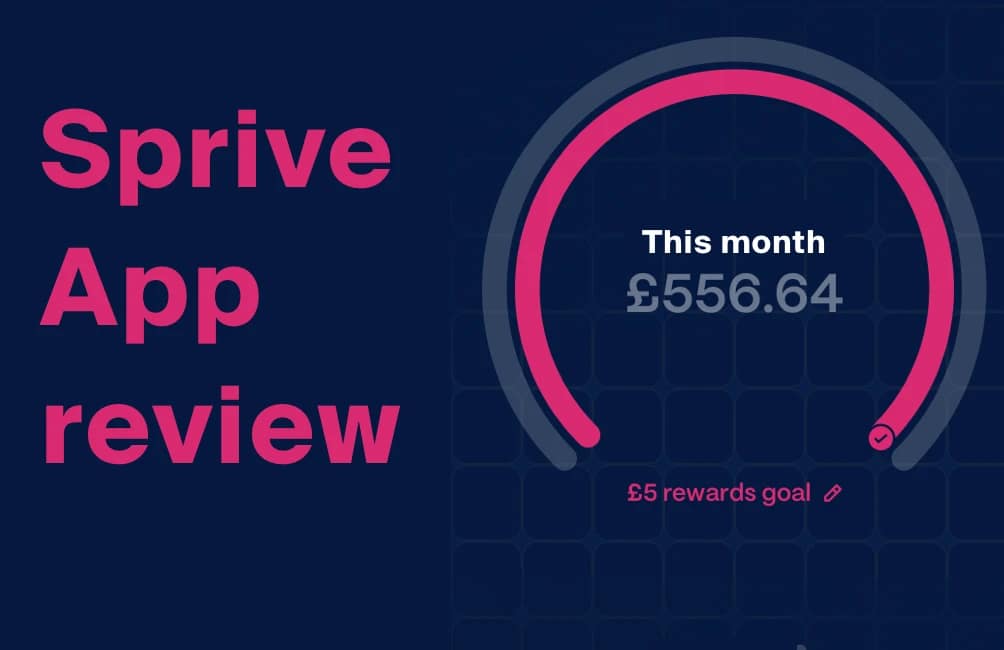
Last updated: 13 October 2026
By Stiv · Design, technology and personal finance
This is an opinion piece. Views expressed are the author's own and do not constitute professional advice.
I've used Sprive since October 2021, first on my Nationwide mortgage and, since a June 2026 remortgage, on a Halifax one. The auto-save started at £100 a month and runs at £250 now. By 13 October 2026 I had overpaid £10,237.41 through the app, mostly from the auto-save. This review is based on that daily use.
If you're looking for a realistic way to make progress on your mortgage without committing to rigid overpayments, the Sprive mortgage app is one of the better-known tools in the UK. Sprive has also pushed further into the mainstream in 2026, with a TV advert running on Channel 4 under the line "Shop away your mortgage. Brick by brick." This Sprive mortgage app review focuses on what actually matters: how it works in day-to-day use, who it's good for, and where it falls short. It's not a sales pitch, and it's not a deep dive into regulation or bonuses. If you're mainly concerned about security and FCA regulation, we cover that separately: Is Sprive safe?
This article contains affiliate and referral links, which are paid links. If you click one and buy or sign up, I earn a commission or referral bonus at no extra cost to you. Brands don't choose what I feature or what I say about them. CoolCuration is not authorised by the Financial Conduct Authority, and this is an opinion, not financial advice.
Your home may be repossessed if you do not keep up repayments on your mortgage.
Short on time?
The current Sprive sign-up bonus and how to claim it are kept up to date on one page.
Claim the Sprive referral bonus
Cool Factor
★★★★☆
4 out of 5
Reading up on Sprive? This review is the deep dive. For every guide we have written on the app in one place, see our Sprive guides hub, kept current as the app changes.
What is Sprive?
Sprive is a UK app designed to help homeowners make small, consistent mortgage overpayments and boost them with cashback. It works by connecting to your bank via Open Banking, analysing your transactions, and setting aside small, affordable amounts you won't miss. You choose a minimum and maximum saving level (the minimum is set at £25). Overpayments are then made according to your setup and your lender's process.
If you're brand new to it, our guide on what Sprive is and how the app works walks through the whole setup step by step.
You stay in full control throughout. You can pause, change the frequency, or withdraw the money at any time. It's more like a smart, automated savings tool that happens to send your savings straight towards your mortgage rather than into a regular account.
On top of that, there's a cashback feature called Shop with Sprive. When you shop with over 1,000 partner retailers through Sprive's partnership with Tillo, a percentage of your spend is added to your overpayment pot, effectively helping you chip away at your mortgage while you buy your usual groceries, clothes, or takeaways. For a deeper look at how the cashback side works in practice, our Sprive cashback explained guide covers checkout tips, rates, and when it's worth the effort.
First impressions
I first downloaded Sprive in October 2021 after seeing it mentioned on a finance forum. Setting it up took under ten minutes: connect your bank, confirm your mortgage details with Nationwide, and set your saving level. I was surprised at how slick, simple, and secure the process felt.
Within the first week, the app had quietly built up about £30 from spare cash based on my spending patterns. I sent that as an overpayment to Nationwide through the app and got confirmation from both Sprive and my bank. That double-confirmation was reassuring because it meant I could track what happened on both sides, not just inside the app.
The onboarding didn't try to upsell me on anything or push me towards a specific saving level. It just asked what I could afford, set the limits, and got on with it. For a full walkthrough of the setup mechanics, our how the Sprive app works guide covers each step.
The experience: daily use since 2021
Since 2021, the thing that's impressed me most is how invisible it becomes. I set up a £100 monthly auto-save early on. I have raised it since, to £500 a month for a stretch and £250 now. Some months I can afford more, and Sprive nudges the amount up within my limits. Other months are tighter, and it stays closer to the minimum. That flexibility is the core difference between Sprive and a fixed standing order.
Before Sprive, I had a simple standing order for an extra £100 a month. The problem was that some months I could easily afford it, and others it left me short. That's where Sprive shines. It's smart, not static. It adjusts based on your spending, so you're never over-committed.
The cashback side
The Shop with Sprive feature has added a nice bonus, especially on weekly supermarket shops. I buy Tesco or Sainsbury's gift cards through the app at checkout and the cashback feeds directly into my mortgage pot. On my spending, the cashback has been a small part of my £10,237.41 total, a few hundred pounds by my estimate. It's not life-changing money on its own, but it compounds over time.
The cashback rates vary by retailer, typically between 1% and 4% per the Sprive FAQ. It's not always the best rate compared to a dedicated cashback platform like TopCashback, but the convenience of having it go straight to your mortgage means I actually use it consistently, which is the whole point.
The overpayment tracking
Sprive shows you projected savings in interest and time based on your overpayment history. I also cross-reference this with the MoneySavingExpert overpayment calculator, and the numbers have consistently lined up. Seeing the projected months knocked off your term is motivating, even when the individual amounts feel small.
Where Sprive falls short
No app is perfect, and after using it since 2021 I've found some real frustrations:
- Bank connection refreshing. My Nationwide connection needs re-authorising roughly every 90 days. This is an Open Banking quirk rather than a Sprive problem, but it's still annoying when the app stops working and you don't notice for a week.
- Cashback retailer range. The catalogue has grown significantly (now over 1,000 brands via Tillo), but I'd still like to see more supermarket options and better rates on everyday shops. The best cashback percentages tend to be on retailers I don't use regularly.
- Less value if you're already disciplined. If you're the kind of person who sets up a standing order and never misses it, Sprive's automation doesn't add much. The app solves a behavioural problem, and if you don't have that problem, it's unnecessary overhead.
- Overpayment limits are your responsibility. Sprive doesn't automatically know your lender's annual overpayment allowance. You need to check this yourself and set your limits accordingly. Our Sprive vs manual overpaying guide explains what to check.
Value for money
Sprive's core features are free. There's no subscription fee for autosaving, overpayments, basic mortgage tracking, or cashback. The company makes money from remortgage commissions (when users switch deals through the app's broker service) and from a share of the gift card cashback revenue. For a full breakdown of the business model: how does Sprive make money.
In practical terms, Sprive is free to use and has helped me overpay £10,237.41 since October 2021. Even accounting for the time spent buying gift cards at the checkout, the return on effort is comfortably positive. If you're comparing it to the cost of a mortgage broker or financial adviser, there's no contest. For the comparison with just doing it yourself, our Sprive vs manual overpaying guide covers the trade-off in detail.
Is Sprive any good?
Is Sprive any good? For homeowners who mean to overpay but don't manage it consistently, yes. It adds much less if you already overpay by standing order every month and don't use the shops in the app.
Who Sprive suits
Sprive works best if you are a UK homeowner who wants to overpay your mortgage but finds it hard to stay consistent. If you already have a disciplined standing order and never miss a month, you probably do not need an app to do what willpower already handles. But if you are the sort of person who means to overpay and then forgets, or whose spare cash varies month to month, Sprive fills that gap well.
It is also a solid pick if you do most of your shopping at the supported retailers and want those small cashback amounts to go somewhere meaningful rather than sitting in a loyalty app you never check.
Who should skip it
If your lender is not supported, there is no workaround. If you are on a tight fixed-rate deal with strict early repayment charges, check your overpayment allowance first. Most UK mortgages allow overpayments of up to 10% of the outstanding balance per year without penalties, but you should confirm this with your lender before setting anything up.
What other users say
On 13 October 2026, Sprive was rated 4.4 out of 5 ("Excellent") on Trustpilot from 1,645 reviews. Sprive also took investment on BBC Dragons' Den, and our Dragons' Den page has that story.
The verdict
For the right person, Sprive is well worth it. It's not about beating the system or finding loopholes. It's about making good behaviour easier. If you want to overpay your mortgage but struggle with consistency, Sprive can help, and the cashback feature is a nice bonus that compounds over time.
More than £10,000 of overpayments later, I'm still using it. That says more than any feature list.
Cool Factor
★★★★☆
4 out of 5
Overall, a solid 4/5 Stone cold. Sprive has changed how I manage my mortgage, and the combination of autosaving and cashback has produced real, measurable results since 2021. It didn't quite hit Ice cold because the bank connection refreshing is a persistent annoyance, the cashback rates on everyday shops could be better, and the app adds less value if you're already disciplined with manual payments. But for the majority of homeowners who intend to overpay but never quite get around to it, Sprive turns that intention into action, and that's worth a lot.
If you want to try it, the current sign-up bonus and claiming steps are on our referral page:
Get the current Sprive referral bonus
For the trust and regulation breakdown: Is Sprive safe?. For a step-by-step setup walkthrough: How the Sprive app works.
FAQs
Is the Sprive app worth it?
If you struggle with consistency, yes. Since October 2021 I've overpaid £10,237.41 through the app, mostly through the auto-save, without having to remember to make a manual payment. If you're already disciplined with a standing order and don't care about cashback, the app adds less value. Our Sprive vs manual overpaying comparison covers this in more detail.
Is Sprive any good for small overpayments?
Yes. Sprive is designed around small, regular amounts rather than large lump sums. Even £25 to £50 a month in overpayments can reduce your mortgage term and save you interest over time. The app lets you set minimum and maximum saving limits so you stay comfortable.
Is Sprive free to use?
Yes. The core features are free. Sprive makes money from remortgage commissions and a share of cashback revenue, not from user subscriptions. For the full breakdown: how does Sprive make money.
Is Sprive safe?
Sprive Limited is an appointed representative of Connect IFA Ltd and New Leaf Distribution Limited for mortgage services. You can verify Sprive on the FCA Register (FRN 919863), Connect IFA Ltd on the FCA Register (FRN 441505) and New Leaf Distribution Limited on the FCA Register (FRN 460421). Sprive uses Open Banking (so it never sees your bank password), and holds your funds via PrePay Technologies Limited (FRN 900010), an FCA-authorised e-money institution. Funds are safeguarded but not FSCS-protected, which is an important distinction. Our is Sprive safe guide covers FCA status, Open Banking security, and fund protection.
How much can I save by overpaying with Sprive?
It depends on your balance, rate, and how much you overpay. As a rough illustration, on a £200,000 mortgage over 25 years, overpaying £100 a month can make a meaningful difference to total interest paid and term length. Sprive has an in-app calculator that models your specific numbers, and you can cross-reference with the MoneySavingExpert overpayment calculator.
Does Sprive work with Nationwide?
Yes. I used it with Nationwide from October 2021 until I remortgaged to Halifax in June 2026. The connection occasionally needs refreshing (roughly every 90 days), which is a standard Open Banking behaviour rather than a Sprive issue. Overpayments showed up on my Nationwide statement within a couple of working days.
How does Sprive compare to a standing order?
A standing order is fixed and predictable: the same amount leaves your account every month regardless of your situation. Sprive is flexible and adjusts based on your spending. If your outgoings vary month to month, Sprive is easier to live with long term. If your income and spending are rock-steady, a standing order may be all you need.
More from CoolCuration
- Best mortgage overpayment apps UK: how Sprive compares to Chip, Plum, Emma, and other tools.
- Octopus Energy referral guide: switch energy provider and pick up bill credit to free up cash for overpayments.
- Chip app: automate savings with deposits held by ClearBank if you'd rather build a pot before overpaying.
- Overpay mortgage or invest?: a practical UK guide to the right call for your situation.
- Sprive cashback explained: gift card mechanics, rates, and checkout tips.
This review is an opinion piece and does not constitute financial advice. CoolCuration is not authorised by the Financial Conduct Authority and earns from referral links, which are clearly disclosed. Our editorial opinions are never influenced by these partnerships. Your home may be repossessed if you do not keep up repayments on your mortgage. Always check your mortgage terms, overpayment limits, and the app's current features before making decisions.
What's trending





Recent posts
- Best Affordable Art UK 2026: 15 Prints and Originals Under £500
 Fifteen prints and originals under £500 from UK gallery shops, print studios and Saatchi Art, plus how editions, framing and Own Art work.
 - Apple Welcome Home Event: What It Means for Your UK Smart HomeApple Welcome Home event, UK view: HomeView, Apple TV 4K and HomePod mini 2 prices, release dates and the new LG cameras.
- iPhone Duo Pre-Order UK: Price, Timing and Whether to BotherThe iPhone Duo pre-order opens at 1pm UK time on 16 October. Every UK price, the case and folio, trade-in values, the eSIM catch and who should skip it.



No Comments.