
Last updated: 22 August 2026
By Stiv · Design, technology and personal finance
Affiliate disclosure: This article contains affiliate or referral links. If you click through and sign up I may earn a commission or referral bonus at no extra cost to you. It does not affect my editorial view.
After the bigger sign-up bonus?
Chase's refer-a-friend offer pays £50 when you join and deposit £1,000 within 30 days; our referral page walks you through it.
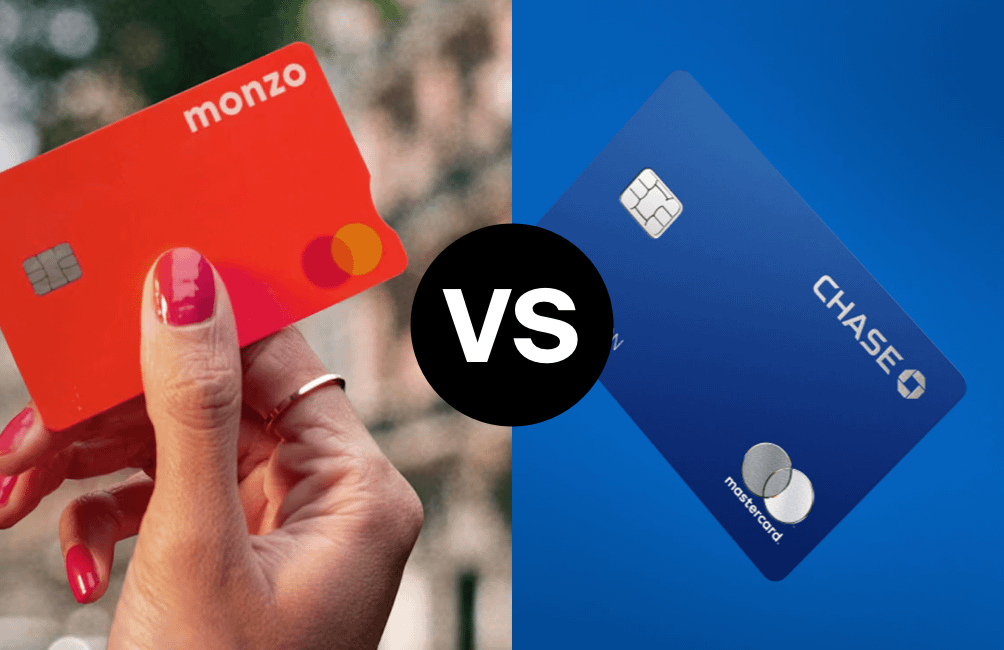
If you're weighing up Monzo vs Chase in 2026, you're in good company. Both are app-only banks, both are free to open, and both promise to make managing your money less painful. However, once you dig past the slick onboarding screens, the two take noticeably different approaches to savings, cashback and everyday features.
Chase (a trading name of J.P. Morgan Europe Limited) lures new customers with a boosted saver rate and 2% cashback on everyday spending. Monzo, the UK's original fintech darling, counters with powerful budgeting tools, paid plan perks like a free Railcard, and one of the most feature-rich banking apps on the market.
Below, we break down every meaningful difference so you can pick the one that actually fits your life. We also link to both referral offers if you want a bonus for signing up.
Comparing Monzo with more than Chase? I have also put it against Starling and Zopa's Biscuit, and my Monzo guides hub collects every Monzo guide in one place.
Monzo vs Chase at a glance
| Feature | Monzo (free plan) | Chase |
|---|---|---|
| Parent company / legal entity | Monzo Bank Limited (FCA 730427) | J.P. Morgan Europe Limited, Chase is a trading name (FCA/PRA 124579) |
| UK launch | 2015 | 2021 |
| Monthly fee | £0 (paid plans from £3/month) | £0 |
| Interest on current account | None | None |
| Savings rate (instant access) | 2.75% AER variable (3.25% on Perks, 3.50% on Max) | 2.25% AER variable (4.50% AER boosted for new customers, 12 months) |
| Select Access savings | 3.15% AER variable (3.65% on Perks/Max) | Not available |
| Round-ups interest | No dedicated rate (goes into Savings Pot) | 5% AER variable on round-up account |
| Cashback | Retailer offers in-app (variable) | 2% on groceries, restaurants, cafes, takeaways, transport, fuel and public EV charging; capped £20/month; requires 15+ payments/month and £1,000+ across savers (eligibility conditions apply, effective 1 June 2026) |
| Fee-free spending abroad | Yes (Mastercard rate, no markup) | Yes (Mastercard rate, no markup) |
| Fee-free ATM withdrawals abroad | Up to £200/month (free plan), higher on paid plans | Unlimited (local operator fees may apply) |
| CASS support | Yes | Yes |
| Overdraft | Up to £3,000 (subject to eligibility) | Not available |
| Joint accounts | Yes | Not available |
| FSCS protected | Yes (£120,000 per eligible person, held with Monzo Bank Limited) | Yes (£120,000 per eligible person, held with J.P. Morgan Europe Limited) |
| Referral bonus | Random, from £5 up to £50 (sometimes £100) | £50 (deposit £1,000 within 30 days) |
Both banks are authorised and regulated by the Financial Conduct Authority (FCA) and the Prudential Regulation Authority (PRA). Eligible deposits with either bank are protected by the FSCS. Eligible deposits are protected up to £120,000 per eligible person per UK-authorised bank, building society or credit union by the FSCS (since 1 December 2025). Monzo deposits are held with Monzo Bank Limited (FCA 730427); Chase deposits are held with J.P. Morgan Europe Limited (FCA/PRA 124579).
Savings and interest rates
Chase savings
Chase's standard easy-access saver pays 2.25% AER (variable), which is tied to the Bank of England base rate minus 1.50%. Where it gets interesting is the boosted saver: new customers who open the account within 31 days of joining get an extra 2.25% AER fixed on top for 12 months, bringing the total to 4.50% AER. That is one of the most competitive easy-access rates from a major bank right now. (Source: Chase UK savings rates page, verified 9 June 2026.)
On top of that, Chase's round-up account pays 5% AER (variable) on the spare change from your card transactions. The balance sweeps into your main account once a year, so it works best as a passive micro-savings tool rather than a serious pot.
Monzo savings
Monzo's free-plan savings pots pay 2.75% AER (variable) on instant access. If you subscribe to Perks (£9/month), that rises to 3.25% AER. Max (from £19/month) pays 3.50% AER. Monzo also offers a Cash ISA at the same rates, which is handy if you have already used your Personal Savings Allowance.
Monzo changed its plan prices in 2026. Our Monzo Perks price increase breakdown has every tier, the key dates and the maths.
In addition, Monzo offers Select Access pots at 3.15% AER (free plan) or 3.65% AER (Perks/Max). These pay a better rate in return for limiting you to two withdrawals per year per pot. If you make a third withdrawal, the rate drops temporarily until the pot's anniversary.
While Monzo does have round-ups, there is no separate boosted rate for them. Spare change simply lands in whichever Savings Pot you choose at the standard rate.
Verdict: Chase wins on headline savings, particularly for new customers grabbing the 4.50% boosted rate. After that first year, the standard Chase rate drops below Monzo's free-plan rate, so keep an eye on when your boost expires. For longer-term savings without switching, Monzo edges ahead.
Cashback compared
From 1 June 2026, Chase updated its cashback offer. You can now earn 2% cashback on groceries, restaurants, cafes, takeaways, everyday transport, fuel and public EV charging points, capped at £20 per month. That is up to £240 over a year. However, eligibility conditions now apply: you must make at least 15 payments per month with your debit or credit card and/or Direct Debits, and hold £1,000 or more across your Chase savers to qualify for cashback the following month. The cashback applies only to UK and Channel Islands GBP transactions. (Source: Chase UK cashback page, verified 9 June 2026.)
Monzo takes a different approach. Rather than blanket cashback, it surfaces retailer-specific offers inside the app, typically ranging from 2% to 10% at selected partners. These rotate and can be withdrawn at any time, so the value depends on whether you shop at those retailers.
Monzo's paid plans also include Billsback, a monthly prize draw where at least 1,000 bills are paid back (up to £150 each). It is more of a prize draw than dependable cashback, but it is a fun extra if you are already on a paid plan.
Verdict: Chase's 2% cashback is generous, but the eligibility conditions (15+ payments and £1,000 in savers) mean it suits active, regular users who keep money with Chase. Monzo's approach is more opportunistic but can be rewarding if the right offers land.
App features and everyday banking
Monzo's app
This is where Monzo really flexes. The app includes salary sorting, bill pots, spending categories, shared tabs, instant notifications, budgeting trends, and the ability to split payments with friends. You can also connect external bank accounts (on paid plans), track your credit score, and even see your mortgage details. For day-to-day money management, it is hard to beat.
Monzo also offers Flex, a buy-now-pay-later credit product that lets you spread eligible purchases over three months interest-free (or longer with interest). Loans up to £25,000 and overdrafts up to £3,000 round out the borrowing side.
Chase's app
Chase keeps things simpler. The app is clean and fast, with spending categorisation, round-ups, and the ability to freeze your card or block certain transaction types. There is also a payment approval feature that makes you confirm purchases in-app before they go through, which is useful for curbing impulse buys.
However, Chase does not offer overdrafts, joint accounts, bill pots, salary sorting, or any borrowing products. If you need those, you will need another account alongside Chase.
Verdict: Monzo is the clear winner for anyone who wants their banking app to do more than just hold money. Chase suits people who prefer simplicity and use it as a secondary account.
Travel and spending abroad
Both banks let you spend abroad with no markup on the Mastercard exchange rate, making either a strong choice for holidays. The difference is in ATM withdrawals: Chase places no limit on fee-free cash withdrawals overseas (though local ATM operators may charge their own fees). Monzo's free plan caps fee-free foreign ATM withdrawals at £200 per month, with a 3% charge after that.
If you travel frequently and rely on cash, Chase has the edge. For card-only travellers, there is very little between them.
For more ways to save on travel, check out our TrainPal vs Trainline comparison, which is useful if you are looking to cut the cost of UK rail fares.
Verdict: Slight edge to Chase for heavy cash users abroad. Otherwise, it is a draw.
Paid plans and perks
Chase has no paid tiers. Everything is included in the free account.
Monzo, on the other hand, offers three upgrade plans:
- Extra (£3/month): virtual cards, connected banks, credit insights, advanced round-ups, custom categories, and Billsback eligibility.
- Perks (£9/month): everything in Extra, plus a weekly Greggs treat, an annual Railcard, an annual Uber One membership, a monthly Vue cinema ticket, and 3.25% AER on instant access savings.
- Max (from £19/month, 3-month minimum): everything in Perks, plus worldwide travel and phone insurance, UK and European breakdown cover.
Whether Monzo's paid plans are worth it depends on how many of those perks you would actually use. The Railcard alone normally costs £30/year, and Uber One is £7.99/month, so Perks can pay for itself fairly quickly if you use both.
Verdict: If you want a completely free experience with strong savings rates, Chase wins. If you are happy paying a small monthly fee for lifestyle perks and better budgeting tools, Monzo's plans offer solid value.
Referral bonuses
Both banks run referral schemes, and both are worth grabbing if you are signing up anyway.
- Chase: Get £50 when you join via a referral code and deposit £1,000 within 30 days. No spending requirement.
- Monzo: Get a random reward from £5, up to £50 (sometimes up to £100) when you join via a referral link and make a card payment within 30 days.
Chase's bonus is more predictable and usually larger, but it requires a £1,000 deposit (which you can withdraw straight after). Monzo's reward varies, and the barrier to entry is much lower. If you are opening both (which plenty of people do), you can claim both.
Get the Chase referral offer (£50)
See the latest Monzo referral offer
For a full list of the best sign-up deals right now, see our best referral offers UK 2026 roundup.
Customer reviews and reputation
Monzo has over 10 million personal customers in the UK and consistently ranks highly in customer satisfaction surveys. It holds a Which? Recommended Provider badge for current accounts, and Trustpilot reviews sit around 4.4 stars with thousands of ratings.
Chase UK has grown rapidly since launching in 2021, reportedly surpassing 2 million customers. It benefits from J.P. Morgan's global brand recognition and infrastructure. Trustpilot reviews are generally positive, with users praising the cashback and savings rates, though some note the limited feature set compared to more established UK fintechs.
Verdict: Monzo has a longer UK track record and more third-party endorsements. Chase is newer but backed by one of the world's largest financial institutions. Both are well-regarded.
So which is better: Monzo or Chase?
| Category | Winner |
|---|---|
| Savings rates (new customer) | Chase |
| Savings rates (long-term) | Monzo (free plan beats Chase standard rate) |
| Cashback | Chase (2%, subject to eligibility) |
| App features and budgeting | Monzo |
| Travel (spending abroad) | Draw |
| Travel (ATM withdrawals abroad) | Chase |
| Referral bonus | Chase (fixed £50 with qualifying deposit vs a random reward from £5 up to £50 (sometimes £100)) |
| Paid plan perks | Monzo |
| Overdrafts and borrowing | Monzo (Chase offers neither) |
| Joint accounts | Monzo (Chase does not offer them) |
| Simplicity | Chase |
There is no single winner in the Monzo vs Chase debate. It depends on what you actually need from a bank account.
Chase may suit you if you want a simple, no-fuss secondary account with strong first-year savings rates, consistent cashback (provided you meet the activity requirements), and a generous £50 sign-up bonus. It is an excellent option for parking your money and earning interest while you decide on a longer-term savings strategy.
Open a Chase account and get £50
Monzo may suit you if you want a full-service main account with proper budgeting tools, joint accounts, overdrafts, and lifestyle perks on the paid plans. It is a strong option for anyone who wants their bank to actively help them manage their money.
Join Monzo and get a mystery reward
Plenty of people run both. Chase for the savings boost and cashback in year one, Monzo for the day-to-day heavy lifting. They complement each other well.
If you are also weighing up other options, we have compared Zopa Biscuit vs Chase and Monzo vs Biscuit in separate guides.
Frequently asked questions
Is Monzo or Chase better for savings in 2026?
For new customers, Chase currently offers the higher rate thanks to its 4.50% AER boosted saver (available for 12 months). After the boost expires, Chase's standard rate drops to 2.25% AER, which is lower than Monzo's free-plan rate of 2.75% AER. Consequently, if you are looking long-term, Monzo edges ahead unless you are willing to switch again.
Can I use both Monzo and Chase at the same time?
Yes. There is nothing stopping you from holding accounts with both banks. Many people use Chase for its first-year savings boost and cashback while keeping Monzo as their main everyday account. Both are free and FSCS-protected up to £120,000 per eligible person per bank.
Does Chase offer an overdraft?
No. Chase UK does not currently offer overdrafts, loans, or any form of credit. If you need borrowing facilities, Monzo provides overdrafts up to £3,000 and personal loans up to £25,000 (subject to eligibility).
Which has better cashback: Monzo or Chase?
From 1 June 2026, Chase offers 2% cashback on groceries, restaurants, cafes, takeaways, everyday transport, fuel and EV charging, capped at £20/month. However, eligibility now requires 15 or more payments per month and £1,000 or more held across your Chase savers. Monzo's cashback is retailer-specific and varies, so it can be higher at certain shops but is not consistent. For consistent cashback from a broad range of spending categories, Chase suits active users who meet the eligibility requirements.
Is my money safe with Monzo and Chase?
Yes. Both are authorised and regulated by the FCA and PRA. Eligible deposits are protected up to £120,000 per eligible person per UK-authorised bank, building society or credit union by the FSCS (since 1 December 2025). Monzo deposits are held with Monzo Bank Limited (FCA 730427). Chase operates under J.P. Morgan Europe Limited's banking licence (FCA/PRA 124579).
Can I switch my current account to Chase or Monzo?
Yes. Both banks support the Current Account Switch Service (CASS), which moves your direct debits, standing orders and incoming payments within seven working days. You can switch to either from most UK banks.
Does Chase do joint accounts?
No. Chase UK does not currently offer joint accounts. If you need a shared account for household bills or savings, Monzo is the better option here, as it supports joint accounts with another Monzo user.
Which bank is better for travelling abroad?
Both offer fee-free card spending abroad at the Mastercard exchange rate. The main difference is ATM withdrawals: Chase has no withdrawal limit, while Monzo's free plan caps fee-free withdrawals at £200/month (with a 3% charge after that). For frequent travellers who rely on cash, Chase has the slight advantage.
What is Monzo Select Access?
Select Access is a Monzo savings pot that pays a higher rate (3.15% AER on free plan, 3.65% on Perks/Max) in exchange for limiting withdrawals to two per year per pot. If you make a third withdrawal, the rate drops temporarily until the pot's anniversary. It suits money you will not need to touch often.
More from CoolCuration
- Best investment ISA 2026: compare the top ISA options before the tax year deadline.
- Trading 212 referral code: grab a free share when you sign up to one of the UK's most popular investment apps.
- Oura Ring 4: track sleep, activity and readiness without wearing a bulky watch.
- Switch to Octopus Energy: save on energy bills with one of the UK's highest-rated suppliers.
- Gift guide for techies: the best gadgets and gear for the tech obsessed.
- Emma app premium trial: track all your accounts, subscriptions and spending in one place.
Disclaimer: This article is for informational purposes only and does not constitute financial advice. CoolCuration is not authorised by the Financial Conduct Authority and does not offer personalised financial guidance. Tax treatment depends on the individual circumstances of each client and may be subject to change in future. Always check current rates, terms and eligibility directly with the provider before opening an account. Referral bonuses are subject to change or withdrawal at any time. CoolCuration may earn a small commission if you sign up through links on this page, at no extra cost to you.
What's trending






Recent posts
- Best Audiobooks October 2026: 10 UK Listens Ranked
 Ten new audiobooks for October 2026, from a full-cast Dracula with Jonathan Bailey to Russell T Davies reading his own television memoir.
 - Louis Fratino at David Zwirner ReviewLast updated: 4 October 2026 By Tristan · Arts, exhibitions and creative culture This is an opinion piece. Views expressed are the author's own and do not constitute professional advice. Exhibition reviewMayfair Saunas, subway cars and a lot of skin in Mayfair Louis Fratino at Zwirner is the American painter's first solo show in London,… Read more: Louis Fratino at David Zwirner Review
- What Is a Sprive Boost? Seven Days, and What It Actually PaysA Sprive boost lifts your cashback rate for seven days, and it arrives on its own. What mine paid, and why Supercharge is a display toggle rather than extra cashback.


No Comments.